
Have you ever been scrolling through your favorite app when you saw a mysterious acronym that left you scratching your head? Whether you are active on Instagram, keeping up with streaks on Snapchat, or swiping through dating profiles, you have likely encountered the letters NFS. If you have ever wondered why someone would post this or how you should react to it, you are not alone.
This term has become a staple of modern digital communication, yet its meaning shifts depending on who is typing and where they are posting. Understanding these shorthand codes is essential for anyone who wants to stay in the loop with current online trends.
In this article, we will break down exactly what this abbreviation stands for, how to use it properly, and why it matters in your daily digital interactions. Let’s clear up the confusion and get you up to speed.
Defining the Acronym and Its Primary Meaning
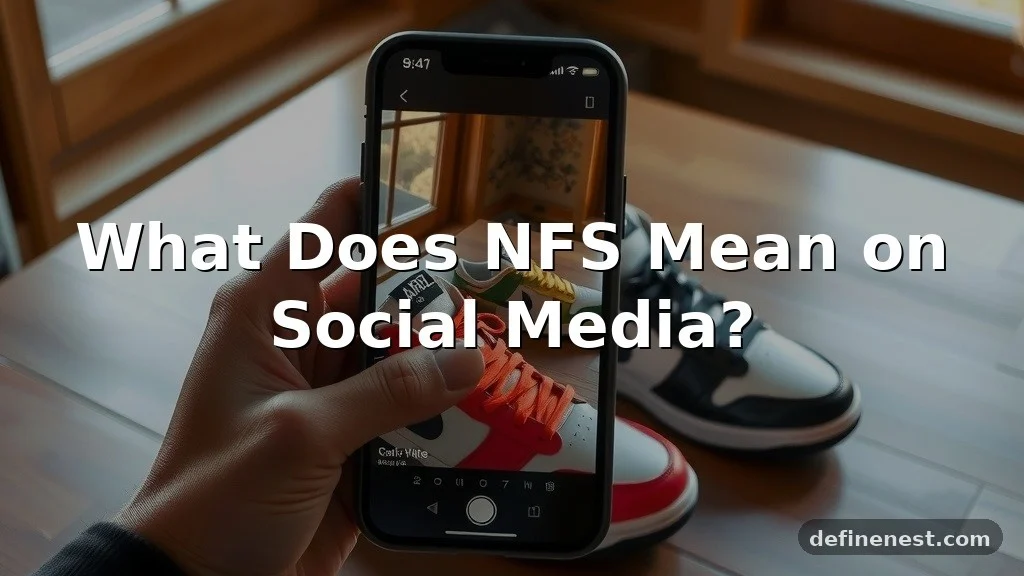
At its core, NFS most commonly stands for Not For Sale. This is the most frequent usage you will encounter across various platforms. When a user posts a photo of a prized possession, such as a vintage car, a custom sneaker collection, or a piece of rare art, they add this tag to signal that they are not interested in any offers to buy the item.
It is a protective measure to stop their direct messages from being flooded with unsolicited purchase inquiries. By stating this upfront, the owner saves time and sets a clear boundary for their audience.
However, in the fast-paced world of social media, meanings are rarely static. In some specific circles, especially among younger demographics on platforms like Snapchat or Instagram, NFS can also stand for Not For Sure.
This is used to express hesitation or a lack of commitment to a plan. For example, if a friend asks if you are going to a party, you might reply with NFS to indicate that your attendance is still up in the air.
Understanding the distinction is vital because the intent behind Not For Sale and Not For Sure is completely different. The first is a declaration of ownership and boundaries, while the second is a marker of ambiguity. To determine which one is being used, you must look at the context of the post or the conversation.
If the content is an image of a product, it almost certainly means Not For Sale. If it is part of a dialogue about future plans, it is likely Not For Sure. Being able to decode these nuances helps you avoid awkward misunderstandings and keeps your online interactions smooth.
The Evolution and Background of Digital Shorthand
The rise of acronyms like NFS is a direct result of how we communicate in a digital-first world. As typing on mobile devices became the primary way we interact, the need for efficiency grew.
People wanted to convey complex ideas without typing out long, formal sentences. This led to the birth of internet slang, a phenomenon that has evolved significantly since the early days of chat rooms and message boards.
In the early 2000s, abbreviations were often restricted to gaming forums or specific niche communities. Today, they are woven into the fabric of everyday language. The term NFS specifically gained traction as online marketplaces and social sharing became more intertwined.
When users started posting personal items on platforms that were not originally intended for commerce, the need for a quick way to say “don’t ask me to sell this” became apparent. The term migrated from enthusiast groups to the general public as social media platforms grew.
Another interesting historical angle is the confusion caused by other popular uses of the same letters. For many, the first thing that comes to mind when seeing those three letters is the long-running video game franchise Need For Speed. This association has existed for decades, and it often leads to humorous mix-ups where people see a post about a car and assume the person is talking about the game rather than the status of the item.
This overlap shows how language is never truly static. As users continue to adopt and adapt these terms, the history of the acronym becomes a layered story of gaming culture, commerce, and the constant drive for brevity in our digital lives. You can learn more about how slang and language change over time to see how these terms settle into our dictionaries.
Usage in Various Contexts and Platforms
The way you use NFS depends entirely on the digital space you are inhabiting. On Instagram, for instance, it is almost exclusively used in captions to manage expectations about personal property.
If a person shares a photo of their custom gaming rig, they might caption it with “My pride and joy, NFS.” This tells their followers that they are sharing the content for the sake of showing off their hobby, not to start a business transaction.
In contrast, on Snapchat, the acronym is frequently used in a more casual, conversational way. If a friend sends a message asking if you want to go to a movie on Friday, replying with “NFS” is a quick way to say you are still checking your schedule.
It is a low-pressure response that keeps the door open without forcing a commitment. Here is how that might look in a real-life text exchange:
User A: Hey, are you coming to the concert tonight?
User B: NFS, my boss might keep me late at the office. I will let you know in an hour.
In gaming communities, you might see it used differently again. If a player is trading items, they might list their inventory with “FS” (For Sale) for some items and “NFS” for others to ensure no one asks for their entire collection.
This level of clarity is vital in high-stakes trading environments where time is money. By mastering these different contexts, you ensure that you are never the one causing confusion when you type a quick message.
Common Misconceptions and Clarifications
One of the biggest misconceptions about NFS is that it is always related to money. Because “Not For Sale” is the most common definition, people often assume that any mention of the term must involve a product. This can lead to awkward moments where someone uses the term to mean “Not For Sure” regarding a social plan, and the recipient assumes the person is talking about a transaction.
Another common point of confusion arises from the “Need For Speed” overlap. If you post a picture of a fast car and tag it with NFS, your friends might start commenting about racing games or movies.
This is usually harmless, but it can be annoying if you were trying to make a serious point about your vehicle. To avoid this, it is often better to use a hashtag like #NotForSale instead of just the acronym.
It is also worth noting that some people interpret NFS as “No Funny Stuff,” though this is significantly less common. This usage usually appears in professional or semi-professional contexts where someone wants to emphasize that they are being serious. However, because this meaning is not widely recognized, using it can lead to massive misunderstandings.
If you want to say you are being serious, it is always better to just type out the words rather than relying on an obscure acronym that most people will read as a property status. Always consider your audience before using a term that has multiple, conflicting definitions.
Similar Terms and Alternatives
If you find that NFS is too ambiguous for the message you want to convey, there are plenty of clearer alternatives. Language is all about being understood, and sometimes a few extra letters can save you from a long-winded explanation later.
If you are trying to say an item is not for sale, consider these alternatives:
* “Not taking offers” – This is crystal clear and leaves no room for debate.
* “Personal collection” – This implies that the item is kept for sentimental or private reasons.
* “Not available” – A simple, professional way to shut down inquiries.
If you are trying to say you are not sure about a plan, consider these options:
* “TBD” (To Be Determined) – This is the gold standard for uncertainty.
* “Tentative” – A slightly more formal way to express that plans are not set in stone.
* “Maybe later” – A casual way to keep the door open without committing.
| Acronym | Primary Meaning | Best Context |
|---|---|---|
| NFS | Not For Sale | Selling/Showing off items |
| TBD | To Be Determined | Planning events |
| N/A | Not Available | General status |
| FIRM | No negotiation | Selling items |
Using the right term for the right situation is the mark of a skilled communicator. If you are ever in doubt, it is always safer to use a full phrase than a potentially confusing acronym.
How to Respond to This Term
Knowing how to reply when someone else uses NFS is just as important as knowing how to use it yourself. If a friend uses it to mean “Not For Sure” regarding plans, your response should be flexible.
Do not pressure them for an immediate answer. A response like “No worries, just let me know when you figure it out!” is perfect because it shows you are easygoing and respects their need for time.
If someone uses NFS on a post about an item they own, the best response is simply to acknowledge the item without asking for a price. If you really love the item, you can say something like, “That is an amazing collection!
I can see why you aren’t parting with it.” This validates their decision to keep it and keeps the conversation positive.
In a professional or semi-professional setting, if you see someone use NFS, it is best to treat it as a hard boundary. Do not try to negotiate or push for a sale.
If you are genuinely interested in something similar, a polite question like, “I love that style, do you happen to know where I could find something similar for myself?” is much better than asking if they will change their mind. This keeps the relationship professional and respectful of their boundaries.
Regional and Cultural Variations
The use of NFS is surprisingly consistent across English-speaking countries, but there are regional quirks. In some areas, the “Not For Sure” definition is much more prevalent than in others. For instance, in fast-paced urban environments where social calendars are packed, you might see “NFS” used for scheduling more frequently than in smaller, more relaxed communities.
Additionally, the influence of gaming culture means that in countries with high concentrations of online gamers, the “Need For Speed” association is much stronger. If you are communicating with someone from a region with a heavy gaming subculture, you should be extra careful to provide context so they know you aren’t referencing a racing title.
It is also important to remember that acronyms are highly dependent on the platform. On platforms like Wizz or Tinder, where conversations move at lightning speed, NFS is almost exclusively used for personal status updates or quick plan changes.
Across different languages, these English acronyms are often adopted by younger generations, but they may not be understood by older speakers or those outside of internet-heavy circles. Always gauge the digital literacy of the person you are talking to before relying on internet slang.
Usage in Online Communities and Dating Apps
In the world of dating apps like Tinder, NFS can be a bit of a red flag if not used correctly. If someone has “NFS” in their bio, it is usually a sign that they are protective of their time or their possessions. It can sometimes come across as slightly standoffish.
If you see it on a profile, try to look at the rest of their bio to understand the tone. Are they being funny, or are they being serious?
In gaming communities, NFS is a standard part of the vocabulary. Whether you are on Discord or in an in-game chat, it is a functional tool. When you are in a large group, typing “NFS” is a quick way to manage a large volume of requests.
If you are new to a community, take a few days to observe how the regulars use the term before you start using it yourself. This will help you fit in and avoid using the term in a way that might be considered “newbie” behavior.
Twitter and Instagram are where the term is most “public.” Because these posts are searchable, using NFS helps you avoid being tagged in random sales threads.
It effectively acts as a filter for your digital presence. If you are a content creator, using these tags consistently can actually help you build a professional brand by showing that you know how to manage your audience interactions effectively.
Hidden or Offensive Meanings
While NFS is generally innocent, context is everything. There are rare instances where internet slang can be repurposed for offensive or exclusionary language. For example, if someone uses “NFS” in a way that targets a specific group of people, it could be interpreted as a form of gatekeeping.
Always be mindful of the tone of the post. If the content is aggressive or rude, the acronym might be part of an attempt to signal “you aren’t welcome here.”
Furthermore, if you are ever unsure of what someone means by NFS, do not be afraid to ask for clarification. A simple, “Hey, just making sure I understand, did you mean you aren’t selling that?” is a perfectly polite way to clear up ambiguity. It is much better to ask a quick question than to assume a meaning that could lead to a misunderstanding.
Remember that the internet is a vast space, and people from different backgrounds bring their own interpretations to the table. By staying curious and polite, you can navigate these potential pitfalls with ease and keep your online interactions helpful and positive.
Suitability for Professional Communication
Is it ever okay to use NFS in a professional email or a business Slack channel? Generally speaking, the answer is no. Professional communication requires clarity and a certain level of formality.
Using abbreviations like NFS can make you appear lazy or overly casual. Even if you are in a creative field where the culture is more relaxed, it is usually safer to use full words.
If you are communicating with a client or a colleague, take the time to write out “This item is not for sale” or “I am not sure about those plans yet.” This shows that you respect their time and that you are committed to clear, professional discourse. Using slang in a professional setting can create a barrier, especially if the recipient is not familiar with the latest internet trends.
You want your message to be understood by everyone, regardless of their age or how much time they spend on social media. Save the acronyms for your personal accounts and keep your professional life clean and clear.
FAQs
1. Does NFS always mean Not For Sale?
No, it can also mean Not For Sure. Context is the most important factor in determining the meaning.
2. Is it rude to ask why something is NFS?
It depends on how you ask. If you are polite and genuinely curious, most people won’t mind, but don’t push them to sell it to you.
3. Can I use NFS in a job application?
Absolutely not. Keep your professional communication free of slang and acronyms to maintain a high standard of clarity.
4. Is NFS common on all social media platforms?
It is very common on Instagram, Snapchat, and Twitter, but less common on platforms like LinkedIn.
5. Does NFS have any negative connotations?
Generally, no, but it can be used for gatekeeping if the surrounding content is exclusionary or rude.
6. What should I do if I see NFS on a dating profile?
Take it as a sign of their boundaries and use the rest of their profile to determine if you have shared interests.
7. Is there a better way to say NFS for plans?
Yes, using “TBD” or “Tentative” is much more common and widely understood in professional and social settings.
Conclusion
To wrap up, NFS is a versatile and useful tool for managing your digital presence. Whether you are using it to protect your personal collection from unwanted offers or simply indicating that your schedule is still open, it serves a clear purpose in our modern, fast-paced world. The key to using it effectively is context.
Always ensure your audience understands your intent, and don’t be afraid to use full words when clarity is needed. By understanding these nuances, you become a more effective communicator in every digital space you inhabit. Stay observant, keep your tone respectful, and you will find that these small abbreviations make your online life much more efficient.