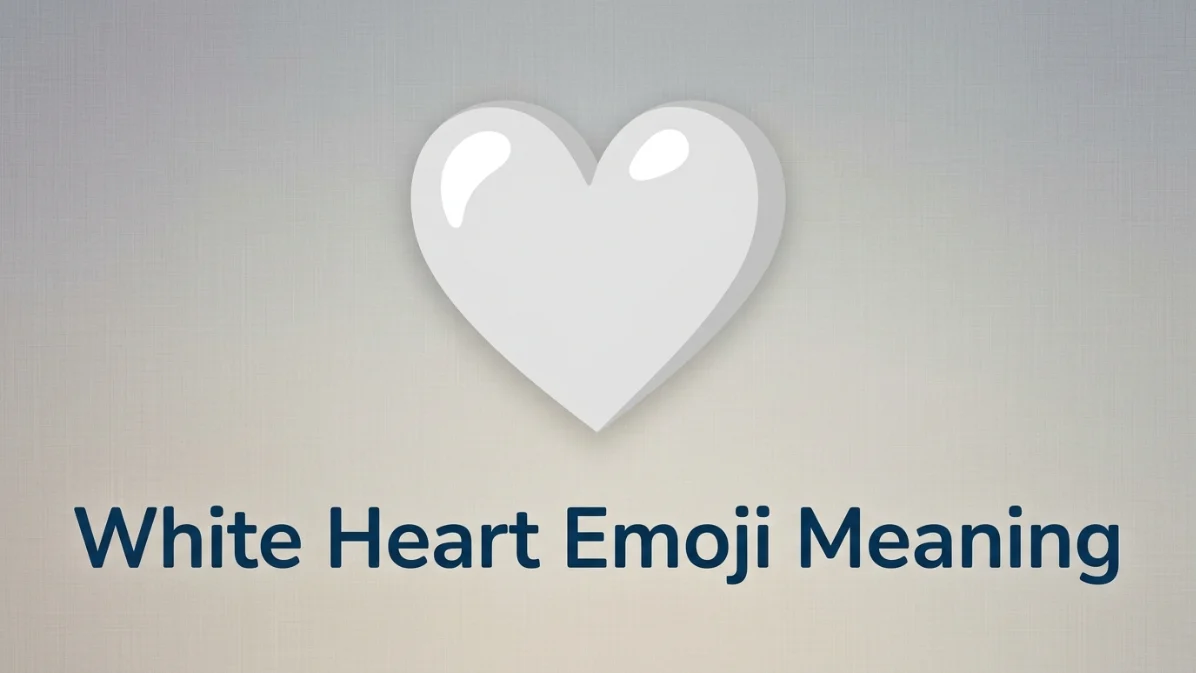

The white heart emoji 🤍 is a soft, understated symbol of love and care. Unlike the bold red heart, it usually signals pure, gentle, or peaceful affection rather than intense romance.
People use it for close friendships, family bonds, emotional support, quiet sympathy, or even simple appreciation of things that are white. Context decides the exact tone, but the overall feeling is calm and sincere.
Quick Answer: 🤍 most often means pure or sincere love, gentle support, or peaceful affection. It can be romantic, but it more commonly feels platonic, comforting, or reflective. Surrounding words and the relationship between the people involved shape how it lands.
What the White Heart Emoji Usually Means
The official Unicode name is White Heart. It was approved in 2019 as part of Unicode 12.0 and Emoji 12.0. On most platforms it appears as a filled white or light-gray heart.
In everyday use it commonly expresses:
- Pure or unconditional love (family, close friends, or a calm romantic bond)
- Emotional support or comfort during hard times
- Sympathy, remembrance, or quiet solidarity
- Peace, calm, or sincere good intentions
- Appreciation for white objects, aesthetics, or minimalist style
White as a color often carries associations of purity, innocence, peace, and, in some cultural contexts, mourning. That mix gives the emoji a broader range than many other hearts. It rarely feels loud or dramatic.
Meaning in Text Messages and Conversations
In texts, 🤍 tends to feel softer than ❤️. From a friend or family member it usually means “I care about you” or “I’m here for you.” Between partners it can still express love, just in a quieter, steadier way. Alone or paired with simple phrases, it often functions as a gentle reaction or sign of warmth.
Examples:
- “Thinking of you today 🤍” — soft support or quiet affection
- “So proud of you 🤍” — sincere encouragement
- “Rest in peace 🤍” — respectful remembrance
- “Love you, Mom 🤍” — pure family love
The same emoji can feel more intimate if the conversation is already close, or more neutral if the relationship is casual. Sender style matters: someone who rarely uses hearts may be signaling something meaningful, while a frequent heart-user may simply be choosing a soft tone.
Friendly vs. Romantic Use
🤍 is not inherently flirty. Many people reach for it precisely because it feels less charged than the red heart. In early or uncertain connections it can keep the tone warm without pressure. In established relationships it often signals steady, comfortable love rather than passionate intensity.
It can still be romantic when the rest of the message and history support that reading. The difference usually comes from the words around it and the existing dynamic, not the emoji alone.
Related Heart Emojis and How They Compare
| Emoji | Official Name | Common Meaning | Tone | Where or When It Is Used |
|---|---|---|---|---|
| 🤍 | White Heart | Pure love, support, peace, remembrance | Calm, sincere, soft | Texts, condolences, family, quiet affection |
| ❤️ | Red Heart | Strong love, romance, deep affection | Warm, intense | Partners, close declarations of love |
| 🩷 | Pink Heart | Sweet affection, softness, fondness | Playful, gentle | Crushes, friends, light romantic moments |
| 💛 | Yellow Heart | Friendship, happiness, positivity | Cheerful, casual | Best friends, light support, good vibes |
| 💙 | Blue Heart | Trust, loyalty, calm care | Steady, reliable | Friends, family, supportive messages |
| 💜 | Purple Heart | Compassion, admiration, unique bonds | Thoughtful, warm | Friends, fans, caring notes |
| 🖤 | Black Heart | Dark humor, sorrow, alternative style | Edgy, somber, ironic | Jokes, mourning, aesthetic posts |
| 🩶 | Grey Heart | Neutrality, quiet sadness, subtle care | Reserved, muted | Low-key reactions, hard-to-name feelings |
The white heart sits between pure warmth and restraint. It is softer and less romantic than ❤️, less playful than 🩷 or 💛, and less charged than 🖤. People often choose it when they want sincerity without intensity or when they need a respectful tone for difficult moments.
Common Misunderstandings
Some readers assume any heart equals romantic interest. With 🤍 that assumption is especially easy to overread. Others treat it as purely aesthetic or empty. Both extremes miss the mark. The emoji usually carries genuine positive feeling—just expressed quietly.
Cultural background can also shift interpretation. In some places white is linked more strongly to mourning or purity, which can color how the emoji is received in memorial posts or formal messages.
How to Respond
A natural reply often matches the tone:
- Return 🤍 when you feel the same warmth
- Add a short supportive phrase (“Thank you 🤍” or “Thinking of you too”)
- Use a different heart if you want to adjust the intensity (❤️ for stronger closeness, 💛 for friendly ease)
- Simply acknowledge the message if a heart feels too much in the moment
No single response is required. Matching sincerity works better than overthinking the emoji itself.
Frequently Asked Questions
Is the white heart emoji romantic? It can be, especially between partners, but it more often reads as pure or gentle affection rather than passionate romance.
What does 🤍 mean from a friend? Usually sincere care, support, or appreciation for the friendship without romantic overtones.
Can the white heart be used for sympathy? Yes. It frequently appears in messages of condolence, remembrance, or quiet solidarity.
When was the white heart emoji added? It was approved in Unicode 12.0 and Emoji 12.0 in 2019.
What’s the difference between 🤍 and ❤️? ❤️ tends to signal stronger or more romantic love. 🤍 feels calmer, purer, and more versatile for support or platonic bonds.
The white heart emoji 🤍 offers a quiet way to show care. Whether it lands as pure love, gentle support, or peaceful remembrance depends on the relationship and the words around it. Used with intention, it communicates sincerity without excess drama.
Conclusion
The white heart emoji 🤍 offers a quiet way to show care. Whether it lands as pure love, gentle support, or peaceful remembrance depends on the relationship and the words around it. Used with intention, it communicates sincerity without excess drama.