
Have you ever been scrolling through your favorite social media platform or chatting with a friend when you encountered the acronym POS? Depending on who you are talking to, this little cluster of letters can mean something entirely different. If you are a small business owner, you might think of it as a tool for managing your sales.
However, if you are a teenager on a gaming server or a frequent user of Twitter, you might see it used as a tone indicator. Understanding these nuances is vital because misinterpreting a message can lead to awkward moments or even heated arguments.
Whether you are a digital native or someone just trying to keep up with modern slang, this guide will help you navigate the various meanings of this term. Let us break down exactly what this abbreviation stands for and how to use it correctly in your daily life.
Defining the Term and Its Core Meanings
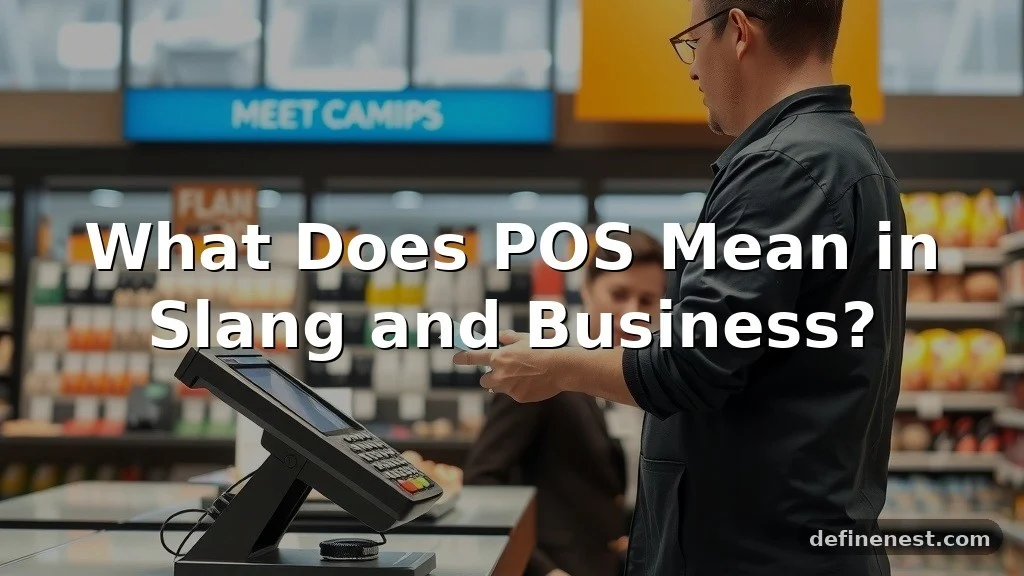
At its most basic level, an abbreviation is a shortened form of a word or phrase. The acronym POS is a classic example of how one combination of letters can represent wildly different concepts depending on the context. In the world of commerce and retail, POS stands for point of sale.
This refers to the specific time and location where a transaction is completed. It is the moment when a customer hands over payment in exchange for goods or services. You encounter this every time you swipe your card at a grocery store or pay for a coffee at a local cafe.
On the other hand, in casual online spaces, the term has taken on a life of its own as slang. Most people are familiar with its derogatory meaning, which is a profanity used to describe a person who is seen as worthless or contemptible. Because it is a highly offensive slur, it is rarely used in polite conversation.
However, the internet has a unique way of reclaiming or repurposing language. In recent years, social media users, particularly on platforms like Twitter and Discord, have started using /pos as a tone indicator. In this specific digital dialect, it stands for positive.
Adding it to the end of a sentence helps clarify that the speaker is being sincere or kind, especially when the text might otherwise be read as sarcastic or aggressive. Understanding these distinct definitions is the first step toward clear communication.
The History and Evolution of the Acronym
The history of the term POS is a tale of two very different paths. The business definition has been around for decades, evolving alongside technology. In the early days of retail, a point of sale was simply a cash register.
As technology advanced, these machines became sophisticated computers capable of tracking inventory and managing complex data. Today, modern pos systems are digital hubs that integrate everything from accounting software to customer loyalty programs. The term has become a standard part of business vocabulary, appearing in everything from internal memos to tax documents.
The slang usage has a much more chaotic history. The derogatory version of the term grew out of general street slang and became a staple of harsh, internet-based insults during the early days of message boards and chat rooms. It was used to shut down arguments or attack someone’s character.
However, the evolution of tone indicators is a much more recent phenomenon. As online communication grew more complex, people realized that text often lacks the emotional cues present in face-to-face speech. To prevent misunderstandings, users began adding tags like /s for sarcasm or /j for joking.
The use of /pos emerged from this need for clarity. It shows how language adapts to the medium. What started as a rigid business term has been transformed by the internet into a tool for emotional expression, showing just how flexible our vocabulary can be in a digital age.
Usage in Various Digital and Social Contexts
How you use the term depends entirely on where you are. If you are talking to a business partner about your latest equipment upgrade, you are talking about hardware.
If you are tweeting about a heartwarming moment, you are using it as a sentiment tag. Let us look at how this plays out in real conversations.
In a business meeting, you might hear: “We need to update our current POS system to handle contactless payments more efficiently.” Here, the speaker is clearly talking about the technology used to process sales. It is professional, direct, and focused on operational efficiency.
In contrast, consider a social media interaction. A user might post: “I really love how you stood up for your friend today. You are a good person /pos.”
In this case, the tag is essential. Without it, the comment might seem like it is being used in a sarcastic or mocking way. By adding the tag, the sender ensures the recipient knows the praise is genuine.
In gaming, the term can be more volatile. A player might shout in a chat: “That player is such a total POS for camping at the spawn point!” This is the derogatory usage.
It is used to vent frustration after a perceived unfair loss. Because gaming culture can be intense, these types of labels are common, though they are often against the community rules of many platforms. Always check the rules of the group you are in before using harsh language.
Common Misconceptions and Necessary Clarifications
One of the biggest issues with this acronym is the potential for confusion between the positive tone indicator and the offensive slur. If you see someone type /pos, they are almost certainly using it as a positive sentiment indicator.
However, if you see the letters without the slash, or if the context is an argument, it is likely being used in the negative, derogatory way. This ambiguity can cause significant problems.
A major misconception is that all uses of the term are inherently bad. People who are unfamiliar with tone indicators might see /pos and assume it is a typo or a strange way of being insulting. This is why it is so important to stay updated on internet slang.
Another point of confusion is the medical field. In medical charting, POS can sometimes refer to “post-operative status,” which describes a patient who has recently undergone surgery. While this is a niche usage, it reminds us that context is king.
Never assume you know what someone means without looking at the surrounding conversation. If you are ever unsure, it is perfectly acceptable to ask for clarification. A simple “I am not sure what you mean by that, could you explain?” can save a lot of trouble.
Similar Terms and Alternatives for Different Situations
When you want to convey a specific meaning, it helps to have options. If you are worried about using a term that might be misinterpreted, you can use alternatives that are clearer and less prone to confusion.
For the business context, you might use terms like “cash register,” “checkout terminal,” or “payment processing software.” These are unambiguous and work well in professional settings where you want to avoid jargon.
For the slang context, it gets trickier. If you are using it as a tone indicator, you could also use emojis like a heart, a smiley face, or a thumbs-up. Emojis are universally understood and do not carry the risk of being confused with a slur.
If you are trying to express that someone is a bad person, you might use words like “jerk,” “unreliable,” or “rude.” These are specific and avoid the ambiguity of an acronym that has multiple, conflicting meanings.
| Context | Term | Alternative |
|---|---|---|
| Business | POS System | Checkout terminal |
| Positive Tone | /pos | 🙂 or <3 |
| Negative Slang | POS | Jerk or bully |
| Medical | POS | Post-op |
Having these alternatives in your back pocket allows you to communicate effectively without accidentally causing offense or confusion.
How to Respond to the Term in Different Settings
Responding to the acronym depends on the intent of the sender. If someone uses /pos in a friendly way, a simple “Thank you!” or a reciprocal emoji is usually enough. It shows you understood the sentiment and are participating in the positive vibe of the conversation.
If you encounter the term in a business setting, your response should be professional. If a colleague mentions a problem with the POS system, your response might be, “I will log that in our maintenance software and see if we can get a technician to look at it.” This keeps the focus on solving the problem and maintaining the business flow.
If you encounter the term used as an insult, the best approach is often silence or de-escalation. Engaging with someone who is using hostile language rarely leads to a productive outcome. You might say, “I think we should keep this conversation respectful,” or simply disengage from the chat entirely.
Protecting your own peace of mind is more important than winning an argument with a stranger online. Always remember that your response sets the tone for the rest of the interaction.
Regional and Cultural Variations in Usage
Language is not static, and the way we use acronyms can vary based on where we live and the culture we belong to. In some regions, the business meaning is the only one most people know. In other areas, especially among younger generations, the slang meaning is dominant.
In global business, the term is widely understood. Because it is a standard industry term, you can use it in a meeting in New York, London, or Tokyo, and you will likely be understood.
However, the slang usage is highly dependent on Western internet culture. If you try to use /pos as a tone indicator in a non-English speaking country, it may not be recognized at all.
Furthermore, some cultures are more direct than others. In some places, being blunt is valued, while in others, indirect communication is preferred. Using an acronym that can be interpreted as an insult might be seen as much more offensive in a culture that values politeness.
Always be mindful of your audience. If you are communicating with people from different backgrounds, it is usually safer to use clear, full words rather than relying on abbreviations that might get lost in translation.
Usage in Online Communities and Dating Apps
Online dating and community forums are places where abbreviations thrive. On apps like Tinder or Bumble, a user might write something like “I hate it when people are a total POS.”
This is a way of setting a boundary or describing what they dislike in a partner. It is a quick way to filter for shared values.
In gaming communities, you might see it used in chat logs to report toxic behavior. However, be careful.
Using the term yourself can sometimes get you reported for harassment, even if you are just using it to describe someone else’s behavior. The rules on platforms like Discord are often strict regarding derogatory language.
If you are using these platforms, my biggest tip is to lead with kindness. If you see someone acting in a way you dislike, address the behavior rather than the person. Instead of calling someone a name, you could say, “Your behavior in this match was really frustrating.”
This is much more effective and less likely to get you banned from the community. When in doubt, lean toward being polite.
Hidden Meanings and the Importance of Tone
We have touched on this, but it is worth emphasizing: tone is everything in digital communication. Because we cannot see facial expressions or hear the inflection in a voice, we have to rely on context clues. The term we are discussing is a perfect example of why this is so difficult.
The difference between a helpful, positive sentiment and a harsh, offensive insult is often just a single forward slash. This is why the “tone indicator” movement is so important. It helps bridge the gap between intent and interpretation.
If you are ever in doubt about how a message was meant, look at the other words used in the sentence. Are there other positive words? Is the person usually kind?
Sometimes, people use these terms to test boundaries or to see how others react. If you feel like someone is using the term in a way that makes you uncomfortable, trust your gut.
You are not obligated to continue a conversation that feels toxic. Remember that you have the power to define the terms of your own digital space by choosing how you respond.
Professional Communication and Formal Alternatives
Is it ever appropriate to use this term in a professional setting? Only if you are referring to the business tool. Even then, it is often better to be specific.
Instead of saying “The POS is down,” you could say “The point of sale system is currently offline.” This sounds more polished and professional.
If you are writing a report or a formal email, avoid slang entirely. There is never a reason to use the derogatory version of this acronym in a professional environment.
It is unprofessional, rude, and can lead to HR issues. If you are in a situation where you need to describe someone’s poor performance, use professional language like “unreliable,” “not meeting performance standards,” or “disruptive to the team.”
By sticking to clear, professional language, you build a reputation as someone who communicates with clarity and respect. This is a vital skill in any career, whether you are in retail, tech, or any other industry. Your words are a reflection of your professional brand, so choose them wisely.
Frequently Asked Questions
1. Is it okay to use /pos in a text message to a friend?
Yes, it is a great way to ensure your friend knows you are being sincere and not sarcastic.
2. Does POS always mean something bad in slang?
Not anymore. With the rise of tone indicators, /pos is frequently used to mean positive.
3. Can I use the term in a business email?
Only if you are referring to the checkout system, but using the full term “point of sale” is usually better.
4. Why do people use tone indicators like /pos?
They help prevent misunderstandings by clarifying the intent behind a text message or social media post.
5. What should I do if someone calls me a POS?
If it is in a professional setting, report it to HR. If it is online, block and report the user for harassment.
Is the medical meaning of POS
6. Is the medical meaning of POS common?
It is common in medical documentation, but it is specific to that field and not something you would encounter in casual conversation.
7. Are there other ways to show a positive tone online?
Yes, you can use emojis, exclamation points, or just clear, kind language.
Understanding the various meanings of this acronym is a great example of how digital literacy works in the modern world. By paying attention to context, knowing when to use formal language, and being mindful of how your words affect others, you can navigate any conversation with confidence.
Whether you are managing a shop or chatting with friends, clarity is the ultimate goal. Keep these lessons in mind, and you will never be confused by this term again.