
Have you ever received a message that simply says “OFC!” and wondered what it means? If you are a student, parent, gamer, social media user, or someone who chats online every day, you are not alone. Internet slang changes quickly, and keeping up with new abbreviations can be confusing.
This guide is written especially for beginners, teenagers, parents, professionals, and anyone who wants to understand modern texting language. Whether you use WhatsApp, Snapchat, Instagram, Discord, TikTok, Facebook Messenger, or simple SMS, you have probably seen OFC appear in conversations.
The good news is that OFC is one of the easiest and most friendly internet abbreviations to understand. Knowing what it means helps you avoid confusion, reply naturally, and communicate with confidence in online conversations.
By the end of this guide, you will know exactly what OFC meaning in text is, when to use it, when not to use it, and how to respond naturally.
What Does OFC Mean in Text?
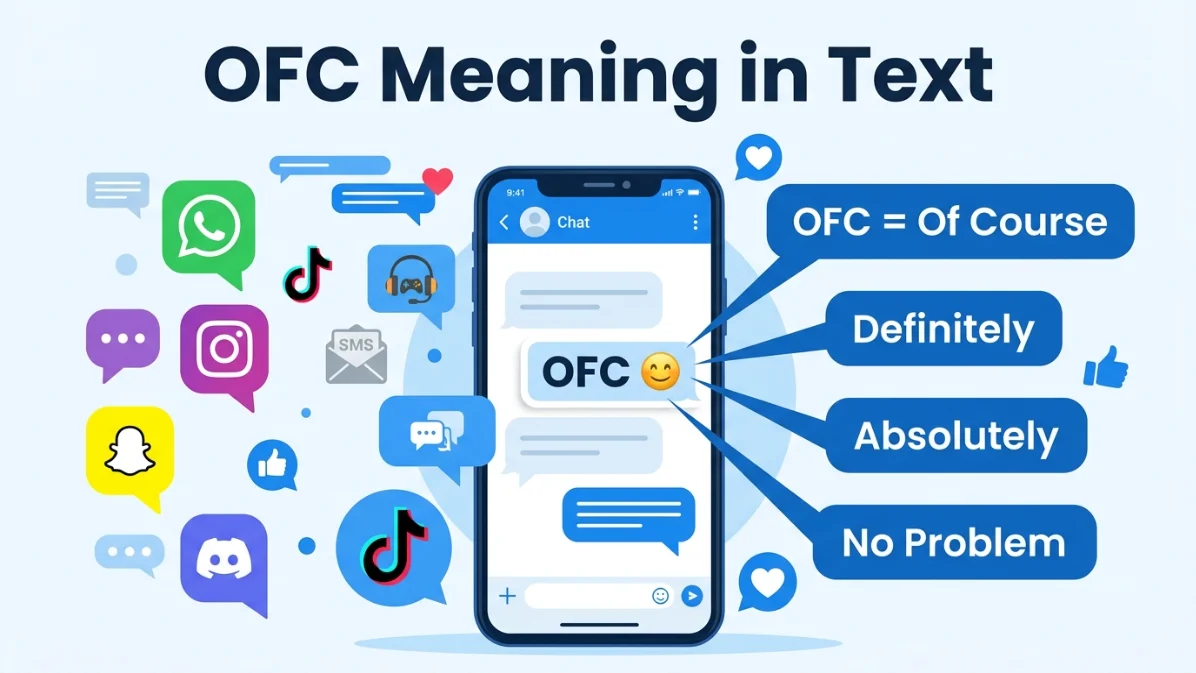
OFC stands for “Of Course.”
People use it as a short and friendly way to say:
- Yes
- Definitely
- Absolutely
- Certainly
- No problem
Instead of typing the full phrase “of course,” many people simply type OFC because it is faster.
The abbreviation usually expresses agreement, reassurance, or willingness to help.
OFC Meaning in Chat: In chat and text messaging, OFC most commonly stands for “Of Course”
Quick Definition
| Abbreviation | Full Form | Meaning |
|---|---|---|
| OFC | Of Course | Definitely, certainly, yes |
Example 1
Alex: Can you send me the notes?
Sarah: OFC!
Meaning: Yes, I’ll send them.
Example 2
Jake: Are you coming tonight?
Emma: OFC 😊
Meaning: Definitely.
Example 3
Mom: Did you finish your homework?
Son: OFC!
Meaning: Yes, I already finished.
Notice how the meaning stays the same while the situation changes.
Background and History of OFC
Unlike many internet slang words, OFC did not begin as a meme or joke. It is simply a shortened version of the phrase “of course.”
The expression “of course” has existed in English for centuries. As texting became popular during the early 2000s, users started shortening common phrases to save time and reduce typing.
Some well known examples include:
- LOL
- BRB
- IMO
- BTW
- OFC
As smartphones, messaging apps, and social media became more common, abbreviations like OFC spread quickly.
Today, OFC appears regularly on:
- Snapchat
- Discord
- TikTok
- X (formerly Twitter)
- Facebook Messenger
- SMS
Interestingly, younger users often type ofc in lowercase instead of uppercase.
Both versions mean exactly the same thing.
- OFC
- ofc
Neither spelling changes the meaning.
How OFC Is Used in Different Situations
Text Messages
The most common place to see OFC is in personal conversations.
Friend: Want pizza tonight?
You: OFC!
Social Media
People use it while replying to comments.
Comment:
Will you upload another video?
Creator:
OFC ❤️
Gaming
Gamers often use OFC during multiplayer matches.
Player 1:
Need backup?
Player 2:
OFC! Coming now.
School Chats
Students frequently use OFC.
Student A:
Can you explain Question 5?
Student B:
OFC.
Family Conversations
Dad:
Can you help your sister?
You:
OFC.
Workplace Chats
Sometimes coworkers use OFC in casual workplace messaging.
Manager:
Can you join today’s meeting?
Employee:
OFC!
However, it depends on the company’s communication style.
Common Misconceptions About OFC
Although OFC usually means “Of Course,” people sometimes misunderstand it.
Misconception 1
OFC is rude.
Not necessarily.
Tone matters.
Compare these:
Friend: Can you help?
Reply: OFC 😊
Friendly.
Friend: Can you help?
Reply: OFC.
May sound slightly serious.
Misconception 2
OFC always sounds excited.
Actually, emojis and punctuation affect the tone.
Compare:
- OFC!!
- OFC 😊
- OFC.
- ofc lol
Each feels different.
Misconception 3
OFC is only for teenagers.
False.
People of many ages use it online.
Similar Terms and Alternatives
Many abbreviations express agreement.
| Term | Meaning | Tone |
|---|---|---|
| OFC | Of Course | Friendly |
| Yep | Yes | Casual |
| Yup | Yes | Relaxed |
| Sure | Certainly | Neutral |
| Definitely | Strong agreement | Positive |
| Absolutely | Strong agreement | Enthusiastic |
| Certainly | Formal | Professional |
| No problem | Happy to help | Friendly |
| You bet | Absolutely | Casual |
Choose the expression based on your audience.
How to Respond to OFC
Casual Response
Friend: OFC!
You: Thanks!
Funny Response
Friend: OFC 😂
You: I knew you’d say that!
Professional Response
Coworker: OFC.
You: Thank you. I appreciate it.
Privacy Conscious Response
Friend: Can I ask something personal?
You: OFC, if you’re comfortable sharing.
Or
You: OFC, but only if you want to.
Friendly Response
Friend: OFC 😊
You: You’re the best!
Regional and Cultural Differences
OFC is understood in many English speaking countries.
These include:
- United States
- Canada
- United Kingdom
- Australia
- New Zealand
In countries where English is a second language, OFC is also common because social media has made English internet slang more global.
Many users mix OFC with their local language.
Example:
- “OFC yaar.”
- “OFC bhai.”
- “OFC amigo.”
- “OFC bro.”
This code switching is very common online.
OFC vs Similar Expressions
| Expression | Full Meaning | Best Used When |
|---|---|---|
| OFC | Of Course | Casual chats |
| Sure | Agreement | Neutral conversations |
| Absolutely | Strong agreement | Positive responses |
| Definitely | Confident yes | Everyday conversations |
| Certainly | Formal agreement | Business communication |
| Yep | Yes | Friends |
| No worries | It’s okay | Friendly reassurance |
OFC on Social Media, Gaming, and Dating Apps
Followers often reply with OFC to comments.
Snapchat
Friends use OFC for quick replies.
TikTok
Creators reply to fans using OFC.
Discord
Gamers use OFC constantly.
Player A:
Raid tonight?
Player B:
OFC!
Tinder
People sometimes respond casually.
Match:
Want to meet this weekend?
Reply:
OFC 😊
Be careful not to overuse abbreviations in early conversations because some people prefer complete sentences.
OFC appears in discussions, especially when users strongly agree with another comment.
Does OFC Have Hidden or Offensive Meanings?
Generally, no.
OFC almost always means “Of Course.”
However, context always matters.
Sometimes people use it sarcastically.
Example:
Person:
Another meeting today.
Reply:
OFC…
Here, the speaker is expressing frustration instead of enthusiasm.
Tone changes everything.
Unlike some internet abbreviations, OFC is not considered offensive.
Still, avoid assuming everyone’s intention without reading the conversation.
Is OFC Appropriate for Professional Communication?
It depends.
Acceptable
Internal team chats.
Slack conversations.
Microsoft Teams.
Friendly coworkers.
Better Alternatives
When emailing clients or communicating formally, write the full phrase instead.
Instead of:
OFC
Use:
- Of course.
- Certainly.
- Absolutely.
- I’d be happy to help.
- Yes, certainly.
Professional writing benefits from complete words.
Frequently Asked Questions
What does OFC mean in text?
It stands for “Of Course.”
Is OFC rude?
No. It is usually friendly and positive.
Is OFC the same as “of course”?
Yes. It is simply the abbreviated form.
Can adults use OFC?
Yes. People of all ages use it.
Is OFC appropriate at work?
Only in casual workplace chats. Use “of course” in formal emails.
Is OFC used on Snapchat?
Yes. It is very common on Snapchat and other messaging apps.
Does OFC have another meaning?
In most online conversations, it means “Of Course.” Other niche meanings exist in specialized fields, but they are uncommon in everyday texting.
Conclusion
The OFC meaning in text is simple but incredibly useful to know. It stands for “Of Course” and is one of the most common abbreviations used in modern digital conversations. Whether you are chatting with friends, replying on social media, playing online games, or messaging coworkers in an informal setting, OFC helps you express agreement quickly and naturally.
Remember that tone, punctuation, and context can slightly change how OFC feels. Adding an emoji makes it friendlier, while using it alone can sound more direct. Although it is perfect for casual communication, writing the full phrase “of course” is usually the better choice in professional emails and formal messages.
Now that you understand OFC, you can recognize it instantly, use it confidently, and respond in a way that fits every conversation.