
Ever received a text that says “DW” and wondered what it means? You are not alone. Short forms like this are everywhere in chats, DMs, Snapchat, TikTok comments, and group messages.
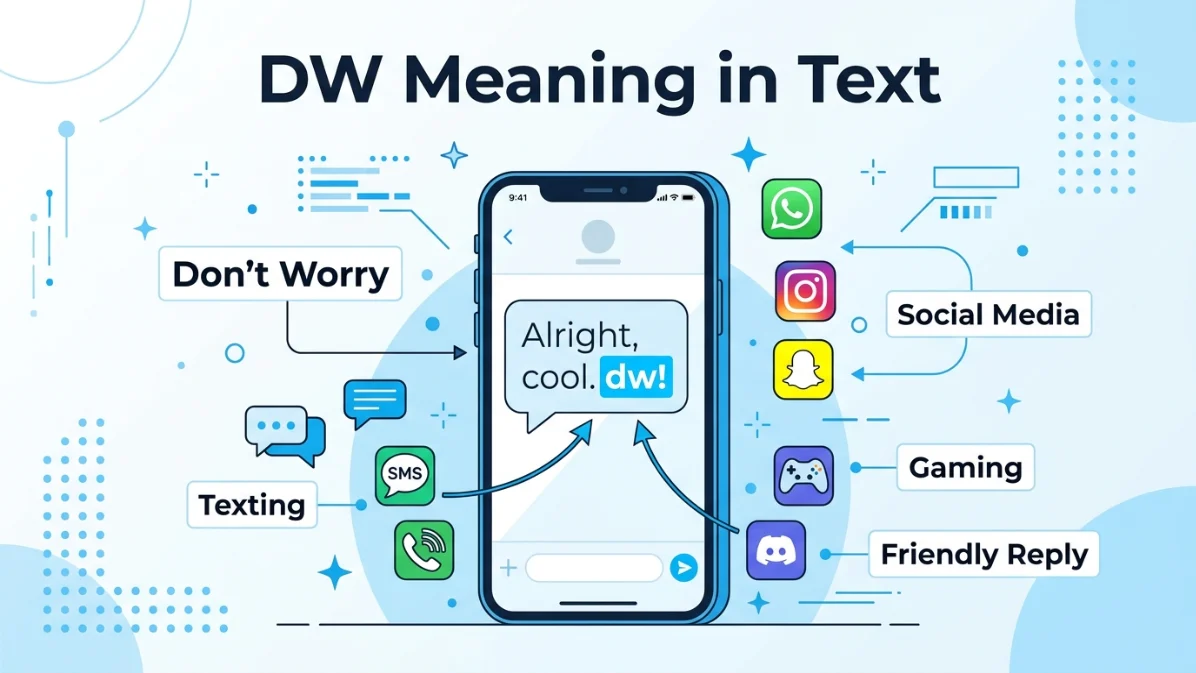
DW usually means “Don’t Worry.” It is a quick way to reassure someone, calm them down, or tell them that something is not a big deal. For example, if a friend says, “Sorry I’m late,” you might reply, “DW, take your time.”
The meaning is simple, but the tone can change with the situation. In a friendly chat, DW can sound warm and relaxed. In a serious conversation, it may feel brief or even slightly dismissive.
This guide explains DW meaning in text, what DW stands for, how people use it, and when you should use it yourself. You will also see real texting examples, common meanings, similar slang, and situations where DW may not be the right choice. By the end, you will know exactly what DW means and how to use it naturally in 2026.
What Does DW Mean in Text?
DW stands for “Don’t Worry.”
It is a friendly and reassuring abbreviation people use to comfort someone or tell them that everything is fine.
Instead of typing the full phrase “Don’t worry,” people simply write “DW.”
It usually means:
- Everything is okay.
- No problem.
- It’s not a big deal.
- Relax.
- You don’t need to stress.
The abbreviation saves time while keeping conversations casual and friendly.
Example 1
Alex: Sorry I’m five minutes late.
Emma: DW. I’m still parking.
Example 2
Chris: I think I broke your charger.
Ryan: DW. I already bought a new one.
Example 3
Sarah: I forgot to send the photo.
Lisa: DW. You can send it tomorrow.
In each conversation, DW reduces stress and reassures the other person.
Quick Meaning
| Abbreviation | Full Form | Meaning |
|---|---|---|
| DW | Don’t Worry | Everything is okay or no problem |
DW Meaning in Text and Chat
The dw meaning in texting is usually “Don’t Worry.” It is a common abbreviation used to reassure someone, tell them not to stress, or let them know that something is okay. The meaning of dw can be understood from the tone and context of the conversation.
If you’re wondering what does dw mean, it generally means “Don’t Worry.” For example, someone might say, “DW, I’ll handle it,” to reassure a friend. When someone asks what does dw mean in text, the answer is usually the same.
DW Full Form and Abbreviation
The dw full form is “Don’t Worry.” The dw full form in chat also has this meaning and is widely used in casual conversations. As a dw abbreviation, it saves time while keeping the message friendly and relaxed.
You may see phrases such as what dw means or dw means when someone is trying to understand the abbreviation. In most texting situations, DW is simply a quick way to say “Don’t Worry.”
The dw meaning in chat can sometimes carry a comforting tone. For example, “DW about being late” tells the other person that being late isn’t a problem. However, like many abbreviations, DW can have other meanings in specific contexts, so the surrounding conversation should always be considered.
Background and History of DW
Unlike many internet abbreviations that originated from gaming communities, DW comes directly from the everyday English phrase “Don’t worry.”
As text messaging became popular during the late 1990s and early 2000s, people began shortening common expressions to save characters and type faster.
Some of the earliest texting abbreviations included:
- LOL
- BRB
- OMG
- IDK
- BTW
- DW
Over time, smartphones replaced old keypad phones, but abbreviations remained popular because they make conversations faster.
Today, DW is commonly seen on:
- Snapchat
- Facebook Messenger
- Discord
- Telegram
- TikTok comments
- Gaming chats
- SMS conversations
Unlike many slang terms that disappear after a few years, DW has stayed popular because its meaning is simple, polite, and universally understood.
How Is DW Used in Different Situations?
In Text Messages
This is the most common use.
Jake: Sorry for replying late.
Anna: DW. I know you’ve been busy.
On Snapchat
Friends often use it after someone apologizes.
Friend: I accidentally opened your Snap.
You: DW 😂
On Instagram
Someone misses your live stream.
Follower: Sorry I couldn’t join.
Creator: DW. I’ll upload the replay.
In Gaming
Players use DW to keep teammates calm.
Player 1: I missed the shot.
Player 2: DW. We’ll win the next round.
At School
Students reassure classmates.
Student: I forgot my homework.
Friend: DW. The teacher is collecting it tomorrow.
At Work
Although informal, coworkers may use it privately.
Coworker: Sorry for the delay.
Manager: DW. Thanks for letting me know.
Common Misconceptions About DW
Although DW almost always means Don’t Worry, some people misunderstand it.
Misconception 1
DW means “Dear Wife.”
This meaning exists, but it is mostly found in parenting blogs and family discussion forums.
Example:
“My DW loves traveling.”
Here, DW means Dear Wife, not Don’t Worry.
Misconception 2
DW is rude.
Actually, it usually sounds friendly.
However, replying with only DW can sometimes appear short if someone is discussing a serious issue.
Instead, write:
“DW. Everything will be okay.”
Misconception 3
DW is only for teenagers.
Not true.
Adults, professionals, parents, students, and gamers all use it.
Similar Terms and Alternatives
Several expressions have the same purpose.
| Expression | Meaning | Tone |
|---|---|---|
| DW | Don’t Worry | Friendly |
| NP | No Problem | Casual |
| NVM | Never Mind | Neutral |
| It’s okay | Reassurance | Friendly |
| No worries | Relaxed | Informal |
| All good | Everything is fine | Casual |
| You’re fine | Comforting | Friendly |
| Don’t stress | Relax | Casual |
Each phrase offers reassurance, but the tone may vary slightly.
How to Respond to DW
Here are several natural replies.
Casual Response
Friend: DW.
You: Thanks!
Funny Response
Friend: DW.
You: Too late. I already panicked 😂
Appreciative Response
Friend: DW.
You: Thanks for understanding.
Professional Response
Manager: DW. We’ll fix it together.
Employee: Thank you. I appreciate your support.
Privacy Conscious Response
Friend: DW.
You: Thanks. I’d rather not discuss it right now.
Regional and Cultural Differences
DW is widely understood in English speaking countries including:
- United States
- Canada
- United Kingdom
- Australia
- New Zealand
People learning English also use it around the world.
In some countries, users prefer writing the full phrase because abbreviations are less common.
Different languages have their own versions.
Spanish
“No te preocupes.”
French
“Ne t’inquiète pas.”
German
“Keine Sorge.”
Even when speaking other languages, bilingual users often type DW when chatting in English.
DW Compared With Similar Abbreviations
| Abbreviation | Full Form | Purpose | Emotion |
|---|---|---|---|
| DW | Don’t Worry | Reassure someone | Comfort |
| IDK | I Don’t Know | Express uncertainty | Neutral |
| NVM | Never Mind | End discussion | Neutral |
| BRB | Be Right Back | Temporary absence | Informative |
| TBH | To Be Honest | Introduce honesty | Honest |
| IMO | In My Opinion | Share opinion | Neutral |
| NP | No Problem | Accept apology | Friendly |
| TY | Thank You | Show gratitude | Positive |
The biggest difference is that DW focuses on reducing someone’s stress.
DW in Online Communities and Dating Apps
Tinder
People often use DW after canceling plans.
Alex: Sorry I had to leave early.
Taylor: DW. Maybe next weekend.
X (Twitter)
Followers reassure each other after mistakes.
“DW. Everyone makes errors.”
Discord
Players encourage teammates.
“DW. We still have another round.”
Users often write:
“DW. This happens to everyone.”
Online Games
Competitive players commonly type:
“DW.”
“GG.”
“Next game.”
This keeps the team positive.
Tips
- Read the tone first.
- Don’t assume sarcasm.
- Use emojis if needed.
- Avoid overusing abbreviations in important conversations.
Does DW Have Any Hidden or Offensive Meaning?
Generally, no.
The vast majority of people use DW to mean Don’t Worry.
However, context always matters.
For example:
“DW about it.”
Sounds caring.
“DW.”
Can sound dismissive if someone is discussing something emotional.
Some niche communities may use DW differently, but those meanings are uncommon.
Overall, DW is considered safe, polite, and positive.
Is DW Appropriate for Professional Communication?
It depends.
Appropriate
Private chat with coworkers.
Internal team messaging.
Casual workplace conversations.
Avoid
Job applications.
Business proposals.
Client emails.
Formal reports.
Professional alternatives include:
- Don’t worry.
- No problem.
- Thank you for letting me know.
- It’s completely fine.
- Please don’t be concerned.
These sound more polished in formal communication.
Frequently Asked Questions
What does DW mean in text?
It usually means Don’t Worry.
Is DW rude?
No. It is generally friendly and reassuring.
Can DW have another meaning?
Yes. In some communities it can mean Dear Wife, but Don’t Worry is far more common in texting.
Is DW popular on Snapchat?
Yes. Many Snapchat users use it when reassuring friends.
Can I use DW at work?
Only in casual workplace chats. Avoid it in formal emails.
Is DW used in gaming?
Yes. Gamers often use it to encourage teammates after mistakes.
Should I reply with DW?
Yes, if the conversation is informal and you want to reassure someone.
Conclusion
The DW text meaning is simple but incredibly useful. It stands for “Don’t Worry” and is one of the most common abbreviations used in texting, social media, gaming, and everyday online conversations. Its purpose is to reassure people, reduce stress, and keep conversations friendly.
While DW is perfect for casual chats with friends, classmates, family, and teammates, it should be used carefully in professional communication where complete phrases sound more appropriate. Context also matters because a short reply can sometimes seem dismissive if someone is discussing a serious issue.
Now that you understand what DW means, you’ll be able to recognize it instantly, respond naturally, and use it confidently across different platforms. The next time someone texts “DW,” you’ll know they’re simply telling you to relax because everything is okay.