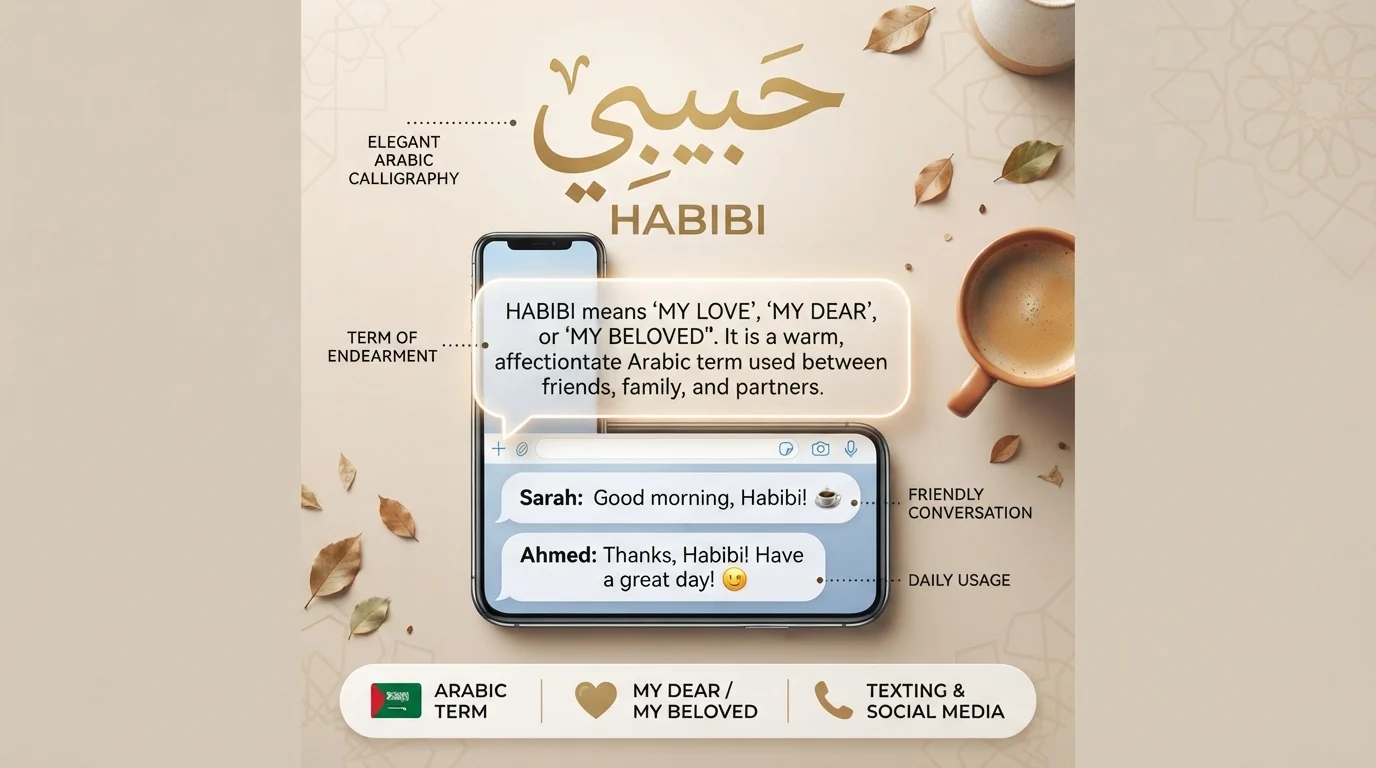

Someone may call you “habibi” in a text, Instagram comment, or casual conversation, and you might wonder whether it is romantic. The habibi meaning is usually “my dear,” “my beloved,” or “my darling” in Arabic. However, it does not automatically mean romantic love.
Arabic speakers use habibi in several relationships and situations. A close friend, family member, partner, or even a familiar person may use it depending on the context. The speaker’s tone, your relationship, and surrounding words often reveal what they really mean.
What Does Habibi Mean?
Habibi (حبيبي) is an Arabic term of affection that literally means “my beloved” or “my dear.” It comes from habib, meaning beloved or dear, with the possessive ending that means “my.”
| Detail | Explanation |
|---|---|
| Most Common Meaning | My dear, my beloved, or my darling |
| Arabic | حبيبي |
| Tone | Affectionate, warm, friendly, or romantic |
| Common Use | Everyday conversation, texts, social media, and relationships |
| Formal or Informal | Mostly informal |
The word can express affection without necessarily expressing romantic feelings. For example, a friend might say, “Thanks, habibi!” simply to sound warm and friendly.
The exact feeling depends heavily on who says it and why.
Habibi Meaning in Text and Chat
In texting, habibi meaning usually stays close to its Arabic meaning: “my dear,” “my beloved,” or “my darling.”
People may use it when thanking someone, greeting them, joking with them, reassuring them, or showing affection.
For example:
“You made it home safely, habibi?”
Here, habibi adds warmth and affection. It could sound romantic between partners, but it could also be a familiar expression between close people.
You may also see phrases such as:
“Good morning, habibi.”
“Come on, habibi.”
“Thank you, habibi!”
“Don’t worry, habibi.”
In English-language chats, people sometimes use habibi because they like the Arabic expression itself. In those situations, the speaker may not be using it in a strictly Arabic-speaking context.
Is Habibi Romantic?
Sometimes, but not always.
In a romantic relationship, habibi can mean something similar to “my love,” “baby,” or “darling.” Couples may use it naturally as a term of endearment.
However, Arabic speakers can also use habibi toward friends, relatives, children, and other familiar people. The relationship matters more than the word by itself.
Compare these examples:
“I miss you, habibi ❤️”
This is more likely to have a romantic or intimate tone.
“Thanks for helping me, habibi!”
This can simply sound friendly and affectionate.
“Relax, habibi, it’s okay.”
This may be comforting rather than romantic.
So, calling something romantic based only on habibi can lead to a misunderstanding.
Habibi Meaning on TikTok, Instagram, Snapchat, and WhatsApp
The meaning generally does not change dramatically by platform. TikTok, Instagram, Snapchat, and WhatsApp users typically use habibi as an affectionate Arabic expression.
What changes is often the style of use.
On TikTok, someone might use habibi humorously in a caption, comment, or video.
“Habibi, we have a problem 😂”
The tone here can be playful rather than romantic.
On Instagram, it may appear in comments, captions, or direct messages.
“Looking good, habibi ❤️”
The heart emoji can make the message feel more affectionate or flirty.
On Snapchat, it can appear in quick, casual exchanges.
“Where are you, habibi?”
On WhatsApp, especially among people who already use Arabic expressions, it may sound completely natural in everyday conversation.
The platform gives you clues, but the relationship and message context usually matter more.
How Context Changes the Meaning of Habibi
When you receive habibi, look beyond the single word. The surrounding message often tells you much more.
The Relationship
A romantic partner using habibi will usually sound more intimate than a coworker or casual acquaintance.
The Message
“Goodnight, habibi ❤️” carries a different tone from “Move over, habibi 😂.”
Emojis
A heart, kiss, or affectionate emoji can strengthen a romantic interpretation. Laughing emojis can make the word playful.
Punctuation
“Habibi!” can sound excited or affectionate, while “Habibi…” may sound teasing, dramatic, or frustrated.
Conversation Timing
If someone suddenly starts using habibi after a personal or emotional conversation, the phrase may carry more affection than usual.
In other words, the word gives you a general meaning, while context gives you the specific meaning.
Real Conversation Examples
Friends
Person A: “I finally passed my exam!”
Person B: “Yesss, habibi! I knew you could do it.”
Meaning: This is a warm, supportive use between friends and does not necessarily suggest romance.
Romantic Conversation
Person A: “Text me when you get home.”
Person B: “I will, habibi ❤️”
Meaning: In a relationship, the word works as an affectionate term similar to “my love” or “darling.”
Family Conversation
Person A: “I made dinner for everyone.”
Person B: “Thank you, habibi!”
Meaning: Here, the expression can show family affection and appreciation without a romantic meaning.
Is Habibi Rude?
No, habibi is generally affectionate rather than rude. However, tone can change its effect.
Someone might use it sincerely, jokingly, teasingly, or even sarcastically. For example:
“Sure, habibi, whatever you say.”
Depending on the situation, that could sound playful or slightly sarcastic.
A speaker may also use exaggerated affection as a joke. That does not make the word inherently offensive.
Is Habibi Flirty?
Habibi can be flirty when the surrounding conversation is romantic or suggestive.
For example:
“You looked amazing tonight, habibi 😉”
The combination of wording and emoji makes the tone more flirtatious.
But habibi alone does not prove that someone is flirting. Friends and family members may use the same word affectionately.
How to Reply to Habibi
Your best reply depends on the relationship and the tone of the original message.
Friendly Replies
“Thanks, habibi!”
“Appreciate you, habibi.”
“You’re sweet!”
“Of course, my friend.”
Funny Replies
“Easy there, habibi 😂”
“Okay, habibi, calm down.”
“Someone’s feeling affectionate today 😂”
Flirty Replies
“Anything for you, habibi ❤️”
“Only if you say it like that 😉”
“You’re making it hard not to smile.”
Replies When You Are Confused
“What do you mean by habibi?”
“Are you using that as a friendly nickname?”
These replies let you clarify the tone without making assumptions.
When to Use Habibi
Use habibi when the relationship already supports a warm, informal tone. It can fit casual texts, social media comments, family conversations, close friendships, and romantic chats.
It can also appear in multilingual conversations where Arabic words naturally mix with English.
The key is familiarity. A term of affection can feel natural from a close friend but awkward from someone you barely know.
When to Avoid Habibi
You usually do not need habibi in formal writing. Professional emails, job applications, academic assignments, official announcements, and client communication normally call for clearer, neutral wording.
That does not mean the term is universally inappropriate. In a workplace where colleagues regularly use informal or multilingual expressions, it may be perfectly understood. Still, when the relationship or audience is unclear, a neutral phrase is safer.
Common Mistakes
| Common Mistake | Correct Understanding |
|---|---|
| Assuming habibi always means romantic love | It can also be friendly, familial, playful, or affectionate |
| Treating every use as flirting | The relationship and surrounding message determine the tone |
| Assuming the spelling changes the meaning completely | Variations such as “habibi” and “habiby” usually reflect transliteration choices |
Another common mistake is confusing habibi with its feminine counterpart, habibti. Arabic uses different forms depending on grammatical gender, although English-language users do not always follow those distinctions consistently.
Similar Arabic Terms
| Term | Meaning | Main Difference |
|---|---|---|
| Habibti | My dear, my beloved | Feminine form commonly addressed to a woman |
| Ya Habibi | Oh my dear / Oh my beloved | Adds “ya,” an Arabic form of direct address |
| Hayati | My life | Another affectionate expression with a different literal meaning |
| Qalbi | My heart | More literally expresses “my heart” |
| Habib | Beloved or dear person | Does not carry the same “my” possessive form |
These expressions can overlap emotionally, but they are not exact substitutes in every sentence.
Origin and Popularity
Habibi is an Arabic word rather than an abbreviation created for texting or social media. Its written form is حبيبي, and its meaning comes from the Arabic word habib, which refers to someone beloved or dear.
There is no single social media origin for the term. It has existed as part of Arabic vocabulary and everyday expression independently of modern platforms.
Today, English speakers may also use habibi because of cultural familiarity, multilingual conversations, music, entertainment, memes, or personal connections with Arabic speakers. That broader online usage does not erase its original Arabic meaning.
Quick Recap
- Habibi commonly means “my dear,” “my beloved,” or “my darling.”
- It can be romantic, friendly, familial, playful, or affectionate.
- The speaker’s relationship and surrounding message matter more than the word alone.
- The term appears naturally in texts, social media, WhatsApp, TikTok, Instagram, and everyday conversation.
- If the tone is unclear, ask for clarification instead of assuming the person is flirting.
Frequently Asked Questions
What does habibi mean in text?
It usually means “my dear” or “my beloved,” used affectionately between friends, family members, or romantic partners.
Is habibi rude?
Habibi is generally affectionate, although sarcasm or unusual wording can make it sound teasing or less sincere.
What does habibi mean on TikTok?
On TikTok, habibi usually keeps its Arabic affectionate meaning but may be used playfully in captions, comments, or jokes.
How should you reply to habibi?
Reply warmly, humorously, or flirtatiously according to your relationship and the tone of the original message.
Can habibi have different meanings?
Yes, habibi can express friendship, family affection, romance, comfort, teasing, or casual warmth depending on context.
Final Thoughts
The simplest habibi meaning is “my dear,” “my beloved,” or “my darling.” It is an Arabic term of affection, but its emotional meaning can shift from friendly to romantic depending on the situation.
When you see habibi in a text, do not judge the entire message from that one word. Consider who sent it, what they said around it, their usual communication style, and any emojis or punctuation. Used naturally, habibi can be a warm and expressive way to address someone you care about.