
You have likely seen it popping up in the comments section of a viral video or perhaps a friend sent it to you after you shared a bit of bad news. If you are wondering why people are typing those two words, you are not alone. The phrase has taken over social media feeds, gaming chats, and group texts recently.
It is a playful, often sarcastic way to react when things do not go as planned. Whether you are a parent trying to understand your teenager’s new favorite slang or a gamer who just got trolled in a lobby, knowing the meaning behind this phrase helps you navigate modern digital communication. In this article, we will break down exactly what this expression implies, how it evolved from an old sound effect into a viral sensation, and how you should handle it when it lands in your inbox.
Understanding the Meaning and Definition
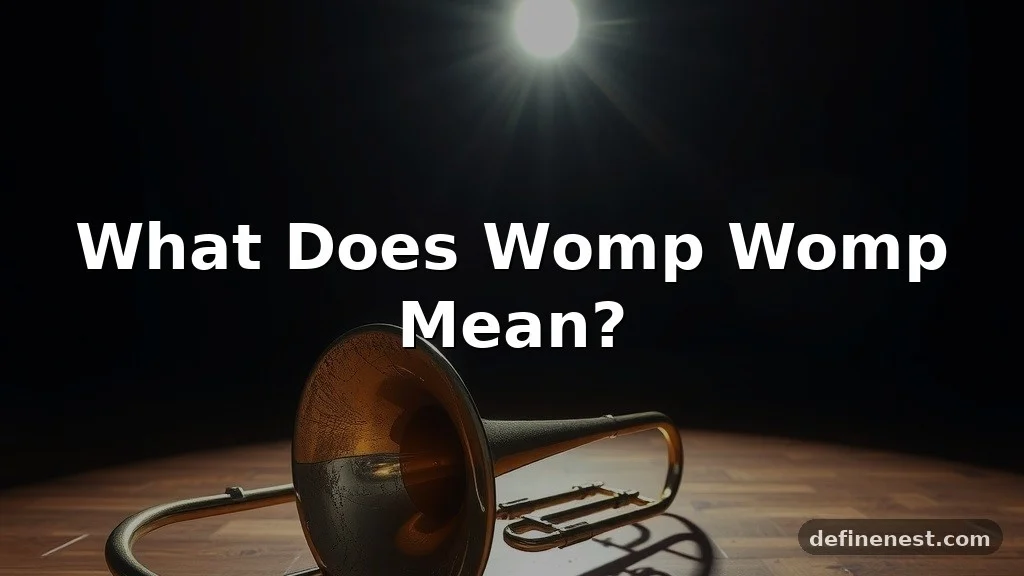
At its core, the expression is an onomatopoeic representation of a specific sound. You might recognize it as the sound of a sad trombone. In classic television and old-school game shows, whenever a contestant gave a wrong answer or failed a challenge, the band would play a sliding, low-pitched brass note.
This sound was designed to signal a comical failure. Today, when someone types this phrase, they are essentially mimicking that sound to mock a situation or express mock sympathy.
When you see someone post this in a comment, they are usually trying to dismiss someone else’s complaint. It is a way of saying that the person’s problem is not actually a big deal, or perhaps that they deserve the negative outcome they are experiencing. It is rarely used to offer genuine comfort.
Instead, it is used to highlight a sense of irony or to shut down a conversation that the sender finds annoying or trivial. It is the digital equivalent of a shoulder shrug combined with an eye roll.
Consider a situation where a friend says they are upset because they missed the bus. If you reply with this phrase, you are not really being supportive. You are signaling that you think the situation is minor or perhaps even funny.
It is important to note that the term is almost always used in a lighthearted or trolling capacity. It is not meant to be deeply hurtful, but it is certainly not a way to show empathy. Because it relies on the auditory memory of the sad trombone, it creates an immediate sense of irony, turning a moment of frustration into a punchline.
The History and Evolution of the Term
The origins of this phrase are deeply rooted in the history of American entertainment. The actual sound of the sad trombone has been a staple of comedy for nearly a century.
It became popularized in the early 20th century, particularly through cartoons and Vaudeville-style variety shows. Whenever a character slipped on a banana peel or failed to impress a crowd, the orchestra would hit those descending notes to emphasize the absurdity of the failure.
Over time, this sound became a cultural shorthand for disappointment. It was a way to make failure feel less tragic and more like a funny moment. As television evolved, game shows adopted this sound effect to avoid being overly harsh to losing contestants.
It softened the blow of defeat by turning it into a comedic beat. By the time the internet age arrived, the sound was already baked into our collective consciousness as the definitive audio cue for a “swing and a miss.”
In recent years, the term migrated from the sound effect to text. With the rise of platforms like TikTok, users began captioning videos with these words to mock people who were complaining about their lives. The transition from audio to text allowed the phrase to become a versatile tool for internet discourse.
Now, it is no longer just a sound; it is a meme. It has moved from the broadcast booth of a game show to the comment section of a viral post, proving how quickly digital language can evolve when it taps into a shared cultural reference. You can read more about how cultural expressions evolve through media at the Library of Congress, which tracks the history of American popular culture.
Usage in Various Contexts
You will find this phrase used in almost every corner of the internet today. Its usage changes slightly depending on the platform, but the underlying sentiment of mockery remains constant. In texting, it is often used between friends who have a sarcastic rapport.
If you tell your friend you dropped your ice cream, they might text you back with just these two words. It is a way to acknowledge the event without having to write a long paragraph of sympathy.
In gaming environments, the term is particularly common. If a player loses a match or makes a mistake during a round, an opponent might type this in the chat to get under their skin.
It is a form of “trash talk” that is relatively mild but still effective at annoying the other player. It is brief, punchy, and impossible to ignore.
Social media platforms like Twitter and TikTok have turned this into a staple of the “clapback” culture. If someone posts a long, dramatic rant, a user might simply comment with the phrase to invalidate the entire post. It is a way of saying, “I heard you, but I do not care.”
Here are a few examples of how it looks in real-life dialogue:
Friend A: “I cannot believe I have to work on a Saturday.”
Friend B: “Womp womp.”
Gamer A: “I missed that easy
Gamer A: “I missed that easy shot!”
Gamer B: “Womp womp, get better.”
In these instances, the brevity of the response is what makes it effective. It strips away the need for a complex reply and forces the focus back onto the failure of the first person.
Common Misconceptions and Clarifications
There is a common misconception that this term is a “bad word” or a slur. It is not. It is essentially a sound effect written out in text.
However, just because it is not a profanity does not mean it is always polite. Using it can definitely be seen as rude or dismissive, which is why some people might get offended when they receive it.
Another misconception is that it is only used by younger generations. While it is certainly popular among Gen Z and TikTok users, the reference to the sad trombone is decades old.
Older generations who grew up watching game shows often understand the reference immediately. The confusion usually stems from the fact that it is being used in a new, digital context that feels dismissive to those who are used to more traditional, polite forms of conversation.
It is also important to clarify that it is not meant to be a direct insult. It is a way to mock a situation, not necessarily the person. However, when you use it, you are choosing to prioritize humor over empathy.
If someone is genuinely going through a hard time, this is absolutely the wrong thing to say. If you use it in the wrong context, people might perceive you as cold, heartless, or simply immature.
Always gauge the room before deciding to use it. If the person is truly sad or hurt, skip the sarcasm and offer a real apology or support instead.
Similar Terms and Alternatives
If you find that this particular expression does not quite fit the vibe you are going for, there are several alternatives that convey a similar sense of mockery or dismissiveness. Depending on how much snark you want to inject, you might choose a different word altogether.
* “Sad trombone”: This is the literal description of the sound and is often used by people who want to be more descriptive.
* “L”: Often used in gaming to tell someone they have taken a loss.
* “Skill issue”: A common way to tell someone that their failure is due to their own lack of ability.
* “Cope”: Used when someone is complaining and you want to tell them to deal with the reality of the situation.
* “Who asked?”: A classic, albeit very rude, way to shut down a conversation.
| Term | Tone | Best Used For |
|---|---|---|
| Womp womp | Sarcastic | Minor failures |
| Skill issue | Competitive | Gaming |
| L | Blunt | Losing a match |
| Cope | Aggressive | Dealing with complaints |
As you can see, each of these terms serves a slightly different function. While they all fall under the umbrella of dismissive internet slang, they carry different weights. Choosing the right one depends on your relationship with the person and the severity of the situation you are discussing.
How to Respond to This Term
If someone sends this to you, how you respond depends entirely on your relationship with them and the context of the conversation. If a friend sends it to you during a casual chat, you can probably just laugh it off.
You might reply with a GIF of a trombone or simply ignore it. You do not need to take it too seriously because it is rarely intended to be a deep, personal attack.
If you are feeling a bit more defensive, you could lean into the joke. Replying with something like, “Glad I could provide some entertainment for you,” shows that you are not bothered by their sarcasm. It takes the power away from their attempt to mock you.
In a more professional or serious context, you should ignore the comment entirely. If someone is being dismissive of your work or your ideas, do not engage with the slang.
Instead, steer the conversation back to the facts. If you feel that the behavior is becoming a pattern of disrespect, you might want to address it directly by saying, “I am trying to have a serious conversation here, and I would appreciate it if we kept the jokes for later.”
Remember, the goal of the person using this term is usually to get a reaction. If you do not give them one, they will likely move on. You have the power to decide how much energy you want to put into a conversation that started with a sarcastic sound effect.
Regional and Cultural Differences
While the phrase is widely understood across English-speaking countries, its popularity is heavily influenced by Western media. Because the “sad trombone” sound is so ingrained in American television history, it resonates most strongly with people who grew up with that specific media diet. In other cultures, the sound effect might not have the same immediate recognition, though the internet has certainly helped bridge that gap.
In some regions, you might find variations in how people spell or say it. Some might stretch the vowels, while others might add more “womps” to emphasize the length of the failure. These are minor linguistic variations that do not change the core meaning.
Interestingly, in non-English speaking countries, the phrase is often used exactly as is because it has become a global meme. It is a testament to how quickly internet culture can transcend language barriers.
However, be careful when using it in cultures that place a high value on formal, respectful communication. In countries where social hierarchy and politeness are strictly observed, using a dismissive, mocking term could be seen as significantly more offensive than it would be in a casual American setting.
Always consider your audience before using slang that is rooted in sarcasm. What feels like a funny, harmless joke in one country could be perceived as a major social faux pas in another.
Usage in Online Communities and Dating Apps
On dating apps like Tinder or Hinge, seeing this phrase in a bio or a message can be a bit of a red flag. It often suggests that the person is prone to being sarcastic or cynical.
If someone uses it to describe their personality, they are likely looking for someone who shares their sense of humor and does not take things too seriously. However, it can also be a sign of someone who is not interested in deep, emotional connection.
In gaming communities, it is used frequently in voice chat and text lobbies. You will see it after a team loses a round or when a player makes a particularly embarrassing mistake. It has become a standard part of the gaming lexicon.
If you are new to a game, you might feel targeted when you see it, but try to remember that it is just a part of the culture. It is not necessarily a reflection of your worth as a player; it is just a way for others to express their frustration or amusement.
On Twitter, the term is often used as a reply to “ratio” someone or to simply dismiss a political or social take that the user disagrees with. It is a way to signal to your followers that you think the original post is not worth a serious rebuttal. It is a low-effort way to participate in the conversation, which is why it is so popular.
Hidden or Offensive Meanings
Is there a hidden, offensive side to this term? Generally, no.
It is not a slur, and it does not have a history of being used to target protected groups. However, any term can become offensive if it is used to harass, bully, or belittle someone in a harmful way.
The danger lies in the context. If you use this phrase to mock someone who is sharing their trauma, their grief, or their genuine struggles, you are being cruel. While the word itself is “funny,” the act of using it in that situation is inherently unkind.
Tone and context are everything. If you are in a group chat where everyone is roasting each other, it is perfectly acceptable. If you are in a support group or a professional setting, it is entirely inappropriate.
Always assess the power dynamic, too. If you are a manager using this term toward an employee, it is unprofessional and potentially abusive. If you are a peer using it against a peer, it is just a bit of banter.
Never use it to “punch down.” If someone is already in a vulnerable position, using a term that mocks failure is just adding insult to injury. Keep your usage light, and never use it to intentionally hurt someone’s feelings.
Suitability for Professional Communication
To put it bluntly: do not use this in a professional setting. Whether you are emailing a client, chatting on Slack with your team, or speaking in a meeting, this phrase has no place in the workplace.
Professional communication requires clarity, empathy, and respect. Using a term that is fundamentally rooted in mockery and sarcasm undermines your professional image.
If you are a leader, using this kind of language can alienate your team. It signals that you do not take their concerns seriously.
Even if you are just trying to be funny, it can be misinterpreted as dismissive or condescending. There are plenty of other ways to lighten the mood without resorting to slang that is designed to mock failure.
If you find yourself in a situation where you want to express that a situation is unfortunate but not a disaster, use professional language instead. Phrases like “That is certainly a setback,” or “I understand this is frustrating,” are much better alternatives.
They acknowledge the situation without being flippant. Keep your professional communication professional; save the internet slang for your personal time.
FAQs
1. Is this term considered offensive?
It is not inherently offensive, but it can be perceived as rude or dismissive depending on the context in which it is used.
2. Where did the phrase come from?
It is derived from the “sad trombone” sound effect, which has been used in comedy and game shows for decades to signal a comical failure.
3. Can I use this in a work email?
No, it is not appropriate for professional communication as it can appear dismissive and unprofessional.
4. What should I do if someone says this to me?
If you are close to the person, you can laugh it off. If it feels like they are being rude, it is best to ignore them or steer the conversation back to a serious tone.
5. Is it only used by Gen Z?
While popular with younger users, the reference to the sad trombone is well-known across many generations, making the phrase broadly understood.
6. Is there a difference between the phrase and the sound?
The phrase is essentially the written version of the sound. Both are used to express the same sentiment of mocking a failure.
7. Can I use it to comfort someone?
No, it is the opposite of comforting. It is a sarcastic expression of mockery and should never be used when someone is genuinely upset.
Conclusion
Understanding the slang we use every day is a great way to stay connected to the ever-changing landscape of digital communication. The phrase we have discussed here is a perfect example of how a simple sound effect can transform into a widespread cultural tool for sarcasm and mockery.
While it can be a fun way to banter with friends or react to a ridiculous situation in a game, it is important to remember that it is not a universal language of kindness. It carries a specific, dismissive weight that can easily be misinterpreted or misused.
By knowing when to use it and, more importantly, when to avoid it, you can navigate your online and offline conversations with much more confidence. Always prioritize the context of your conversation and the feelings of the person on the other end of the screen. If you keep the tone light and avoid using it in sensitive or professional situations, you will find it to be a harmless, if slightly snarky, part of your vocabulary.
Just remember that behind every “womp womp” is a history of comedy and a modern desire to keep things brief, sarcastic, and lighthearted. Use it wisely.