
Have you ever been scrolling through your feed, reading a frustrating comment, or texting a friend about a wild situation when suddenly you see the acronym SMFH? If you are like many people, you might have paused for a second to wonder what exactly that string of letters implies. You are not alone in this.
Whether you are a casual texter, a heavy social media user, or someone just trying to keep up with the fast-paced world of internet slang, understanding these shorthand terms is essential for clear communication. This article is written for you, the curious reader who wants to navigate the digital landscape with confidence. We will break down what this term means, how it evolved, and why it has become such a popular way to express disappointment or disbelief in our modern, quick-fire conversations. 📱
Defining the Acronym and Its Core Meaning
At its heart, SMFH stands for “shaking my fucking head.” It is an intensified version of the much more common acronym SMH, which stands for “shaking my head.” When someone types this, they are expressing a deep sense of frustration, disbelief, or pure annoyance at a specific situation, a comment, or an action.
While SMH is often used to show mild disappointment or a sense of “I can’t believe this,” adding the “F” takes the emotion to a higher level. It signals that the sender is not just mildly annoyed but is genuinely fed up with the circumstances they are describing.
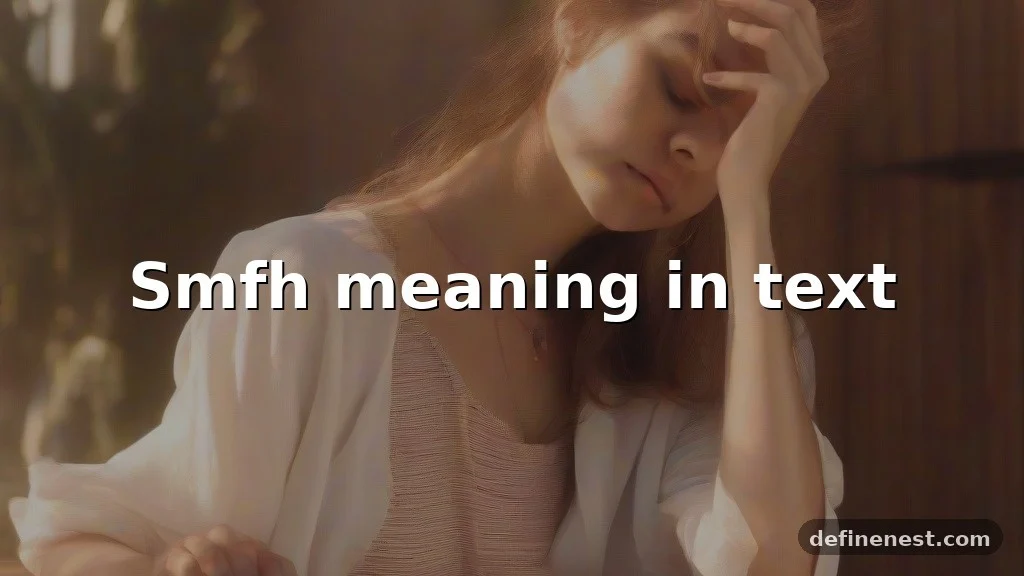
Think of it as a digital way of showing that you are physically reacting to something absurd. When you see a post where someone does something illogical, like forgetting their keys inside a locked car for the third time in a week, you might feel that specific brand of exasperation.
You are not just shaking your head; you are doing so with a level of intensity that requires an extra word for emphasis. It is a way to say, “I am absolutely done with this nonsense.”
In real-life usage, you might see it used in various scenarios. For instance, if a friend tells you they spent their entire paycheck on a pair of shoes they don’t even like, you might reply with, “SMFH, why would you do that?” The term serves as a punctuation mark for your emotional state.
It frames the conversation, letting the other person know that you are judging the situation as foolish or avoidable. Because it uses a swear word, it carries a weightier tone than its milder counterpart, making it a tool for when you really want to underscore how ridiculous you find a particular event or statement.
The History and Evolution of Internet Slang
To understand why we use terms like this, we have to look at the history of how we communicate online. As the internet evolved from chat rooms and forums to the rapid-fire pace of social media, the need for efficiency became paramount. Typing out full sentences takes time, and in a fast-moving conversation, speed is often the priority.
This is how acronyms became the backbone of digital interaction. Internet slang emerged from the desire to convey tone and emotion without needing to type long, descriptive paragraphs.
The predecessor, SMH, has been a staple of digital communication for decades. It gained massive popularity during the era of early instant messaging and message boards. As social media platforms like Twitter and Facebook grew, these short, punchy acronyms became even more common because they fit perfectly into character limits and quick status updates.
The addition of the “F” to create SMFH is a classic example of linguistic intensification. Just as people use profanity in real-life speech to add emphasis to their frustration, users of digital platforms began incorporating that same intensity into their shorthand.
This evolution tracks with how we use language in general. We often create “stronger” versions of words or phrases to capture more complex emotions. Over time, these terms have moved from niche gaming communities and forums into the mainstream.
Today, you can find them in everything from professional group chats to casual TikTok comment sections. The term has effectively become a universal signifier of disbelief, proving that even in a digital space, we are constantly looking for new ways to express our very human reactions to the world around us. You can find more linguistic context on how these abbreviations function by visiting the Merriam-Webster definition of slang to see how language changes over time.
Usage in Various Digital Contexts
The way we use this term changes depending on where we are having the conversation. In a text message between best friends, it is common to see it used to vent about a bad day or a silly mistake.
In social media comments, it is often used as a critique of public figures or viral videos that strike the user as particularly foolish. The context dictates how “heavy” the term feels.
Consider these examples of how it might appear in a conversation:
Friend A: “I just realized I left my laptop at the coffee shop.”
Friend B: “SMFH. Are you going back to get it?”
In this scenario, the term is used to show empathy mixed with disbelief. It is a way of saying, “I am disappointed that this happened, but I am also annoyed that you made this mistake.”
Or consider a social media interaction:
User 1: “I can’t believe they delayed the game release again.”
User 2: “SMFH, this is the third time this year.”
Here, the term acts as a
Here, the term acts as a collective sigh of frustration shared among a community of players. It creates a sense of camaraderie. By using the term, the user is saying, “We are all in this boat, and we all feel the same annoyance.”
The term acts as a social glue, allowing people to bond over their shared experiences of frustration. Whether you are in a gaming lobby or a private chat, the term serves the same purpose: it externalizes the internal feeling of shaking your head at the absurdity of a situation.
Common Misconceptions and Clarifications
One of the biggest misconceptions about this term is that it is always meant to be aggressive or mean-spirited. While it does carry a negative connotation, it is not always a personal attack. Often, it is used to describe a situation rather than a person.
For example, saying “SMFH at the traffic today” is not attacking a specific person; it is venting about a circumstance. People sometimes mistake the presence of the profanity for a direct insult, but tone is everything.
Another point of confusion is how it compares to SMH. Some users might think they are interchangeable, but they are not. SMH is more versatile and can be used in almost any setting where you feel a bit of chagrin.
SMFH, however, is reserved for moments of higher irritation. If you use it too frequently, it can lose its impact or make you seem like you are constantly angry. It is a tool that is best used sparingly to maintain its emotional punch.
It is also worth noting that some people find the term offensive because of the included profanity. If you are communicating with someone you don’t know well, or if you are in a setting where casual language is frowned upon, it is better to stick to the milder SMH. Being aware of your audience is key.
You would not want to use this term in a work email or a formal message to a stranger, as it could come across as unprofessional or unnecessarily aggressive. Knowing when to keep it clean and when to let the frustration show is a skill that comes with experience in digital communication.
Similar Terms and Alternatives
If you find that SMFH is too strong for your needs, or if you simply want to vary your vocabulary, there are plenty of alternatives. Language is vast, and there is almost always a way to express your feelings without relying on the same acronym every time.
Here is a quick look at some alternatives:
* SMH: The classic choice for general disappointment.
* Facepalm: Usually expressed as an emoji or written out in asterisks, like facepalm. It conveys the same “I cannot believe this” energy.
* Seriously?: A simple, direct way to express disbelief without the acronym.
* I’m done: A phrase that signals you have reached your limit of patience.
* Are you kidding me?: A classic rhetorical question that mirrors the intent of the acronym.
When you look at this list, you can see that the choice of words depends on the “vibe” of the conversation. If you are trying to be funny, you might use the facepalm emoji. If you are trying to be serious, you might just say “seriously.”
The beauty of text-based communication is that you can choose the level of intensity that fits the moment. You are not locked into one way of expressing yourself, and having a variety of responses keeps your interactions feeling natural rather than robotic.
How to Respond When You Receive This Term
Receiving this term can be tricky. If someone sends it to you in response to something you said, they are telling you they are frustrated. How you respond depends on whether you agree with them or if you want to de-escalate the situation.
If you agree with the frustration, a simple acknowledgement is often enough. You could say, “I know, right?” or “It is such a mess.” This validates their feeling and keeps the conversation flowing.
If you are the one who caused the frustration, it might be better to acknowledge the mistake. A simple, “My bad, I know it’s frustrating,” goes a long way. It shows you understand why they are using the term and that you take their feelings into account.
If you want to be funny, you can play along. If a friend says, “SMFH, you forgot the pizza,” you could reply with, “I know, I’m a disaster, aren’t I?” This keeps the mood light and prevents the frustration from turning into a real argument.
The key is to read the context. Is the person actually mad, or are they just venting? Most of the time, it is just venting, and a lighthearted response is the best way to handle it.
Regional and Cultural Differences
While acronyms like this are largely a product of English-speaking internet culture, they have spread globally. Because platforms like Twitter and Instagram are international, these terms are now understood by people across the globe.
However, the way they are used can vary. In some cultures, the use of profanity in text is much more taboo than in others, which might limit the use of the “F” version of the acronym.
Even within English-speaking regions, there are variations. In some places, slang evolves rapidly, and terms that were popular a year ago might be considered “cringe” or outdated today.
Keeping up with these trends is part of the challenge of being an online communicator. If you are traveling or interacting with people from different countries, it is always a safe bet to stick to more neutral terms until you get a sense of the local slang.
It is also interesting to see how these acronyms are translated or adapted into other languages. Often, people will keep the English acronym because it is so recognizable, even if they are speaking a different language.
This is a testament to the power of the internet in creating a shared global language of shorthand. Whether you are in New York, London, or Tokyo, the feeling of wanting to shake your head at something ridiculous is universal, even if the words we use to describe it change.
Usage in Online Communities and Dating Apps
On platforms like Tinder or Hinge, the use of such acronyms can be a litmus test for personality. If someone uses it constantly in their bio or in early messages, it might signal a negative or cynical outlook. On the other hand, using it sparingly can show that you have a sense of humor about the “struggles” of modern dating.
In gaming communities, the term is practically a dialect. When a teammate makes a questionable play, you will see “SMFH” pop up in the chat immediately.
It is a shorthand for accountability and frustration. In these high-stakes, fast-paced environments, you do not have time to type out a critique, so the acronym does the heavy lifting for you.
When using these terms on dating apps or in gaming, the best advice is to be authentic. If you are a naturally sarcastic person, it might fit your personality. If you are trying to come across as positive and welcoming, you might want to avoid it.
Your digital presence is a reflection of how you interact with the world, and the words you choose—even the short ones—speak volumes about your attitude. Always remember that your digital footprint is permanent, and how you express frustration says a lot about your character.
Hidden or Offensive Meanings
While the term is generally understood as an expression of frustration, it is important to be aware that some people might find the underlying profanity offensive. In professional settings, this is especially true.
Using any acronym that contains a swear word can be seen as a lapse in judgment. It is not necessarily “hidden” in meaning, but its impact can be more severe than the user intends.
Tone is everything. If you are using it to mock someone, it becomes a tool for harassment. If you are using it to vent, it is a tool for expression.
The line between these two is often defined by the context of your relationship with the person you are messaging. If you are joking with a close friend, the “F” is just for effect.
If you are sending it to a colleague, it is a red flag. Always consider the potential for misinterpretation before hitting send.
Suitability for Professional Communication
To put it plainly: avoid using this in professional communication. Whether you are emailing a client, messaging your boss, or communicating in a formal company channel, abbreviations containing profanity have no place there. Professionalism relies on clarity and respect, and while you might be frustrated with a project, there are better ways to express that.
Instead of using an acronym, try to describe the issue directly. “I am concerned about the delays in this project” is much more professional than “SMFH at these delays.” If you need to express that something is not working, focus on the problem and the solution rather than your emotional reaction.
You want to be seen as a problem-solver, not someone who just vents about the issues. Stick to clear, concise, and respectful language, and save the slang for your personal time.
Frequently Asked Questions
1. Is it okay to use this term with my parents?
It depends on your relationship with them. If you have a casual, open dynamic, they might understand it, but generally, it is safer to avoid profanity with family members unless you know they are comfortable with it.
2. Is SMFH the same as SMH?
They are related, but SMFH is much stronger because it includes profanity. Use SMH for general annoyance and SMFH for intense frustration.
3. Can I use this in a professional email?
No, you should never use this in a professional setting. It is considered unprofessional and could damage your reputation.
4. Does the term always mean I am angry?
Not necessarily. It can also mean you are disappointed, exhausted, or just done with a situation. It is more about expressing “fed up” feelings than pure rage.
5. Are there any situations where this term is considered rude?
Yes, if you are using it to belittle someone or mock them, it can definitely be considered rude. Always be mindful of the person on the receiving end.
Should I use this if I
6. Should I use this if I want to be taken seriously?
Probably not. Using slang can sometimes make you seem less articulate. If you want to be taken seriously, use clear and full sentences.
In conclusion, SMFH is a powerful, if informal, tool for expressing frustration and disbelief in our digital lives. It has grown from a simple acronym into a way to share our human reactions to the absurdities of daily life. While it is perfect for texting friends or venting in a gaming lobby, it is best kept out of professional and formal settings.
Understanding the nuance of when and how to use it will help you communicate more effectively and avoid misunderstandings. Keep your tone in mind, be aware of your audience, and remember that sometimes, a simple “I cannot believe this” carries just as much weight as any acronym. Now that you know the ins and outs of this popular term, you can navigate your next group chat or social media thread with full confidence.