
Have you ever stumbled upon a word that sounds beautiful but leaves you guessing about its true depth? If you have been scrolling through social media, watching the latest animated hits, or chatting with friends, you might have heard the term encanto. It sounds melodic, almost like a song, and it carries a weight that goes beyond simple conversation.
Whether you are a fan of modern cinema, a student of the Spanish language, or just someone curious about how words shape our world, understanding this term is a game changer. It is more than just a word found in a dictionary; it is a cultural touchstone that bridges the gap between everyday life and the extraordinary. In this guide, we will peel back the layers of this fascinating term, helping you understand exactly when and how to use it in your own life.
Definition and Meaning
At its core, the word encanto is a noun derived from the Spanish language that translates primarily to enchantment, charm, or allure. When you describe someone or something as having encanto, you are essentially saying that they possess a captivating quality that draws people in. It is not just about physical beauty; it is about a certain magnetism or spellbinding presence that feels almost magical.
Think of a person who enters a room and immediately lifts the energy, or a place that feels so peaceful and inviting that you never want to leave. That is encanto in action.
In a literal sense, the word is linked to the verb encantar, which means to enchant or to love something very much. If you say me encanta, you are saying I love it or it delights me. This connection is vital because it shows that the word is rooted in positive emotion and deep appreciation.
It is a word of high praise. When you use it, you are highlighting the unique character of a person, a piece of art, or a specific moment in time. It captures that elusive feeling of being under a spell of joy and fascination.
In daily life, you might use it to describe a quaint cafe, a kind stranger, or even a sunset that feels particularly breathtaking. It is a versatile tool for expressing genuine admiration.
Background and History
The etymology of the word is deeply rooted in the history of the Spanish language and its connection to Latin. It traces back to the Latin word incantare, which literally means to chant or to use a spell against someone. Over centuries of linguistic evolution, the meaning shifted from the darker, more mysterious associations of sorcery to the lighter, more romanticized concepts of charm and beauty.
This transition reflects how language often adapts to the needs of its speakers. As societies moved away from literal beliefs in witchcraft, the word evolved to describe the bewitchment of the heart rather than the bewitchment of the soul.
In modern times, the term has gained massive global recognition thanks to its prominence in popular media. Specifically, the Walt Disney Animation Studios film titled Encanto brought this word into the living rooms of millions. By focusing on the Madrigal family and their sentient home, known as the Casita, the film showcased the term as a symbol of both magical realism and deep emotional resonance.
It highlighted how Colombian culture views family heritage and personal gifts as a form of enchantment. This pop culture explosion did not just make the word famous; it redefined it for a new generation. It moved the term from a standard dictionary entry to a cultural icon, representing the intersection of tradition, fantasy, and the human spirit.
Usage in Various Contexts
You will find that this word is incredibly flexible across different environments, from casual text messages to more descriptive professional feedback. In casual conversation, it is often used as a direct compliment.
If you are texting a friend about a new person you met, you might say, She has such an encanto that everyone stops to listen when she talks. In this context, it acts as a synonym for charisma or grace.
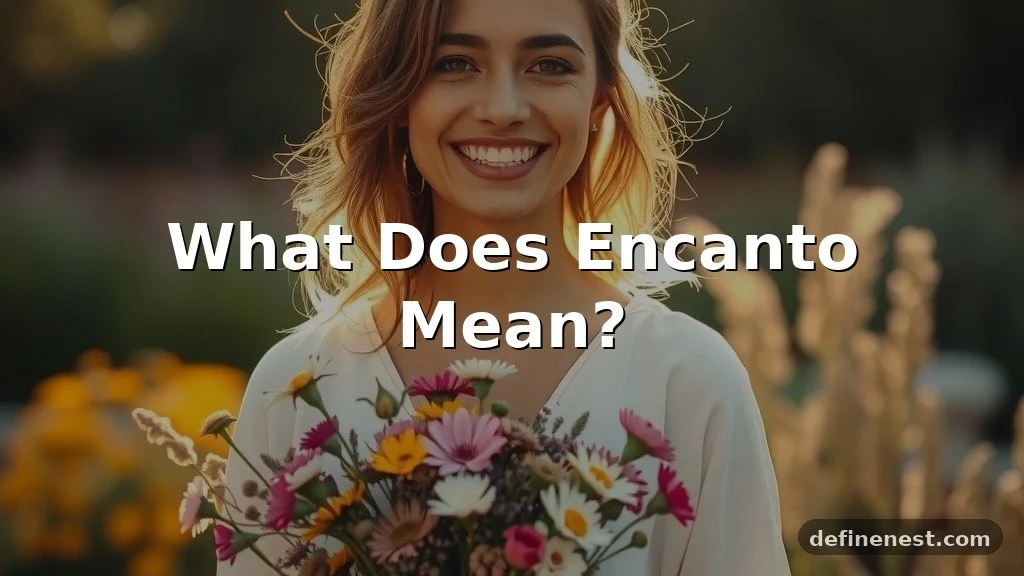
In social media captions, it is used to elevate the aesthetic of a post. Imagine you are sharing a photo of a cozy, flower-filled garden. A caption like A place of pure encanto perfectly captures the mood.
It sounds more sophisticated than simply saying it is pretty. In gaming communities or online forums, users might describe a character design or a game level as having a specific encanto, meaning it has a unique visual style that stands out from the rest.
Dialogue Example 1:
Friend A: Did you see the new art exhibit downtown?
Friend B: Yes, it was incredible. There was such an encanto to the way the lights hit the paintings.
Dialogue Example 2:
User A: Why do you think everyone likes him so much?
User B: It is his encanto. He makes everyone feel like the most important person in the room.
Common Misconceptions and Clarifications
One of the most common mistakes people make is assuming that the word means miracle. While the film often depicts characters with miraculous gifts, the word itself does not translate to miracle. A miracle in Spanish is milagro.
This is a crucial distinction. When people watch the movie, they often conflate the plot points with the literal translation of the title. It is important to remember that the title refers to the magical charm or the enchanted nature of the house and the family, not a religious or divine event.
Another misconception is that the word is strictly reserved for romantic settings. While it certainly fits well in romantic contexts, it is not limited to them. You can use it to describe the charm of a mountain range, the atmosphere of a bookstore, or the personality of a mentor.
It is a neutral term of admiration that can apply to almost anything that makes you pause and appreciate its presence. Some people also worry that using the word makes them sound pretentious.
However, if used naturally, it simply adds a layer of depth to your vocabulary. It is not about showing off; it is about finding the right word to describe an experience that feels special and beyond the ordinary.
Similar Terms and Alternatives
If you are looking for ways to express the same sentiment, there are several alternatives depending on the nuance you want to convey. If you want to focus on beauty, you might use gorgeous or lovely. If you want to focus on the magnetic pull of a person, charisma or allure works perfectly.
| Term | Nuance |
|---|---|
| Charisma | Focuses on personal magnetic appeal. |
| Allure | Focuses on a mysterious or attractive quality. |
| Enchantment | The most direct translation, focusing on a magical vibe. |
| Charm | A lighter, more common way to describe pleasant traits. |
| Fascination | Describes the state of being captivated by something. |
These terms are useful because they allow you to tailor your message. If you are in a professional meeting, you might choose to say someone has great charisma rather than saying they have encanto, as the latter can sound more poetic and less clinical.
However, in creative writing or casual storytelling, using the original term can provide a specific cultural flavor that the English alternatives lack. Understanding these shades of meaning will make you a more effective and expressive communicator.
How to Respond to This Term
Knowing how to react when someone uses this word depends entirely on the context. If someone tells you that you have an encanto, it is a high compliment. They are saying that you have a unique way of making others feel comfortable and interested.
A humble thank you is usually the best response. You might say, That is so kind of you to say, thank you.
If you are in a more playful or casual setting, you can lean into the charm. You might respond with, I guess that is just my secret power! or It must be the company I keep. If you are in a professional setting and a colleague uses the word to describe your work or a project, accept it as a compliment regarding the creativity and appeal of your contribution.
You could say, I am glad you found the presentation engaging; I wanted to ensure it had a memorable impact. Being able to pivot between these response styles shows that you understand the tone and the weight of the word. You are not just repeating a term; you are engaging with the sentiment behind it.
Regional and Cultural Differences
While the word is understood across the Spanish-speaking world, its usage can vary slightly based on geography. In some Latin American countries, it is used more frequently in everyday speech to describe people and places.
In other regions, it might be reserved for more literary or artistic descriptions. Because of the influence of Latin American folklore, the term carries a deeper, more mystical weight in cultures that value storytelling and heritage.
In some coastal regions, the word might be used to describe the ocean or the landscape, emphasizing the natural beauty that feels almost supernatural. In urban settings, it might be used more ironically or to highlight the specific aesthetic of a neighborhood. It is fascinating to see how a single word can shift its emotional temperature depending on where it is spoken.
If you are traveling, pay attention to how locals use the term. You will likely find that it is a word of warmth and appreciation, regardless of the specific country you are visiting. It acts as a universal bridge for expressing wonder, which is a feeling that transcends borders and languages.
Usage in Online Communities and Dating Apps
On dating apps like Tinder or Hinge, descriptors are everything. Using a word like encanto in your bio or your messages can set you apart from the crowd. It suggests that you are someone who appreciates the finer, more poetic things in life.
It can act as a great conversation starter. If someone asks you why you chose that word, it gives you a chance to talk about your interests, your love for travel, or your appreciation for cultural storytelling.
In gaming communities, you might see players using the term to describe the atmosphere of a game. If a game has a beautiful, hand-painted art style, players might say it has a certain encanto that makes it feel like a living storybook. On Twitter or other social platforms, it is often used as a hashtag for photos that capture a dreamy or magical aesthetic.
When responding to someone using it in these spaces, try to match their enthusiasm. If they post a photo of a sunset and call it pure encanto, a comment like It really is, the colors are spellbinding, shows that you are on the same page and appreciate the beauty they are highlighting.
Hidden or Offensive Meanings
It is vital to address whether this word can be used offensively. In its standard usage, it is almost entirely positive. It is a word of admiration and respect.
However, as with any word, tone is everything. If someone uses it in a sarcastic or condescending way, it can be turned into a backhanded compliment. For example, if someone says, Oh, that is just your little encanto, in a dismissive tone, they might be downplaying your actions or making fun of your style.
Context is the ultimate filter. If the situation is lighthearted and kind, the word is a compliment. If the situation is tense or competitive, be mindful of how the word is being framed.
It is rarely, if ever, considered an offensive slur, but it can be used to patronize if the speaker is trying to infantilize someone. Always trust your gut.
If the sentence feels like it is meant to diminish your value, the word is not the problem; the intent of the speaker is. In most cases, however, you can rest easy knowing that the term is meant to celebrate beauty and charm.
Suitability for Professional Communication
Is it appropriate for a formal business email? Generally, no. In a professional setting, you want to be clear and direct.
Using poetic terms can sometimes lead to confusion or come across as unprofessional. If you are writing a report or a formal letter, it is better to use words like professional, engaging, or well-crafted. These terms are universally understood and carry no ambiguity.
However, if you are in a creative field—such as marketing, design, or public relations—the word can be a powerful tool. It can help you describe a brand identity or a campaign concept that aims to capture hearts rather than just sell products. In these instances, using a word that evokes emotion is exactly what you need.
Just be sure to read your audience. If you are pitching to a client who values tradition and stability, stick to standard language.
If you are pitching to a client who values innovation and storytelling, adding a touch of flair with the right vocabulary can make your proposal stand out. It is all about knowing when to be a poet and when to be a professional.
FAQs
1. Does encanto mean miracle in Spanish?
No, the word for miracle is milagro. Encanto refers to charm or enchantment.
2. Is encanto a real Spanish word?
Yes, it is a very common and legitimate Spanish noun.
3. What does le encanto mean in Spanish?
It is a slight grammatical error; usually, people mean me encanta, which means I love it.
4. Can I use this word to describe a man?
Yes, you can describe anyone as having encanto, regardless of gender.
5. Is it okay to use this word in a job interview?
It is better to stick to professional descriptors like charismatic or engaging unless you are applying for a creative role.
Does it always have a magical
6. Does it always have a magical connotation?
Not necessarily. It can just mean someone is very charming or that a place is beautiful.
7. Why is the word so popular right now?
Its popularity has surged largely due to the global success of the movie of the same name.
Conclusion
Understanding the word encanto opens up a new way to appreciate the world around you. It serves as a reminder that there is beauty and magic in the mundane, whether it is found in the personality of a friend or the atmosphere of a quiet room. By moving beyond the simple definition and exploring its cultural roots and varied uses, you have gained a deeper understanding of how language shapes our perception.
It is a word that celebrates the captivating, the spellbinding, and the undeniably charming aspects of life. As you go forward, keep an eye out for those moments that deserve to be described as having encanto.
Whether you are writing a post, chatting with a friend, or simply observing the world, having this term in your vocabulary allows you to articulate the wonder that often goes unnoticed. Embrace the charm, enjoy the beauty, and never lose your sense of fascination.