Top 10 Game Art Outsourcing Studios for 2D and 3D Assets in 2027
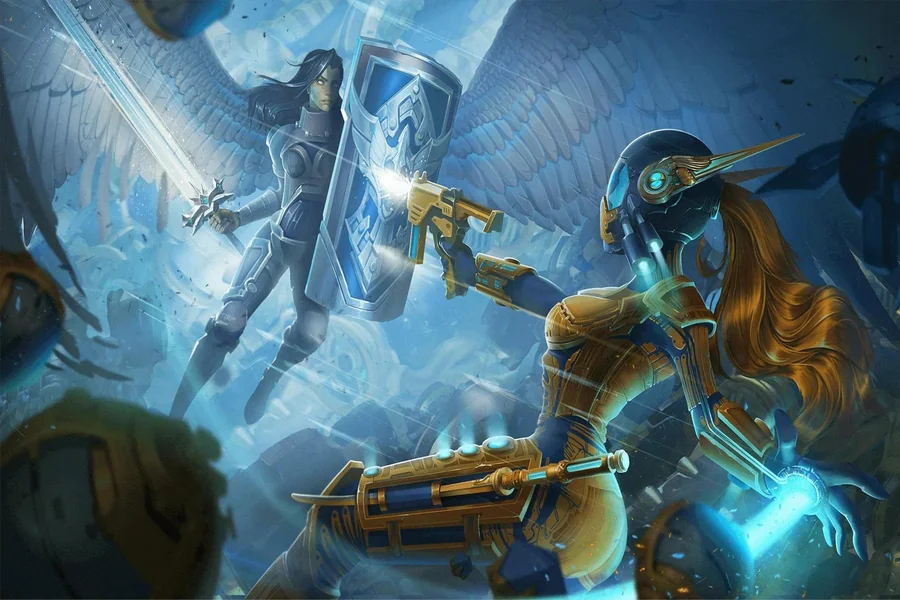
Your game needs 300 assets. Your art team has room for about 80.
Here are ten studios that can close that gap, what each one is actually good at, and where each one might not fit.
Picture an art director at a mid-size studio. We’ll call her Maya. (She is a composite of situations art leads commonly face, not a real person.) Her team just got the green light on a stylized action game. The publisher wants a vertical slice in four months and full production right after.
Maya’s in-house team is six artists. The asset list is north of 300 characters, including props, environment kits, and UI screens. Hiring her way out isn’t realistic. Good 3D character artists take months to recruit, and she needs them next month.
So she does what most art leads do. She opens a dozen studio websites, and every one of them says “AAA quality,” “seamless pipeline,” and “trusted by top publishers”. None of that helps her decide.
This guide is for Maya and for you if you’re in the same spot. We looked at ten studios that produce 2D and 3D game art for outside clients, and we compared them on the things that actually decide whether an outsourcing deal works: who’s on the team, what they’ve shipped, how they plug into your pipeline, and where they tend to fall short.
TL;DR (Quick Summary)
The best game art outsourcing studio is the one whose team size, art style, and working model match your production, not the one with the flashiest portfolio. Our three top-tier picks for 2027 each suit a different kind of project: Juego Studios for mixed 2D and 3D work delivered engine-ready for Unity or Unreal, with room to grow into full development; Lemon Sky Studios for AAA-level 3D; and RocketBrush Studio for 2D and casual art. Starloop Studios and VSQUAD are strong picks for mobile teams and stylized 3D characters. Kevuru Games, RetroStyle Games, Room 8 Studio, Lakshya Digital and Virtuos are strong, established options worth a look, especially for very large or very specific productions.
Key Takeaways
- Game art outsourcing works best when the external team works inside your engine, version control and review process, not as a separate vendor that drops files in a folder.
- Juego Studios, Lemon Sky Studios and RocketBrush Studio make up our top tier. Juego stands out for 2D and 3D range, a 250+ person team, engine-ready delivery for Unity and Unreal Engine 5, and the ability to move from art into full development.
- Team size changes the risk profile. Large studios handle parallel production well; boutique studios often give you more senior attention per asset.
- Always run a small paid art test on your own style before signing a long contract. A portfolio shows the studio’s best work, not the work you’ll get.
- Budget for the whole pipeline. A finished, rigged, game-ready 3D character costs several times more than the concept sketch behind it.
- Get IP ownership, revision limits and payment milestones in writing before production starts.
What Is Game Art Outsourcing?
Game art outsourcing means hiring an external studio to produce visual assets for your game, such as concept art, characters, environments, props, animation, VFX and UI, while your own team keeps ownership of the game and its art direction.
It’s different from buying stock assets. An outsourcing partner builds original work to your style guide and your technical rules (poly counts, texture budgets, naming, file formats), and the IP is transferred to you.
Why are more studios outsourcing art going into 2027?
Short answer: headcount is tight, and asset lists keep growing. In the GDC 2026 State of the Game Industry survey of more than 2,300 professionals, 28% said they had been laid off in the past two years, and that figure rose to 33% among US respondents (GDC, January 2026).
Fewer people in-house doesn’t mean fewer assets. Live-service games need a steady flow of skins, events and seasonal content, and players expect higher fidelity on every platform. External art teams let studios ship that content without hiring permanent staff for every peak.
What about AI-generated art?
The same GDC survey found that 52% of respondents think generative AI is having a negative impact on the industry, up from 30% a year earlier, while 36% use generative AI tools in their own work. In plain terms: many teams use it, and many are uneasy about it. Ask every studio on your list how they use AI, whether any of your files touch public AI tools, and whether they’ll follow a “no AI” rule if your publisher requires one.
How We Picked These Studios
We didn’t rank studios by size or by how famous their clients are. We used five criteria that predict how a real engagement goes:
- 2D and 3D range: Can the studio cover concept art, 2D illustration and UI, plus 3D modeling, texturing, rigging and animation, without handing work off to subcontractors?
- Engine-ready delivery: Does it deliver assets that are already set up and tested in Unity or Unreal, or just source files your team must fix?
- Scale and continuity: Can it ramp up for a big batch and keep the same artists on your project as it grows?
- Proof of shipped work: Has it worked on released games you can check, not just portfolio renders?
- Working models and terms: Does it offer project-based, dedicated team and co-development options, with clear IP transfer?
Facts like founding year, location and team size come from each studio’s own website or public profiles as of November 2026. Studios update these numbers often, so confirm them on your first call.
One note on order: this isn’t a strict ranking. The first three are our top-tier picks, each for a different kind of project. The other seven are strong studios that fit best in specific situations, such as mobile games, stylized characters or very large AAA programs.
The 10 Studios at a Glance
| Tier | Studio | Based in | Team size (stated) | Best for |
| Top tier | Juego Studios | Bengaluru, India, with US entity Juego Studios Inc in Plano, Texas (Dallas area) | 250+ engineers, artists and QA | Mixed 2D and 3D production that may grow into full development |
| Top tier | Lemon Sky Studios | Kuala Lumpur, Malaysia | About 250 | High-end 3D for AAA console and PC games |
| Top tier | RocketBrush Studio | Limassol, Cyprus | Not published | 2D, casual and stylized mobile art |
| Strong pick | Starloop Studios | Lleida, Spain | Part of Magic Media (1,000+ across 14 countries, stated) | Mobile and casual games that need art plus development |
| Strong pick | VSQUAD | Larnaca, Cyprus, with a team in Poland | Small boutique (10 to 49 on Clutch) | Stylized 3D characters and creatures for Unreal and Unity |
| Strong pick | Kevuru Games | Kyiv, Ukraine, and San Francisco | 250+ | Concept art and 3D for a wide mix of genres |
| Strong pick | RetroStyle Games | Ukraine, registered in Cyprus | 100 to 200+ | Casual, match-3 and isometric art |
| Strong pick | Room 8 Studio | Global, Ukrainian roots | 640+ artists | Large AAA art programs |
| Strong pick | Lakshya Digital | Gurgaon, India (Keywords Studios) | 1,000+ | High-volume AAA asset production |
| Strong pick | Virtuos | Singapore, founded in Shanghai | Not listed (4000 according to Wikipedia) | Full AAA co-development and porting at scale |
The Top 10 Game Art Outsourcing Studios, Reviewed
The first three are our top-tier picks. Each profile below covers what the studio does well, the kind of buyer it suits, and one honest limitation to check before you sign.
Juego Studios
Juego Studios is a game art and development studio with more than ten years in production, 200+ shipped titles, and a team of 250+ engineers, artists and QA specialists. It has delivered art and games for publishers including Disney, Warner Bros. Games, Sony, Tencent, Scopely and Zynga.
For US buyers, Juego operates as Juego Studios Inc, with an office at 4740 14th St, Suite T3, Plano, TX 75074, in the Dallas area. That gives American studios a US company to contract with, while production runs through Juego’s larger team in India.
What puts Juego in our top tier is range without handoffs. Its game art services cover concept art, character and environment design, 3D modeling, AAA-grade art, 2D and 3D animation, VFX and UI/UX, all run through one pipeline under a dedicated art lead. Assets are imported, configured and tested inside your Unity or Unreal Engine 5 project before handover, so your team isn’t fixing materials or naming during cert week.
A few things we liked in particular:
- Proof at volume. Juego produced 200 player heads for AFL Evolution 2 in six months, contributed art to NBA 2K21, and built a custom island inside Fortnite with Unreal Editor for Fortnite (UEFN).
- Three ways to work. Full-cycle art production if you have no art team, art co-development if your team is at capacity, and a dedicated art pod for live games that need steady monthly output.
- Clear IP terms. 100% IP transfer on delivery, an NDA before you share details, isolated file storage per client, and no asset reuse across clients.
- Published price ranges. Juego lists typical price ranges on its site, so you can sanity-check a budget before the first call.
- Room to grow. If your project expands past art, the same company offers full game development services, from prototype to launch and LiveOps, so you don’t have to onboard a second vendor mid-production.
On AI, Juego says its senior artists use generative tools for early concept exploration and variations, inside its own controlled pipeline, never with public AI tools, and that it will scope a no-AI workflow if your project requires it.
| Key Strengths | Potential Limitations |
| Full 2D and 3D coverage with engine-ready delivery for Unity and UE5 | At 250+ people, it’s a mid-size studio. For AAA programs that need 100+ artists working in parallel, Virtuos or Lakshya have more raw capacity |
| Shipped work for Disney, Warner Bros. Games, Sony and Tencent | US clients contract through Juego Studios Inc in Texas, but most production happens in India, so agree on review windows early to make the most of time-zone overlap |
| Flexible models: full-cycle art, co-development or a dedicated pod | |
| Can expand into full development, porting and LiveOps with the same team |
Best for: Studios and publishers that need consistent 2D and 3D art at volume, delivered engine-ready, with the option to grow the engagement into co-development or a full build.
Lemon Sky Studios
Lemon Sky Studios is an established 3D art outsourcers in Southeast Asia, founded in 2006 in Kuala Lumpur, Malaysia. It has around 250 people, most of them artists and production staff.
Its credits include work on Final Fantasy VII Remake, Marvel’s Spider-Man, Gears of War 5, Uncharted: The Lost Legacy and Warcraft III: Reforged. If your game targets console-level realism, Lemon Sky’s environment and character work is worth seeing.
| Key Strengths | Potential Limitations |
| Long AAA track record on major console titles | Focus is high-end 3D, so it’s less of a natural fit for 2D-heavy mobile or casual games |
| Large, experienced 3D team | Popular studios book up, so plan your start date well ahead |
| Also works in animation for TV and film |
Best for: AAA and high-end AA teams that need realistic 3D environments and characters.
RocketBrush Studio
RocketBrush Studio is a game art outsourcing studio based in Limassol, Cyprus. It covers 2D concept art, characters, icons, UI, backgrounds and Spine animation, plus 3D environments, props, weapons and stylized characters.
Its client testimonials come from Supercell, Paradox Interactive, A Thinking Ape and UKEN Games, and it lists AppLovin, Tripledot Studios and Romero Games among the companies it has contributed to.
| Key Strengths | Potential Limitations |
| Strong 2D and stylized art, especially for mobile and casual | Mainly an art partner, not a co-development or full-development team |
| Long-term relationships with live-game clients | Team size isn’t published, so ask how many artists would be on your project |
| Good range of icon, UI and promo art work |
Best for: Mobile and casual studios that need a steady supply of 2D and stylized 3D content.
Starloop Studios
Starloop Studios has operated since 2011 from Lleida, Spain, and is part of the Magic Media group, which says it has more than 1,000 people across 14 countries.
Starloop is development-first, with art, VFX, 2D and 3D animation and video ads alongside full-cycle production, porting and QA. That makes it a practical choice for mobile teams that want one partner for art and code, especially on casual and match-3 titles.
| Key Strengths | Potential Limitations |
| Art and development under one roof | Art is one service among many, so check the depth of its art team for your style |
| Deep experience with mobile, casual and match-3 games | Fewer public examples of high-end realistic 3D art |
| Backed by a larger group if you need extra capacity |
Best for: Mobile and casual studios that want art and development from the same team.
VSQUAD
VSQUAD is a boutique studio focused on stylized 3D characters, creatures, environments and props, plus concept art, animation, VFX and real-time effects for Unreal Engine and Unity. Clutch lists its headquarters in Larnaca, Cyprus, with a second location in Poland.
Its credits include 100+ assets for Ruined King, covering characters, creatures, weapons and props, and 200+ assets for Wayfinder, including characters and production assets for a large-scale Unreal Engine game. Both projects were for Airship Syndicate.
| Key Strengths | Potential Limitations |
| Very strong stylized 3D characters and creatures | Small team, so very large parallel batches may be hard to staff |
| Hands-on senior involvement typical of a boutique studio | Less suited to big 2D or UI-heavy workloads |
| Experience on Unreal Engine titles |
Best for: Indie and AA teams with a stylized look that needs hero-quality characters.
Kevuru Games
Kevuru Games lists offices in Kyiv, Ukraine, and San Francisco, a team of 250+ professionals and about 15 years in the market. It offers 2D and 3D game art, concept art, character design, animation and VFX, alongside full-cycle development, porting and QA.
Kevuru names clients such as EA, Epic Games, Lucasfilm and Bandai Namco, and lists work including Fortnite skin concept art and a Poppy Playtime console port.
| Key Strengths | Potential Limitations |
| Broad art and development menu | Its service mix also covers iGaming and Web3, so confirm the team you get has worked in your genre |
| Recognizable client list | Much of the team is in Ukraine, so ask about continuity planning |
| Concept art and character design experience |
Best for: Studios that want art and development options from one vendor across many genres.
RetroStyle Games
RetroStyle Games describes itself as a Ukrainian studio, with a registered company in Nicosia, Cyprus. It covers 2D and 3D art, UI, animation, VFX, match-3, isometric and slots art, and also publishes its own games.
Its site credits work linked to Candy Crush, Frostpunk 2 and Love & Pies, with logos including Supercell, Zynga and Ubisoft.
| Key Strengths | Potential Limitations |
| Deep casual, match-3 and isometric experience | Its site gives two different team sizes (100+ artists and 200+ staff), so ask for actual headcount on your project |
| Also builds its own games, which helps with practical game sense | Less focus on realistic AAA 3D |
| Offers fixed price, time and materials, and dedicated teams |
Best for: Casual and mid-core mobile studios that need polished stylized art.
Room 8 Studio
Room 8 Studio is a large art outsourcer with 640+ artists and a client list that includes 2K, Ubisoft, Square Enix, Gearbox and Remedy. It covers concept art, 3D environments and characters, animation, VFX, cinematics and UI/UX. Its listed projects include Call of Duty: Modern Warfare III, Diablo IV, Alan Wake 2 and Overwatch 2.
| Key Strengths | Potential Limitations |
| Large AAA-focused art team | Client list is AAA-heavy, so smaller teams should confirm the seniority they’d get on a smaller budget |
| Trailers and cinematics alongside game art | Mainly art and cinematics, not a full-development partner |
| Strong environment and character work |
Best for: Large publishers running big AAA art programs.
Lakshya Digital
Lakshya Digital was founded in 2004 in India and was acquired by Keywords Studios in 2014. Today it lists 1,000+ professionals and offices in Gurgaon, Pune, Bangalore, Seattle, London, Manila and Tokyo.
Its credits include Starfield, Microsoft Flight Simulator, Spyro Reignited Trilogy, Middle-earth: Shadow of War and Forza titles.
| Key Strengths | Potential Limitations |
| Very large capacity for AAA asset volume | Built for high-volume programs, so smaller projects should confirm the team size and pricing model up front |
| Long AAA history | Ask who will lead your project day to day |
| Access to the wider Keywords Studios network |
Best for: AAA teams that need large, steady volumes of 3D assets.
Virtuos
Virtuos was founded in Shanghai in 2004 and is now headquartered in Singapore, with studios across Asia, Europe and North America. It’s one of the biggest external development companies in games, covering art production, co-development and porting.
Its work includes art support on Horizon Zero Dawn and Horizon Forbidden West, and development help on Metal Gear Solid Delta: Snake Eater.
| Key Strengths | Potential Limitations |
| Huge scale for AAA art and development | Often more studio than a small or mid-size project needs |
| Long list of major console credits | Art is one of many business lines, so confirm the specific team assigned |
| Studios across Asia, Europe and North America |
Best for: Major publishers that need AAA co-development at very large scale.
Which Engagement Model Fits Your Project?
The model you pick matters as much as the studio. Most of the studios above offer some version of these three:
- Project-based outsourcing: You hand over a defined asset list with a fixed scope and deadline. Good for a one-off batch, like 40 props or a set of UI screens.
- Dedicated art team: The same artists stay on your game month after month. Good for live games and long roadmaps, because style stays consistent and feedback loops get faster.
- Co-development: External artists work inside your tools, sprints and reviews as an extension of your team. Good when art and game systems are being built at the same time.
| Model | Best when | Your management load | Style consistency over time |
| Project-based | Scope is fixed and short | Medium: you write a detailed brief up front | Fine for one batch, harder across many |
| Dedicated team | You need steady monthly output | Low once the team is set up | High, same artists every month |
| Co-development | Art and systems are built in parallel | Medium: shared sprints and reviews | High, if the partner works in your pipeline |
Not sure which model fits? Write down three things first: your asset count, your deadline, and whether your game will need new content after launch. Those three answers usually point to one model.
How Do You Build a Shortlist Without Getting Burned?
Start with three to four studios, not ten. Then test how they work, not just what they’ve made.
Ask to see the pipeline, not only the portfolio
- How does an asset move from concept to engine-ready? Who signs off at each stage?
- What happens when your art director rejects a batch? How many revision rounds are included?
- Which version control and task tools do they already use with clients?
Run a paid art test on your own style
A good studio will do a small paid test using your style guide and your engine. It’s the fastest way to see whether they can match your look, and how they handle feedback.
Watch for these red flags
- Senior artists on the sales call, then a different team once production starts.
- Vague answers on IP ownership, especially for rejected concepts.
- “Unlimited revisions” with no clear scope. It sounds generous and usually leads to disputes.
- No one can explain how they test assets inside your engine.
How Much Does Outsourced Game Art Cost in 2027?
Short answer: there’s no single market rate. Price depends on the asset type, how finished it needs to be, the art style, the seniority of the artists and where the studio is based. Most studios on this list quote per project after they see your brief, and very few publish prices.
Here’s what moves the price the most:
| Price driver | Why it matters |
| How finished the asset is | A concept sketch is one 2D image. A game-ready 3D character adds sculpting, retopology, UV work, texturing, rigging and engine testing |
| Style and detail | Realistic AAA characters take far more hours than stylized or low-poly ones |
| Team seniority | Senior artists and an art lead on every batch cost more per hour, but usually mean fewer revision rounds |
| Studio location | Studios in India, Southeast Asia and Eastern Europe usually charge less per hour than studios in North America or Western Europe |
| Engagement model | A dedicated team is billed monthly. A fixed-scope batch is billed per asset or per milestone |
| Revisions and extras | Capped revision rounds, LODs, engine integration and source files may or may not be in the quote |
To give you a feel for real numbers, here’s one example. These are the typical ranges Juego Studios publishes on its own site. Treat them as one studio’s prices, not an industry benchmark, and compare them with quotes from your own shortlist:
| Asset or service | Example range (Juego Studios, published Nov 2026) |
| 2D concept art | $200 to $1,500 per asset |
| Stylized 3D props | $300 to $2,000+ per asset |
| AAA-quality 3D characters | $5,000 to $25,000+ per character |
| UI/UX systems | $2,000 to $15,000+ per system |
| Dedicated art team | $6,000 to $25,000+ per month |
When two quotes look far apart, check what’s included before you compare prices. Ask each studio to price the same small test batch with the same scope, and the real differences show up quickly.
The cheapest quote often costs more in the end. Missing retopology, unclear naming or no engine testing shows up later as rework your own team has to do.
Conclusion
Back to Maya. She didn’t need the “best” studio in the abstract. She needed a partner that could cover 2D and 3D, match a stylized look across 300 assets, deliver straight into her engine, and scale up if the publisher asked for more.
That’s why Juego Studios is in our top tier for this kind of project. It combines a broad 2D and 3D art team, engine-ready delivery, clear IP terms and the option to grow into full development, which suits most mid-size and growing productions. If your game is a large AAA program, Lemon Sky, Room 8, Lakshya or Virtuos deserve a look. If it’s casual or mobile, RocketBrush, Starloop and RetroStyle are worth a call. And if you need a small team for stylized hero characters, VSQUAD is a strong pick.
Whichever way you lean, shortlist three, run a paid test, and get the terms in writing. That process will tell you more than any portfolio.
Frequently Asked Questions
Which is the best game art outsourcing studio for 2D and 3D assets in 2027?
It depends on your project. For mixed 2D and 3D art delivered engine-ready for Unity or Unreal Engine 5, Juego Studios is a strong first call: it has a 250+ person team, 200+ shipped titles, and can expand into co-development or full development. For AAA realism, look at Lemon Sky Studios and Virtuos. For 2D and casual art, look at RocketBrush Studio.
How much does it cost to outsource game art?
There’s no single market rate. Price depends on asset type, finish, style, artist seniority and studio location, and most studios quote per project. As one example, Juego Studios publishes ranges of $200 to $1,500 for a 2D concept piece, $5,000 to $25,000+ for a AAA-quality 3D character, and $6,000 to $25,000+ per month for a dedicated art team. Get quotes on the same scope from your shortlist and compare what each one includes.
What’s the difference between a game art outsourcing studio and a co-development partner?
An art outsourcing studio produces assets to your brief and hands them over. A co-development partner works inside your engine, sprints and reviews alongside your team, and often handles integration and gameplay work too. Some studios, like Juego Studios, Starloop and Virtuos, offer both.
Should I choose a big studio or a boutique art studio?
Pick a large studio when you need many artists working in parallel or very fast ramp-ups. Pick a boutique studio when you want senior artists closely involved and your scope is smaller. Mid-size studios with a few hundred people often give you a balance of both.
How do I protect my IP when outsourcing game art?
Sign an NDA before sharing details, and make sure the contract says all IP, including rejected concepts and source files, transfers to you. Ask how files are stored, who can access them, and whether any assets or files are ever reused or shared with outside AI tools.
How long does it take to outsource a batch of game art?
It depends on volume and complexity. Plan on roughly one to three weeks for scoping, a style test and team setup before full production, though this varies by studio. After that, batches typically run on a fixed review cadence. Ask each studio for a sample schedule based on your asset list.
Can outsourced studios match an existing art style?
Yes, good studios do this every day, but it takes a clear style guide and early feedback. Start with a small paid test on a few assets in your style, lock the look, then scale up. Style drift often happens when a studio scales too fast without a locked reference.
Which countries are popular for game art outsourcing?
India, Malaysia, China, Ukraine, Poland, Cyprus and Spain all have established game art studios. Each region has its own price levels and time-zone overlap with US and European clients, so factor in how and when your teams will review work together.
Leave a Reply