The Hidden World Beneath Our Feet: How Termites Help Shape Ecosystems and Soil Health
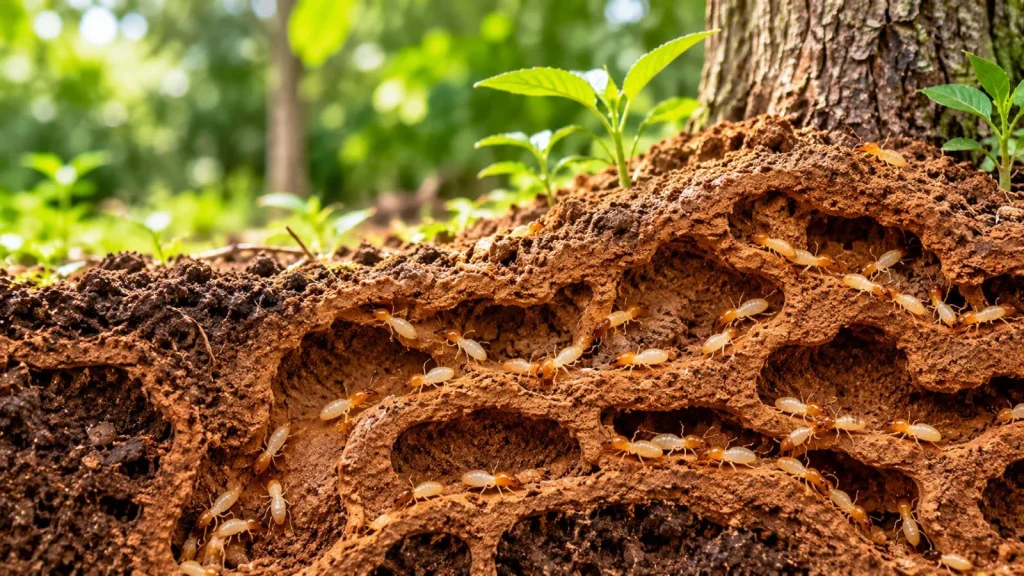
Most homeowners hear the word “termite”, and their mind goes straight to the worst-case version. Structural damage. Expensive repairs. That creeping uncertainty about how far it’s already gone. Fair enough. But it’s not the whole picture. Beneath the surface – literally – termites are doing something that rarely gets talked about. Cycling nutrients. Moving material through the soil. Keeping certain ecological processes ticking along.
If you’re thinking about termite control in New South Wales, it helps to understand what you’re actually working with. It’s a pest problem, yes. It’s also a bit more complicated than that.
How Do Termites Act as Ecosystem Engineers?
A termite mound isn’t a pile of dirt. It’s a functioning structure – designed, more or less, to regulate temperature, humidity, and airflow well enough to keep an entire colony alive through an Australian summer. Building it means tunnelling through compacted earth, which opens up channels for rainwater to move down into the soil instead of running straight off the surface. That process is called bioturbation. In drier regions where water infiltration is already limited, it matters more than you’d think.
They’re also decomposers. Dead wood, leaf litter, organic debris – termites break it down and push the carbon and nutrients back into the soil. Microbial activity increases. Plants benefit from that. Research in tropical and subtropical forests has found measurable connections between termite activity and vegetation health. The process itself isn’t complicated. It just happens underground, out of sight, which is probably why it doesn’t come up much in conversation.
What Is the Link Between Termites and Soil Health?
Soil where termites are active tends to behave differently. It holds more organic matter. It aerates better. Under dry conditions, water retention is often higher than you’d expect. The environment termites create tends to suit the microorganisms that make nutrients easier for plant roots to access.
Agricultural research points in the same direction. Some studies have found links between moderate termite activity in farming areas and improved soil fertility – in certain cases, even better crop yields. Same basic mechanisms: nutrient cycling, aeration, the whole thing. None of that is a reason to let termites anywhere near your house frame. It’s more a reminder that context matters. Termites working through undisturbed bushland soil are doing something very different from termites inside a wall cavity. Worth keeping those two situations separate in your head.
How Can Property Owners and Termites Coexist Sustainably?
Most Australian homeowners aren’t trying to wipe out every termite within a kilometre. The actual goal is keeping them out of the building. Sustainable pest management tends to focus on prevention – physical barriers put in during construction, controlling moisture around the foundation, inspections that catch small issues before they become large ones.
What that looks like in practice depends heavily on where you live and which species are common in your area. In agricultural settings, land managers sometimes leave termite populations alone if no damage is happening. In suburban or urban areas, that’s rarely a realistic option. Termite control in New South Wales usually means some combination of preventive treatment and ongoing monitoring, adjusted for local species and soil conditions. No single approach works the same way everywhere.
Moving Forward with a Balanced Approach
Termites are useful insects in the wrong place. That’s the tension. They do real things for soil health, all of it invisible, and they can quietly eat through a structural beam using the same basic biology. Both are true at once.
That doesn’t make the decision harder – if anything, it’s clarifying. You protect the structure. You just don’t have to treat every termite in every context as purely destructive. If you’re seeing signs of activity on your property, a licensed pest control professional can help you figure out what’s actually there and what actually needs to be done. A proper inspection first is almost always the right place to start.



Leave a Reply