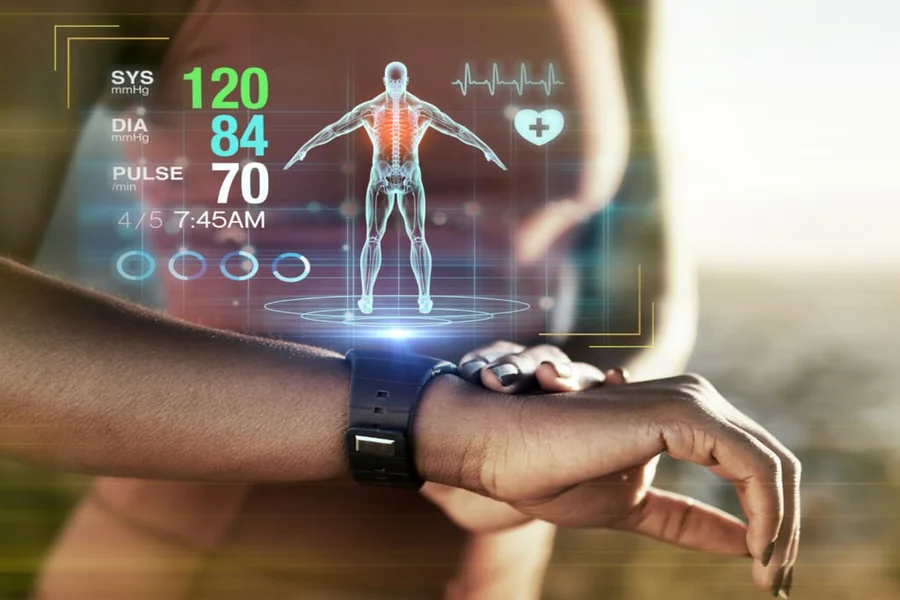

Wearable technology, electronic technology that can be worn on the body and used throughout the day. Smartwatches, fitness trackers, smart rings, health monitors and connected glasses are some of the common examples. These devices gather and analyze data including movement, heart rate, sleep patterns, location and notifications. Wearable technology is making useful technology accessible to everyone, which is transforming the way people manage their health, communicate, exercise, work, travel and organize their time. The evolution of wearable technology is still ongoing, and it is increasingly becoming a reality for many people.
Fashion has become more than just a technology fad for geeks. In the case of humans, there are several people that make use of a smartwatch for information, a fitness tracker for steps, or a smart ring for sleeping information. Such devices are now a part of everyday life.
Wearable technology is also transforming the way users access information. Users don’t have to pick up their phone every time they need an update—they can instead check their wrist, or other connected gadget. This little tweak can make everyday Activities easier.
Wearable tech is also changing our lives in other ways: health and fitness, work, travel and personal safety. As it becomes more integral to the human experience, it also comes with significant privacy, accuracy, cost and technology usage questions.
What Is Wearable Technology?
Wearable technology includes electronic devices that are designed to be worn on the body. The majority of wearables rely on some type of sensor, processor, wireless technology or all of the above.
One of the more common is the smartwatch. They can print messages, record physical activity, guide, measure some health data, and communicate with smartphones. Fitness trackers emphasize more on movement, exercise, and health metrics.
There are other examples of wearable tech such as smart rings, connected glasses, hearing gadgets, and unique health monitors. They have applications for general consumers and for specific requirements in health, sports, workplaces, etc.
One of the main factors of the success of wearables is their capacity to gather data continuously. A phone can track activity, but a body-worn device can collect data all day long, without much effort on the part of the wearer.
This allows wearable technology to be useful in helping people to process, make sense of and review the information they are collecting through their actions.
How Wearables Are Changing Health And Fitness
Wearable technology has a huge impact in the health and fitness sector. Access to information regarding physical activity and daily activity is now easier for people.
A fitness tracker can help you track how many steps you take, how long you exercise, calories burned, and more data related to your activity. Smartwatches can also monitor heart rate, and include sleep, stress or fitness-related features.
This information can help people take their attention to their habits. If a person realizes that they are not very active throughout the day, they might want to make an effort to get regular walks in during the day.
Wearables can also help make fitness goals more understandable. Users can view individual trends over time, not just general advice.
Common uses include:
- Keeping an eye on step counts and activity level throughout the day.
- Track exercise activities and length of exercise.
- Observing sleep patterns
- Checking heart-rate information
- Using reminders to get up or to take a break
- Recording progress toward fitness goals
- Examining the trend of activities over time.
Wearable health data is not a substitute, however, for medical advice from a health professional. Consumer devices may come with certain restrictions, and measurements sometimes may not be precise enough for medical use.
It’s important to look for patterns rather than each individual measurement, as the real value to be gained is in encouraging healthier habits.
Wearable Technology Makes Communication More Convenient
Wearable technology is also shifting the way that people communicate. With smartwatches, users can now view calls, text messages, calendar reminders and app notifications without having to continually check their phones.
This can be helpful in cases where it is not convenient to remove a cell phone. Users can easily see a crucial notification from their wrist when they are cooking, strolling, working or exercising.
Wearables may also be able to minimize phone usage for simple tasks. Users can play music, reply to some messages, schedule reminders, or give instructions to music directly from their device.
This isn’t to say that smartphones are soon going to be obsolete. Rather it is, wearable tech frequently functions as a component of the smartphone.
The correlation of the two devices is significant. The wearable will generally be more limited in functionality than the smart phone, but will be used to give easy access to certain information.
This can alter the way people regulate their attention over time. Looking at a smartwatch may be less intrusive than unlocking a phone and opening several apps.
However, there is always a new issue with constant alerts. If all the messages make it to the wrist, it may be difficult to unplug. In order for wearable technology to be useful, users must be able to manage which notifications are attended to immediately.
The Role Of Wearables In Work, Travel, And Daily Tasks
Wearable tech is making a difference beyond health and communications. It can also aid activities of daily living when working, on the go and at home.
For instance, a smartwatch’s navigation will offer directions without a user having to hold a phone. Certain devices are capable of vibrating when it’s time to turn. This can enable the pedestrian or cyclist to walk or ride with less effort, and without needing to use both hands.
Wearables also can contribute to productivity. People can be reminded, alerted and warned about a schedule by using calendar reminders, calendar alarms, timers, task notifications and quick communication tools.
In certain workplaces, specific wearable devices are employed for improving efficiency or safety. The connected equipment can be used by the workers to retrieve information, communicate with other workers, or monitor environmental parameters.
There are other fields in which wearables can be helpful, specifically transportation. A smartwatch can facilitate digital payment, boarding details, navigation, or translation capabilities, depending on the device and service.
These applications demonstrate a significant change in consumer technology. Devices are becoming less focused on one specific task and more integrated into everyday activities.
People don’t need to stop what they are doing to use technology; they can use technology while interacting with it.
Privacy, Accuracy,And Other Challenges
There are pros and cons when it comes to wearable technology. That is all a lot of personal data these devices are gathering and it poses a legitimate question of privacy.
Health information, location data, and behavior patterns, among other things, are sensitive information. Users should be aware of the information their device collects, how that information is stored, shared, and used.
Another issue of significance is accuracy. The development of wearable sensors has come a long way, but they aren’t foolproof. Measurements may vary from device to device, and the quality of the sensors, device placement, and device movement can affect measurement.
The dependency thing also comes into play. What could be a helpful tool can become a source of stress if the user is constantly checking numbers, notifications or activity goals.
There’s also cost to take into account. There are some high-tech wearables that come with a hefty price tag, and many others invest in the new features will have to be compatible with the smartphone or smartphone owner, or require a subscription service to access the new features.
These are just a few reasons why the number of features available on a wearable device should not be the only thing you consider while making your decision. Users should be conscious whether it is truly a problem in their everyday lives that the device is trying to solve.
To achieve this, it is best to concentrate on a handful of useful functions, instead of using all features.
What The Future of Wearable Technology May Look Like
Wearable technology will be more closely integrated with other digital services. Future devices could be even more useful and less intrusive with advancements in sensors, artificial intelligence, battery life and wireless technology.
It is likely that health monitoring will continue as one of the areas of development. Wearables could be more adept at detecting patterns and displaying health information in a more user-friendly and easily comprehensible manner.
AI could also help make wearable devices more personalized. Future systems can give a more useful context to the data, rather than just the data itself, based on a person’s habits and preferences.
The wearable devices design will also evolve. They might be easier to wear during the day due to their smaller size, longer battery life and comfortable materials.
But it’s not just about technology, however, it will be about trust as well. People must be able to trust that their personal information is treated responsibly and that the information that wearable devices convey is information for which they can have a degree of safety.
Technology that seamlessly integrates into a person’s daily life will be the most successful wearable technologies.
Final Thoughts
Wearable technology is altering the way people live their lives by placing helpful digital gadgets right next to the body. Using a smartwatch, fitness tracker, smart ring, and other connected gadgets people can track activity, manage communication, organize their schedules, get directions to new places, and gain insight on their daily routines.
The most significant shift is not so much it’s people have more data; it’s people have more data at their fingertips. It’s the fact that technology can gather and provide information in normal routine situations with minimal effort.
The convenience has definite advantages but balance is necessary. When considering the use of wearable technology, it is important to take into account privacy, accuracy, cost and digital dependency.
In most people’s minds, the most useful wearable tech doesn’t always have to be the most feature-packed. It’s the one that gives you information you need, saves you time, and helps you achieve your daily objectives without adding to the clutter.
Wearable technology is going to continue to evolve, and it will probably have an increasing influence on people’s everyday lives. The future will depend on how these devices are able to accommodate convenience, privacy, useable information, accuracy, and sometimes unplugging or disconnecting.