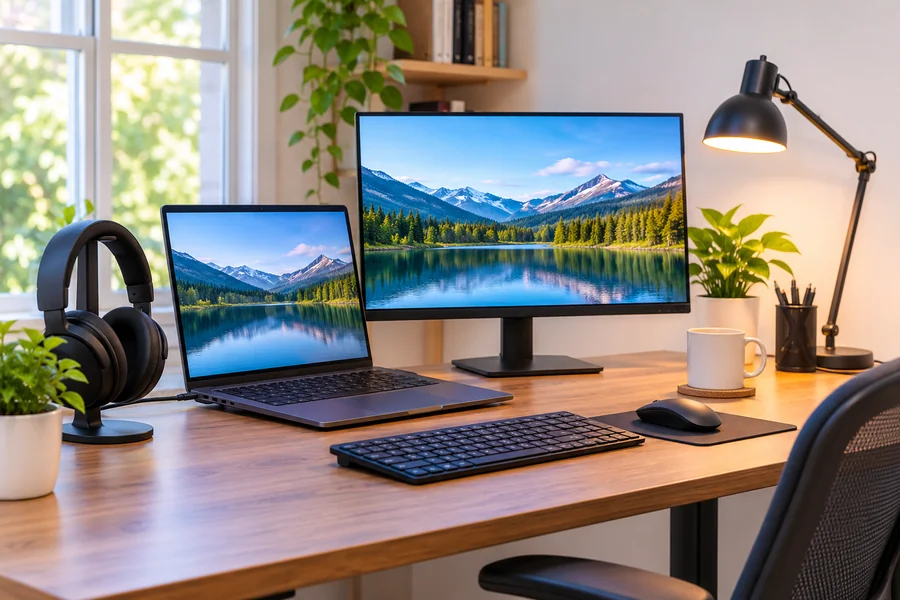

Working from home sounds simple until your laptop freezes in the middle of a client call. A slow machine wastes your time, breaks your focus, and makes you look unprepared.
The right hardware fixes all of that. Before you buy, check the Dell laptop price in Bangladesh to see what a solid work laptop costs.
Then use this guide to pick parts that match your job, not just your wallet. A few smart choices now will save you stress for years.
Match Your Hardware to Your Daily Tasks
Begin with work and not a list of specs. Record your most common tasks, such as video calls, Spreadsheets, writing, or design. The amount of power you need is determined by your top tasks.
Simple jobs such as emails, file work, and phone calls will be handled by a simple machine. Most video editing or design files are heavy and require more speed and memory. A writer working with documents requires a different computer than an editor working with large video files.
So, purchasing excess electricity is a waste of cash. If you buy too little, it’s a waste of your time, and your time is money. Make this decision first, and all other decisions become easier.
Choose a Laptop for Freedom or a Desktop for Power
You will have the freedom to move with a laptop, and more power for the same price with a desktop. If you work in cafes, co-working spaces, or other rooms, purchase a laptop. A desktop may be the better purchase if you sit at your desk all day.
A laptop combines a screen, keyboard, camera, and battery in one package. That means that you will get fewer cables and no additional purchase. A desktop is easier to repair and upgrade, though. If you’re one of the many people who work remotely, I go for the laptop. It accompanies you wherever you go and will work for some time when the power runs out.
Think about weight, too. If you take your laptop with you every day, opt for a lightweight model that has good battery life. A heavy machine leaves home.
Get the Processor, Memory, and Storage Right
The speed of your computer is determined by these three parts. Go with a medium processor, ample RAM, and an SSD. It is a combination that will make your work smooth without a huge bill.
Avoid the most pricey Processor. The vast majority of office activities don’t need it, and the funds are better spent elsewhere. All the apps you’re using currently are in memory. When you have many browser tabs, chat apps, and documents open, it puts a heavy strain on memory. Personally, I recommend you go with 16 GB, which is a good amount for most office-related project work.
Then, select an SSD over the old hard drive. Quick and opens files in seconds. If you have many large files, you should use an external drive for additional storage. Be sure to see if you can expand memory or storage later on. That little detail can help prolong the life of your machine.
Look Sharp and Sound Clear With the Right Screen, Camera, and Mic
Your screen, webcam, and microphone define your work and the way you are perceived. With a clear screen, you will not suffer from eye strain, and a good mic will ensure that you are heard easily. The built-in webcam and microphone options can vary widely, so make sure to find out more before you purchase.
Choose a screen size that is comfortable for reading without straining your eyes. If you have many windows open, you can use a second monitor to help. Install a headset with a mic for calls – this will minimize background noise at home and help you sound better.
When talking on the phone, look into a window or a light source so you can be seen clearly. If you spend many hours at the keyboard and mouse, use a separate one. Your wrists will thank you for it.
Set Up a Workspace That Keeps You Focused and Pain-Free
Good hardware in a good setup is best. Position the screen at eye level, use a back-support chair, and ensure good lighting in the workspace. These minor adjustments help you work longer and stay pain-free.
For laptops, prop it up on a stand and connect an external keyboard. This raises the screen and prevents your wrists from getting out of line. Set up a desk lamp, rather than the screen. Do take short breaks too! A relaxed body maintains a clear mind.
Keep Your Connection and Power Steady
Even the best hardware is not useful if you lose your internet connection or your power goes out. Purchase a good router and, if there is a power outage in your area, a backup like a UPS. A consistent structure will keep your work and your income secure.
Position your router near your work area. If it’s a significant phone call, connect with a network wire (wireless connections tend to be less reliable). Make multiple copies of your files as well. Use an external drive or a cloud service every week on the same day. You can lose an entire project because of just one missing file.
Even safeguard your files from prying eyes. When you leave your computer on, lock the screen and use strong passwords. You must protect your work!
Check Ports, Warranty, and Price Before You Pay
Things can make big headaches later if you don’t pay attention to the small details. Check out the ports, warranty, and seller’s support before paying. The prices are subject to change, so please verify price and availability before ordering.
Make sure your device has the right ports for your needs, including USB, HDMI, and more. If not, you’ll have to purchase additional adapters. Then read the warranty and the details on how repairs will be handled. Inquire about the repair time, as it will cost you income if your work laptop is broken.
Then shop around among the sellers. Better to pay “just a bit more” for an authentic deal rather than for a “too good to be true” one. Also think about the future. If you are likely to have a growing workload, choose a machine that has a bit of extra power.
Build a Setup That Works as Hard as You Do
The first step to using good hardware on the job is to start with the job. Get the right laptop/desktop for your needs, and invest in RAM, an SSD, and a processor. Include a clear screen, a quality mic, a comfortable desk, a stable connection, and a backup plan. Once, before you pay, check ports, warranty, and price.
Your equipment should never be the reason you miss your deadline.