Why Bangkok Became One of the World’s Rooftop Bar Capitals
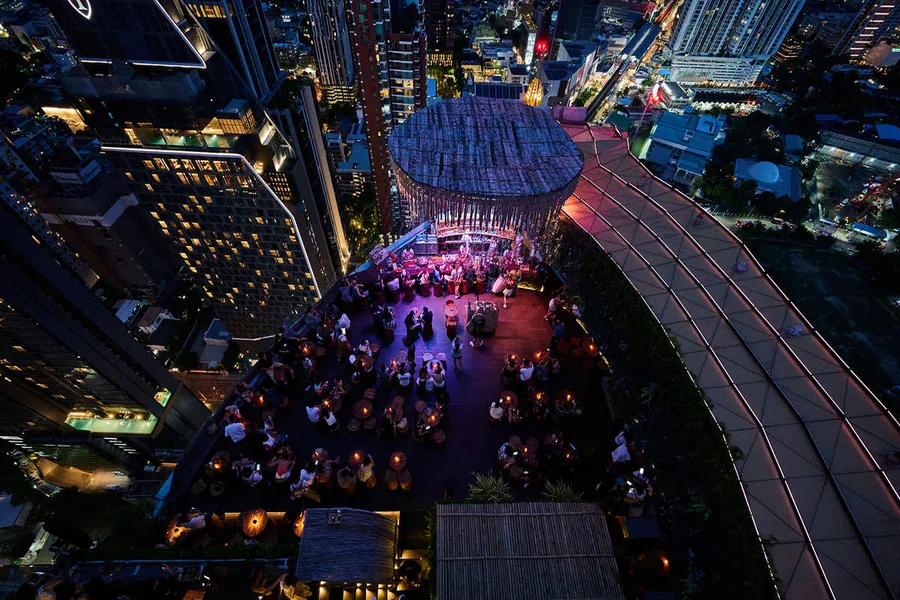
Bangkok has developed a nightlife culture that extends far beyond its busy streets, night markets and entertainment districts. High above the traffic, rooftop bars occupy luxury hotels, commercial buildings, shopping complexes and residential towers. Some serve expensive champagne and handcrafted cocktails, while others attract younger crowds with DJs, craft beers and casual dining. Few cities have embraced rooftop entertainment with such enthusiasm.
The popularity of rooftop bars in Bangkok comes from a combination of urban development, tropical weather, international tourism and competition within the hospitality industry. As buildings have grown taller, business owners have discovered new ways to turn their upper floors into profitable entertainment destinations.
Rooftop bars also reveal an interesting contrast within the Thai capital. A city known for inexpensive street food, crowded markets and chaotic intersections offers sophisticated dining experiences hundreds of meters above the ground. Visitors can spend the afternoon exploring traditional neighborhoods before enjoying a cocktail overlooking illuminated skyscrapers.
What began as an innovation among luxury hotels has developed into an established part of Bangkok’s nightlife. Today, height alone is no longer enough to attract customers. Businesses compete through architecture, creative menus, entertainment and increasingly ambitious interior design.
1. When the Streets Get Too Crowded, Bangkok Looks Up
Bangkok’s urban development has played a significant role in the growth of its rooftop bar industry. Decades of commercial expansion, population growth and property investment have transformed the Thai capital into a city dominated by office buildings, hotels, shopping centers and residential towers.
Neighborhoods such as Sukhumvit, Sathorn, Silom and Thonglor contain numerous high-rise developments. International hotel chains operate alongside residential complexes and commercial offices, creating opportunities for hospitality businesses to occupy elevated spaces.
The concentration of buildings makes ground-level commercial space particularly valuable. Restaurants and bars compete with retail stores, convenience shops, offices and other businesses for accessible locations. Rooftops offer property owners another way to generate income without sacrificing existing commercial units.
A successful rooftop venue can turn a previously underused part of a building into one of its most recognizable features. An area once occupied primarily by technical equipment or maintenance facilities can become a destination capable of attracting hundreds of customers.
Bangkok’s traffic also contributes to the appeal of elevated entertainment. Motorcycles, taxis, buses and private vehicles dominate major roads throughout the day. Street-level restaurants often operate within meters of congested intersections, exposing diners to engine noise and exhaust fumes.
Rooftop bars provide a degree of separation from these surroundings. Although customers remain in the middle of the city, the experience feels different. Traffic becomes a distant background sound, buildings appear less imposing, and the open sky creates a greater sense of space.
The contrast becomes particularly noticeable during the evening rush hour. While thousands of commuters navigate busy streets below, rooftop visitors can watch the movement of the city without participating in it.
Bangkok’s geography makes elevated viewpoints especially attractive. The city occupies relatively flat terrain, with few natural hills offering panoramic views. Tall buildings provide some of the best opportunities to appreciate the capital from above.
The Chao Phraya River adds another dimension to these views. Its winding route passes historical temples, riverside hotels, residential communities and modern commercial developments. Rooftop venues overlooking the river can offer a combination of traditional and contemporary Bangkok within a single view.
Different neighborhoods also provide distinct rooftop experiences. Sathorn offers views across the central business district, while Sukhumvit showcases a mixture of residential towers, hotels and commercial developments. Riverside locations emphasize boats, bridges and waterfront architecture.
The continued construction of skyscrapers creates both opportunities and challenges. New developments provide additional locations for rooftop businesses, but they can also obstruct views from existing establishments. A bar that once enjoyed an uninterrupted panorama may eventually find itself surrounded by taller buildings.
Developers increasingly recognize the commercial value of attractive upper floors. Instead of treating rooftops as secondary spaces, some incorporate restaurants, swimming pools, gardens and entertainment areas into their original building plans.
Bangkok’s rooftop culture reflects a broader change in how the city uses its available space. Commercial activity no longer depends entirely on street frontage. Businesses can attract customers vertically, provided they offer a compelling reason to make the journey upstairs.
2. A City Where Summer Never Really Ends
Bangkok’s tropical climate gives rooftop hospitality a considerable advantage over similar businesses in colder countries. While outdoor venues in many European and North American cities face extended winter closures, Bangkok can support open-air dining throughout much of the year.
Temperatures remain relatively high across all seasons. Although afternoons can become uncomfortable, particularly during the hottest months, evenings often provide better conditions for outdoor entertainment.
The transition from daylight to darkness has become an important part of the rooftop experience. Customers frequently arrive before sunset, allowing them to watch the city gradually change as daylight disappears and buildings switch on their exterior lighting.
Unlike traditional indoor restaurants, rooftop venues can offer two noticeably different settings during a single visit. Early evening provides natural light and expansive views, while nighttime introduces illuminated buildings, colorful bars and decorative lighting.
Bangkok’s sunsets also provide restaurants with a natural marketing opportunity. Hotels promote sunset dining packages, bars organize early evening entertainment, and customers plan visits around the changing colors of the sky.
The city’s climate influences local dining habits as well. Outdoor restaurants, street food markets and open-air cafés have long formed part of everyday life in Thailand. Eating and drinking outside is already familiar to many residents, making rooftop hospitality a natural extension of existing habits.
However, operating an outdoor venue in Bangkok requires more than taking advantage of warm temperatures. High humidity, intense sunlight, tropical storms and seasonal air pollution can create difficult operating conditions.
The rainy season presents one of the biggest challenges. Heavy showers can interrupt service within minutes, forcing employees to move customers, protect equipment and reorganize seating arrangements. Restaurants without suitable indoor alternatives may lose a significant portion of an evening’s revenue.
Many rooftop establishments address these challenges through retractable awnings, covered terraces, indoor lounges and sheltered dining areas. These features allow businesses to continue serving customers when weather conditions change.
Wind becomes another concern at higher elevations. Lightweight decorations, umbrellas and unsecured furniture can create safety hazards. Designers must balance attractive outdoor spaces with practical requirements that differ considerably from street-level venues.
Selecting suitable bar and restaurant furniture becomes particularly important in these environments. Tables, seating and outdoor dining arrangements must withstand sunlight, moisture, frequent cleaning and heavy commercial use while maintaining the appearance expected from an upscale establishment.
Materials such as powder-coated aluminum, treated wood, synthetic wicker and weather-resistant upholstery are common choices for exposed terraces. Operators must also consider drainage, storage and how quickly employees can reorganize outdoor areas before a storm.
Vegetation helps soften the appearance of rooftop spaces and provides limited protection from sunlight. Tropical plants, decorative trees and landscaped terraces can make a venue feel more like a resort than a commercial building.
Lighting becomes equally important once the sun disappears. Restaurants need sufficient illumination for customers to read menus and enjoy their meals without overpowering the surrounding city views. Carefully positioned lighting can highlight architectural features while maintaining a comfortable atmosphere.
Bangkok’s weather creates genuine operational challenges, but it also gives rooftop businesses opportunities that colder destinations cannot easily match. An outdoor restaurant does not need to depend on a short summer season to attract customers.
For international visitors arriving from colder countries, the ability to spend an evening outdoors in January or February adds another reason to explore the city’s rooftop bars.
3. How Luxury Hotels Turned Rooftops Into Money-Making Destinations
Bangkok’s modern rooftop bar culture gained momentum during the early 2000s, when luxury hotels began developing elevated dining experiences that differed significantly from traditional hotel restaurants.
Vertigo and Moon Bar at Banyan Tree Bangkok became early examples of this approach. Located on the hotel’s 61st floor, the former helipad became an open-air hospitality venue offering panoramic views across the capital.
Another influential development arrived in 2003 with Sirocco and Sky Bar at State Tower. The combination of elevated dining, distinctive architecture and extensive city views helped establish a new category of luxury entertainment in Bangkok.
CNA Luxury+1
These establishments demonstrated that hotel restaurants could become independent tourist attractions rather than simply serving guests staying in the building.
The distinction has considerable financial importance. A conventional hotel restaurant depends partly on room occupancy, breakfast services and business travelers. A successful rooftop bar can attract customers from across the city, including tourists staying at competing hotels.
The release of The Hangover Part II in 2011 introduced Bangkok’s rooftop nightlife to an even wider international audience. Scenes filmed at Lebua helped associate the property with the city’s entertainment culture, attracting visitors interested in experiencing a recognizable movie location.
Hollywood exposure provided publicity that would have been difficult to reproduce through conventional advertising. Bangkok’s rooftop bars subsequently appeared in travel magazines, television programs, tourism campaigns and online destination guides.
Other hospitality businesses recognized the commercial potential. Hotels began developing their own rooftop concepts, competing through height, views, menus and architectural design.
Premium pricing became an important component of the business model. Customers visiting rooftop venues often understand that their bill reflects more than the ingredients used to prepare a drink. They are also paying for the location, view, atmosphere, service and reputation of the establishment.
Consider a hypothetical rooftop bar selling 150 cocktails per evening at an average price of 550 baht. Cocktail sales alone would generate 82,500 baht in nightly revenue, or approximately 2.5 million baht over 30 evenings, before accounting for food, other beverages and private events.
These figures represent illustrative revenue rather than profit. Labor, ingredients, rent, maintenance, utilities, taxes and marketing can consume a substantial portion of sales.
Rooftop operations also introduce expenses that conventional restaurants may not encounter. Equipment must travel through elevators, outdoor installations require regular maintenance, and high-rise locations demand careful attention to safety and building infrastructure.
Restaurants may need specialized kitchens, additional storage, dedicated elevators and engineering work to accommodate their operations. Weather interruptions can further complicate revenue forecasting.
Despite these challenges, rooftop bars offer hotels several advantages beyond immediate food and beverage sales. A distinctive venue can strengthen a hotel’s reputation, attract media coverage and encourage travelers to book accommodation at the property.
Private events create additional income opportunities. Companies organize networking evenings, product launches and corporate celebrations, while individuals book venues for birthdays, weddings and anniversaries.
Bangkok’s position as an international business and tourism destination supports this market. Hotels can serve corporate customers during the week, leisure travelers throughout the year and local residents celebrating special occasions.
Competition has also encouraged the development of more affordable alternatives. Not every rooftop business needs to occupy the highest floor of a luxury hotel. Smaller establishments can build profitable concepts around casual service, approachable pricing and neighborhood customers.
The industry has consequently expanded beyond traditional five-star hospitality. Independent operators and commercial property developers have recognized that rooftops can accommodate numerous business models, from fine dining to informal nightlife.
4. Selling an Experience, Not Just a Cocktail
Modern hospitality increasingly revolves around experiences that customers remember long after their visit. Bangkok’s rooftop bars benefit from this change because they offer something that ordinary restaurants cannot easily reproduce.
A well-prepared cocktail is available in thousands of establishments. Drinking that same cocktail while overlooking an illuminated city from the 50th floor creates a more distinctive occasion.
The experience begins before customers reach their tables. Hotel entrances, elevator journeys, reception areas and dramatic staircases can build anticipation. Some venues deliberately conceal the surrounding view until visitors arrive at the main terrace, creating a memorable first impression.
Architecture plays a central role in establishing each venue’s identity. Some rooftop bars adopt contemporary luxury through marble surfaces, metallic finishes and carefully arranged lighting. Others incorporate tropical vegetation, natural textures and colorful decorative elements.
Themed environments help businesses distinguish themselves in an increasingly competitive market. A futuristic cocktail lounge attracts a different audience from a Mediterranean-style terrace or a rooftop garden inspired by Southeast Asian forests.
Social media has accelerated this emphasis on visual identity. Instagram, TikTok and other platforms allow customers to share their experiences immediately, exposing venues to audiences far beyond Bangkok.
An unusual staircase, illuminated sculpture or distinctive seating area can attract considerable online attention. Restaurants increasingly recognize that customers often select destinations after discovering photographs and videos rather than reading conventional advertisements.
Tichuca Rooftop Bar illustrates this development. Its tropical styling and illuminated tree installation have become recognizable features, helping the venue distinguish itself from more traditional hotel rooftops.
However, attractive design alone rarely guarantees long-term success. A rooftop bar that delivers impressive photographs but disappointing drinks, uncomfortable seating or slow service may struggle to attract repeat customers.
Successful establishments must balance visual appeal with practical hospitality. Customers need comfortable places to sit, sufficient space to move around and service that matches the venue’s pricing.
Music also shapes customer expectations. Some venues maintain quiet atmospheres suitable for romantic dinners and conversation. Others feature DJs, electronic music and standing areas designed for more energetic evening entertainment.
This variety allows Bangkok’s rooftop industry to attract different groups without depending entirely on international tourists. Local professionals may visit after work, couples celebrate anniversaries, and groups of friends organize weekend gatherings.
Bangkok’s reputation as a relatively affordable travel destination provides another advantage. Visitors who might rarely visit luxury restaurants in cities such as London, Zurich or New York may find certain upscale experiences more accessible in Thailand.
Bangkok’s premium rooftop venues can still be expensive, particularly by local standards. Nevertheless, the wider range of establishments allows travelers to choose between special-occasion luxury and more reasonably priced alternatives.
Food and beverage menus have also become more creative. Bartenders incorporate Thai ingredients such as lemongrass, coconut, mango, tamarind, ginger and pandan into cocktails, introducing international customers to familiar local flavors in unfamiliar combinations.
Restaurants similarly combine Thai culinary traditions with international cooking techniques. These menus help rooftop businesses establish an identity connected to their location rather than reproducing generic international hotel dining.
Alcohol-free drinks are another opportunity. Travelers who do not drink alcohol can still enjoy panoramic views, elaborate mocktails, food and entertainment.
The most successful venues recognize that the rooftop itself is only the starting point. Customers may arrive because of the view, but their overall experience determines whether they recommend the establishment or return on their next visit.
5. Above the Ordinary: Bangkok’s Most Remarkable Rooftop Bars
Bangkok’s rooftop establishments demonstrate how differently hospitality businesses can interpret the same concept. Some emphasize extraordinary heights, while others focus on food, architecture, nightlife or riverside scenery.
Sky Bar at Lebua remains one of the city’s most internationally recognized rooftop destinations. Its elevated location at State Tower, illuminated bar and distinctive golden dome have made it a familiar feature in photographs of Bangkok.
The venue represents a classic luxury rooftop experience. Its reputation, architectural setting and connection to Hollywood attract visitors who want to experience one of the establishments that helped popularize Bangkok’s elevated nightlife.
Vertigo and Moon Bar at Banyan Tree offer another interpretation of traditional rooftop hospitality. Their open-air setting emphasizes panoramic views, fine dining and the sensation of being suspended above the surrounding business district.
The relatively narrow rooftop layout creates a distinctive dining environment. Rather than relying heavily on elaborate decorations, the venue allows Bangkok’s surrounding buildings and distant lights to become the main visual attraction.
Tichuca Rooftop Bar takes a different approach. Located in the T-One Building near Thonglor, it combines tropical styling with contemporary nightlife. Its illuminated centerpiece, vegetation and energetic music appeal to customers looking for entertainment beyond conventional luxury dining.
Tichuca demonstrates how newer rooftop establishments compete through recognizable design features rather than relying exclusively on their elevation.
Octave Rooftop Lounge & Bar at Bangkok Marriott Hotel Sukhumvit offers a multi-level interpretation of rooftop hospitality. Its different spaces accommodate customers seeking relaxed drinks, group gatherings or a livelier atmosphere later in the evening.
Its location near Thonglor places it within one of Bangkok’s established entertainment neighborhoods, where restaurants, cocktail bars and nightlife venues compete for both local and international customers.
Sky Beach at King Power Mahanakhon takes elevation even further. Located on the building’s 78th floor, the venue combines rooftop hospitality with the experience of visiting one of Bangkok’s most recognizable architectural landmarks.
Its setting demonstrates the commercial relationship between observation decks, tourism attractions and hospitality businesses. Customers can combine sightseeing with food, drinks and entertainment within the same development.
SEEN Restaurant & Bar offers a contrasting experience along the Chao Phraya River. Instead of focusing exclusively on skyscrapers, the venue incorporates views of passing boats, illuminated waterfront buildings and the changing activity along the river.
Riverside rooftops provide an alternative perspective of Bangkok, particularly for visitors interested in the relationship between the city’s historical origins and modern development.
Smaller establishments reveal another side of rooftop culture. Neighborhood bars, boutique hotels and modest commercial buildings can offer pleasant elevated settings without the premium pricing associated with famous luxury venues.
These businesses benefit from customers who prioritize atmosphere, conversation and affordability over impressive heights. A rooftop on the eighth floor can provide a more enjoyable evening than one on the 60th if the service, music and overall environment suit the customer.
The expansion of affordable venues indicates that Bangkok’s rooftop culture has moved beyond its original luxury hotel origins. What was once associated primarily with international travelers and expensive special occasions has become a broader category of urban entertainment.
Future developments will likely place greater emphasis on distinctive concepts rather than height alone. As more buildings offer panoramic views, operators will need other ways to attract attention.
Rooftop gardens, open-air kitchens, contemporary Thai dining, live entertainment and environmentally conscious design could become increasingly important. Businesses may also invest more heavily in weather protection, sustainable materials and energy-efficient lighting to address the operational demands of tropical hospitality.
Bangkok’s rooftop bars ultimately succeed because they offer an experience that complements the city’s identity rather than replacing it. The crowded streets, historical temples, busy markets and constant movement below are precisely what make the views from above so captivating.
The Thai capital does not need to become quieter, less crowded or less energetic to offer sophisticated nightlife. It simply provides another place from which to enjoy it — several dozen floors above the streets.



Leave a Reply