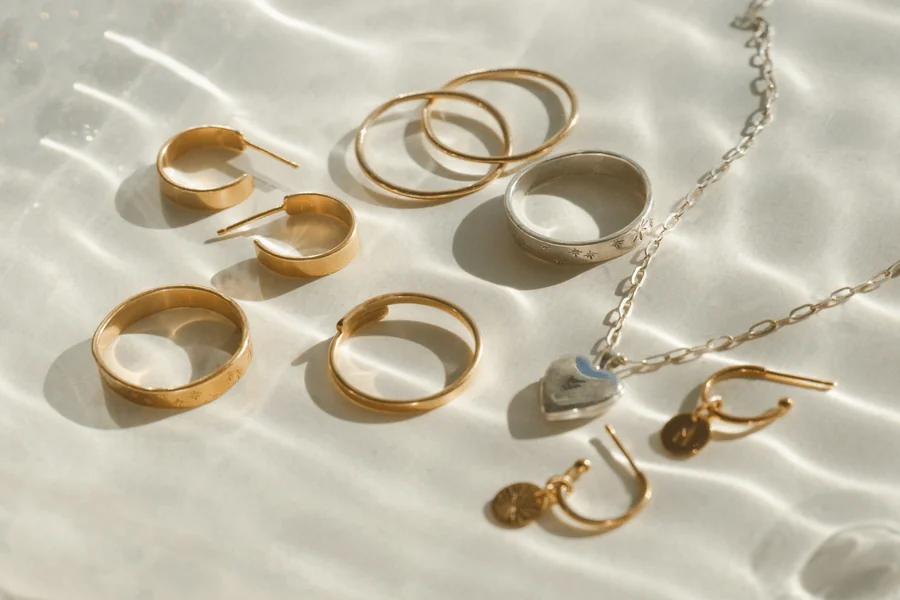

My grandmother’s opal ring sat in a drawer for eleven years because nobody in my family could decide what to do with it. The stone was loose, the band was thin as a paperclip, and three jewelers quoted wildly different numbers. That drawer is why I started asking better questions before agreeing to any repair.
You can sort almost any piece into “fix it” or “retire it” with two facts and five questions. The two facts are sentimental replacement cost and whether the metal itself still holds value. The five questions cover stone condition, setting design, metal hallmarks, wear pattern, and the repair ratio itself. Get those right and you’ll stop agonizing over pieces that were never going to survive another decade of wear.
Start With the Two Facts Nobody Argues About
Sentimental replacement cost is the first number. This isn’t what the piece would sell for on the secondary market. It’s what you’d realistically spend to recreate the emotional equivalent from scratch, including hunting down a similar stone in a similar cut. For a piece you inherited from a parent, that number is usually higher than the insurance schedule says, and that’s fine. Your insurance company doesn’t wear your ring.
The second fact is whether the metal is reclaimable. Gold, platinum, and sterling silver all hold melt or trade value. Gold filled and gold plated pieces usually don’t, which is why a plated chain that snaps often isn’t worth a bench visit at all. A quick look at the stamp inside the band tells you most of what you need. “14K” or “585” means real gold. “GF” or “GP” means a base metal core with a thin layer, and repairs on those often cost more than the piece is worth.
If both facts come back strong, you’ve already cleared the biggest hurdle. If either one is weak, keep reading anyway, because some pieces still make sense to fix.
Five Questions That Sort Almost Every Piece
Is the stone itself repairable, or just the setting?
A loose stone with an intact body is the easiest repair category there is. A chipped or fractured stone is harder. Emerald, opal, and tanzanite are famously fragile and often can’t take the heat that some repairs require. Diamonds and sapphires handle heat and pressure without complaint.
Here’s where I’d draw my own line: if the stone is cracked and rare, I’d replace it. If the stone is cracked and common, I’d still replace it, because a fresh stone in an old setting usually costs less than chasing a repair that keeps failing.
Does the setting have structural value, or is it a shell?
Prong and bezel settings with thick metal survive repairs well. Filigree and channel settings are trickier because the metal is doing structural work with almost nothing to spare. A jeweler has to rebuild the channels to reset stones, and that’s skilled hand work, not a quick solder job.
If your setting is vintage filigree and you love it, accept that repairs cost more than they would on a modern solitaire. If you don’t love it, the setting is the part you replace, not the part you save.
What does the hallmark actually say?
Hallmarks are tiny punch marks that tell you what a piece is made of and sometimes who made it. The Gemological Institute of America publishes educational material about how stones and metals are identified and graded, and it’s worth reading if you plan to buy or inherit jewelry. A hallmark that reads 14K or 18K confirms real gold. A hallmark with a maker’s mark from a known studio adds collectible value that changes the math entirely. A piece with no hallmark at all is a gamble.
Is the wear pattern normal, or is the piece being asked to do something it wasn’t built for?
Thin shanks that have worn to less than half their original thickness need rebuilding, not just polishing. A ring worn every day for thirty years has earned a restoration. A ring worn twice a year that’s already showing cracks was probably never right for the wearer.
Here’s a real scenario I’ve watched play out: a client’s heirloom brooch kept losing stones because she was pinning it to heavy wool coats. The repair was never the problem. The use was. She started wearing it on lighter fabrics and the repairs stopped.
Does the repair cost less than half the replacement value?
This is my own working rule and I’ll defend it. If a repair quote exceeds fifty percent of what a comparable new piece would cost, replace the piece instead and put the money into something you’ll actually wear. Under that threshold, repair almost always wins because you keep the history.
The rule breaks down for anything genuinely irreplaceable. A signed piece from a known studio, a piece with provenance, or the only surviving ring from one branch of a family tree all clear the bar no matter what the numbers say. Compare it to how provenance and origin are treated in gemstone documentation, where history itself adds measurable value to a piece.
What a Bench Visit Actually Looks Like
Walking in without a plan wastes everyone’s time. Here’s the sequence I use:
- Write down the story first. Two sentences about where the piece came from and who wore it. This is what determines sentimental weight, and it’s the thing you’ll forget to mention if you don’t write it down.
- Photograph the piece from five angles before you hand it over. You want a record of every scratch and stone position.
- Ask for a written estimate that separates parts and labor. A bench charge of a hundred dollars and a stone replacement of four hundred are two very different conversations.
- Ask whether the work happens in-house or gets sent out. Both are fine, but timelines and communication change depending on which it is.
- Get the timeline in writing. A resize can take a day. A full setting rebuild can take weeks. Knowing which one you’re in prevents a lot of phone calls.
- Confirm the warranty terms. Most bench work should carry a guarantee on the workmanship, even if the stone itself isn’t covered.
I’d rather pay a little more to a bench that explains its process than save forty dollars with someone who won’t tell me who’s touching my ring.
Where Full-Service Bench Work Fits In
Some shops only resize rings. Others handle every category of repair, from chain soldering to full setting rebuilds to gem polishing and clasp replacement. That broader range matters if you’re bringing in four pieces with four different problems, because it saves you four separate errands.
If you’re in the Pittsburgh area and want that range under one roof, jewelry repair services from Trinity Jewelers cover resizing, chain repair, and setting restoration on pieces whether or not you originally bought them there. The fact that they’ll touch a piece they didn’t sell you is a small thing that tells you a lot about how seriously they take the work.
Worth noting: not every piece deserves a bench visit. Costume jewelry, gold plated chains, and anything with a base metal core usually fails the two-fact test before you even get to the five questions. Save yourself the trip.
The Tools You’ll Want Before You Retire Anything
You don’t need a full bench. You need a jeweler’s loupe, which runs about fifteen dollars, and a strong light. The loupe lets you see prong wear and tiny chips you’d otherwise miss. The light shows you metal thinness by throwing shadows through the band.
Materials science has also given modern jewelers better options than previous generations had. NASA has documented how certain alloys and materials behave under heat and stress in ways that inform which repair methods are safe for which metals, and bench jewelers borrow heavily from that body of knowledge. It sounds like an odd reference for a ring repair, but the underlying question is the same: what can this material take before it fails?
When to Fix It, When to Let It Go
Fix it if the metal is reclaimable, the stone is stable or replaceable, the setting has structure, and the quote lands under half the replacement value. Let it go if the piece is plated, the stone is cracked and common, the setting is a shell, or the quote climbs past the threshold.
The sentimental override applies to both categories. Nobody needs a spreadsheet to justify repairing their mother’s wedding band, and no spreadsheet should talk you into spending six hundred dollars on a costume brooch that was never worth forty.
What’s sitting in your drawer right now, and what’s actually stopping you from getting it looked at?