
Have you ever received a message from a friend or colleague that ends with two exclamation marks instead of the standard one? You might have paused for a second to wonder if they were yelling, excited, or just being extra friendly. If you are someone who spends a lot of time texting, gaming, or scrolling through social media, you have likely encountered this specific bit of digital punctuation.
It is a small detail, but it often changes the entire vibe of a conversation. Whether you are a student, a professional, or someone just trying to decode the nuances of modern digital communication, understanding why people use this formatting is surprisingly helpful. In this article, we will break down exactly what that double punctuation signifies and how to read the intent behind it so you never have to second-guess a message again.
Defining the Double Exclamation Mark
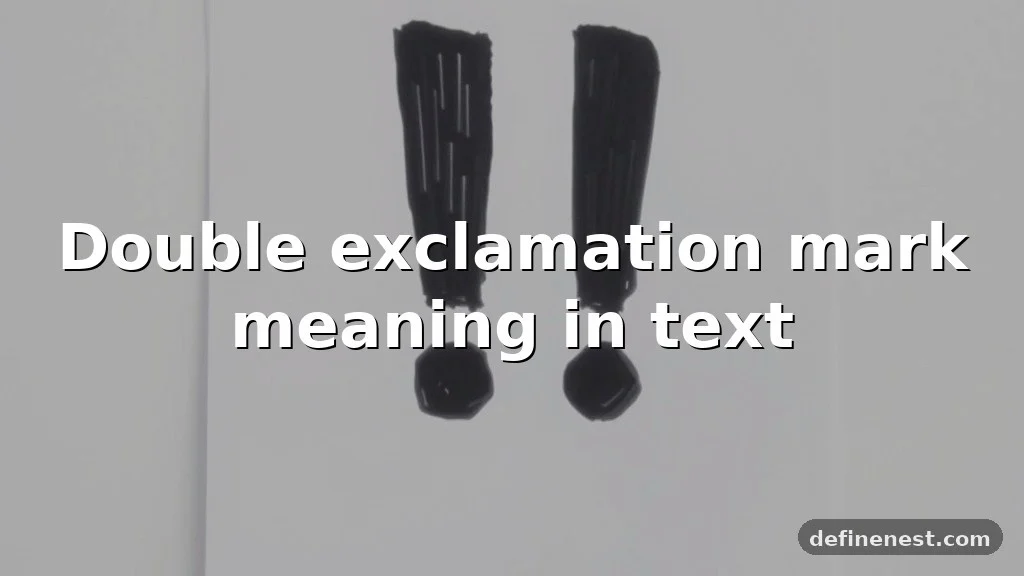
At its core, the double exclamation mark is a stylistic choice used to amplify the tone of a sentence. While a single exclamation mark indicates excitement, surprise, or an urgent command, using two of them turns the volume up a notch.
Think of it as a way to show extra enthusiasm that a single mark just cannot capture. In the world of digital text, where we lack the benefit of tone of voice, facial expressions, or body language, we rely heavily on punctuation to fill the gap.
When you see two exclamation marks, the sender is usually trying to convey a heightened state of emotion. It can signify genuine joy, intense agreement, or even a sense of urgency that borders on playfulness. For instance, if you tell a friend you are moving to a new city and they reply with “That is amazing!!”, they are signaling a level of excitement that feels more personal and warm than a standard “That is amazing!”
The extra mark acts as a digital exclamation of warmth. It bridges the gap between a polite acknowledgement and a high-energy reaction. It is a common way to show that the person on the other end is truly invested in what you are saying.
The History and Evolution of Punctuation
Punctuation has always been a way to guide the reader through the rhythm of a sentence. The exclamation mark itself has been around for centuries, though its exact origins are debated by linguists. Some believe it stems from the Latin word io, which was an expression of joy.
Over time, as we moved from formal writing to the rapid-fire world of digital messaging, the strict rules of grammar began to loosen. We started using punctuation not just for grammatical correctness, but for emotional expression.
As texting became the primary mode of communication, the double exclamation mark emerged as a way to show personality. In the early days of internet forums and chat rooms, people found that one mark felt a bit too formal or stiff. Adding a second mark became a shorthand for “I am really happy for you” or “I am laughing out loud.
This evolution reflects our human need to inject humanity into cold, digital text. We want our personality to shine through the screen, and using extra marks is one of the easiest ways to do that.
Today, it is so common that most people do not even think twice about adding that second mark when they are typing quickly on their phones. It has become a standard part of our digital vocabulary.
Usage Across Different Social Contexts
The way we use double exclamation marks changes depending on who we are talking to. In a casual text conversation between best friends, it is almost always a sign of high energy and friendship.
If you send a message like “I just got the tickets!!” it implies you are jumping up and down with joy. The recipient understands that you are excited, and the double mark serves as a visual indicator of your mood.
In gaming environments, the use of multiple marks can sometimes indicate a sense of urgency or high-stakes competition. If a teammate types “He is behind you!!” in a chat box, the extra mark is meant to grab your attention immediately. It functions as a warning that needs to be read and acted upon in a split second.
Conversely, in social media comments, people often use double marks to show support. You might see a post about someone getting a promotion followed by a string of comments saying “So proud of you!!” or “Well deserved!!”
Here, the double mark acts as a virtual high-five. It is a way to make your comment stand out in a sea of text and show that your positive reaction is sincere and enthusiastic.
Common Misconceptions and Clarifications
There is a common belief that using more than one exclamation mark is grammatically incorrect. While it is true that formal style guides would advise against it, texting is a different beast entirely.
Many people worry that using two marks makes them look unprofessional or childish. While it is true that you should probably avoid them in a formal business contract or a serious email to a client, they are perfectly acceptable in modern, informal communication.
Another misconception is that two exclamation marks mean the person is angry or shouting. While using five or ten exclamation marks might be interpreted as aggressive, two is usually the “sweet spot” for friendliness. If someone is genuinely angry, they are more likely to use caps lock or a single, sharp exclamation mark paired with a blunt sentence.
If you are ever unsure, look at the words themselves. If the words are positive, the double mark is almost certainly positive. If the words are negative, the double mark might be used to emphasize frustration.
Context is always the final judge when it comes to punctuation. If you are ever confused, check out this guide on punctuation usage to see how these marks function in standard writing versus the informal digital world we live in today.
Similar Terms and Alternatives
People often reach for other ways to express excitement when they want to avoid using multiple punctuation marks. Some might use emojis to do the heavy lifting.
A red exclamation mark emoji or a sparkle emoji can convey the same level of enthusiasm without breaking any grammatical rules. Others might use capitalization to emphasize a word, such as “That is GREAT!” instead of “That is great!!”.
There is also the use of the question mark in a similar way. Sometimes, people use “???” to indicate confusion or disbelief.
Just like the double exclamation mark, the double or triple question mark is a way to signal an extreme version of the base emotion. Below is a simple comparison of how these variations change the feeling of a message:
* Single mark: “That is cool.” (Neutral/Polite)
* Double mark: “That is cool!!” (Excited/Friendly)
* Emoji: “That is cool! 🤩” (Visual/Enthusiastic)
* Caps lock: “THAT IS COOL!” (Very loud/Very excited)
How to Respond to Double Exclamation Marks
When you receive a message with double exclamation marks, your response should match the energy of the sender. If they are excited about a piece of news, you should mirror that excitement.
A simple “I know, right!!” or “I am so happy for you!!” works perfectly. This creates a positive feedback loop that makes both people feel heard and understood.
If you are in a professional setting and someone uses them with you, it is usually a sign that they feel comfortable with you. You can respond in kind if the relationship allows, but keep it balanced. If you want to remain professional, you can acknowledge the excitement without using the extra marks yourself.
For example, “That is great news. I am pleased to hear it.” This keeps the conversation polite and focused while still acknowledging the high energy of the original message.
If the message is from a romantic interest, the double exclamation mark is often a sign of playfulness. It is a green light to be a bit more expressive and warm in your reply.
Regional and Cultural Differences
The way we use punctuation can vary wildly depending on where you are in the world and what language you speak. In some cultures, being very expressive in text is the norm, and using multiple marks is a standard way to show warmth. In other, more reserved cultures, using multiple exclamation marks might be seen as a bit over the top or even intrusive.
It is also interesting to note that different languages handle emphasis differently. In Spanish, for example, you have the inverted exclamation mark at the beginning of the sentence. While the double exclamation mark is a digital innovation that crosses borders, the base rules of the language still apply.
In global business, it is usually safer to stick to single marks until you have established a rapport with your international colleagues. Once you get to know someone, you will notice if they use the double mark often.
If they do, you are likely safe to adopt the same style. It is all about reading the room, even if that room is a digital chat window.
Usage in Online Communities and Dating Apps
On dating apps like Tinder or Bumble, the double exclamation mark is a common tool for showing interest. If a match sends a message like “I love that movie too!!” they are trying to signal that they have found a point of connection.
It is a way to build rapport quickly. If you see this, it is a good sign that they are engaged in the conversation and want to keep it going.
In online gaming communities, the usage is even more specialized. You might see double marks used in team chat to denote victory or a funny moment. If someone pulls off a legendary move, the chat might explode with “Nice shot!!” or “Legendary!!”
It is part of the communal language of gaming. If you are new to a community, watch how the long-time members interact.
You will quickly pick up on the specific punctuation habits that are preferred in that space. Using them correctly can make you feel more like an insider and less like an outsider looking in.
Hidden or Offensive Meanings
It is rare for a double exclamation mark to be inherently offensive. However, tone is everything.
If someone uses them in a sarcastic way, they can become a tool for mockery. For example, if you say something and someone replies “Wow, so smart!!” the double marks paired with the sarcastic tone of the words turn the punctuation into a weapon.
Always look at the surrounding words. If the context is clearly negative or if the person has been acting passive-aggressive, the double exclamation mark is likely being used to mock you. In these cases, the best response is often silence or a very neutral reply.
Do not get drawn into a back-and-forth where the punctuation is used to escalate the tension. If you are ever unsure if someone is being sarcastic, a simple “What do you mean by that?” can clear the air without letting them hide behind their punctuation.
Professional Communication Standards
In a formal work environment, the rules are different. While a single exclamation mark can be used to show genuine appreciation or to soften a request, the double exclamation mark is generally best avoided.
It can make you appear less professional or even erratic. When you are emailing your boss or a client, it is safer to rely on your word choice to convey your tone rather than extra punctuation.
If you are excited about a project, use words like “thrilled,” “delighted,” or “enthusiastic.” These words carry the weight of your emotion without needing extra punctuation to back them up.
If you are working in a creative field like marketing or design, the rules might be a bit more relaxed, but it is still good practice to maintain a level of polish. Save the double exclamation marks for your personal texts and social media interactions where they truly belong.
FAQs
1. Does using two exclamation marks mean I am yelling?
Not necessarily.
Two marks usually denote high excitement or enthusiasm. If you use five or more, it starts to look like yelling.
2. Is it rude to use two exclamation marks in a professional email?
It is not necessarily rude, but it can look unprofessional. It is safer to use words to express your tone in formal settings.
3. Why do people use double exclamation marks on iMessage?
It is just a stylistic way to show extra emotion. It makes the text feel more like a real conversation than a formal note.
4. Should I use them when talking to someone I just met?
It is better to wait until you have established a rapport. Stick to single marks until you see how they communicate.
5. Do emojis replace the need for double exclamation marks?
Often, yes. Emojis serve a similar purpose by adding visual tone to a message, but many people use both together for maximum effect.
6. What if I see a double exclamation mark after a question?
This usually indicates intense disbelief or shock, as if the person cannot believe what they are hearing or seeing.
7. Are double exclamation marks common in other languages?
Yes, they are widely used in digital communication across many languages, though cultural norms about how much “emotion” to show in text vary.
Conclusion
Understanding the nuances of modern digital communication is a skill that helps us navigate our daily lives with more confidence. The double exclamation mark is a perfect example of how small, seemingly insignificant details can carry a lot of emotional weight. It is a tool for connection, a way to show that we are engaged, happy, and present in the conversation.
While it is not always appropriate for every setting, it is a vibrant part of our informal language. By paying attention to the context and the relationship you have with the person you are messaging, you can easily determine when to use these marks and how to interpret them when they come your way. Keep your tone consistent with your intent, and you will find that your digital interactions become much clearer and more enjoyable for everyone involved.