
If you have spent any time scrolling through social media lately, you have likely encountered a term that seems to be everywhere: big back. You might have seen it in a comment section, a viral video, or even heard a friend use it while joking about a snack. If you are confused by this new addition to our digital vocabulary, you are not alone.
This term has surged in popularity, becoming a staple of Gen Z slang. It is often used in a playful or teasing way, but it also carries weight regarding body image and social norms.
Whether you are a parent trying to keep up with your teen, a social media enthusiast, or someone just curious about why this phrase is trending, it is important to understand the nuance behind it. Let us break down what this term really implies and how it is shaping online interactions today.
Defining the Term and Its Modern Usage
At its core, the slang term big back is a descriptive label used to comment on a person’s eating habits or their physical build. While it sounds like a simple observation of anatomy, in the current landscape of internet culture, it almost exclusively refers to someone who is perceived as eating too much or eating with a lack of restraint. It is frequently applied to people who are seen indulging in large portions or snacks, often in a way that viewers find relatable or funny.
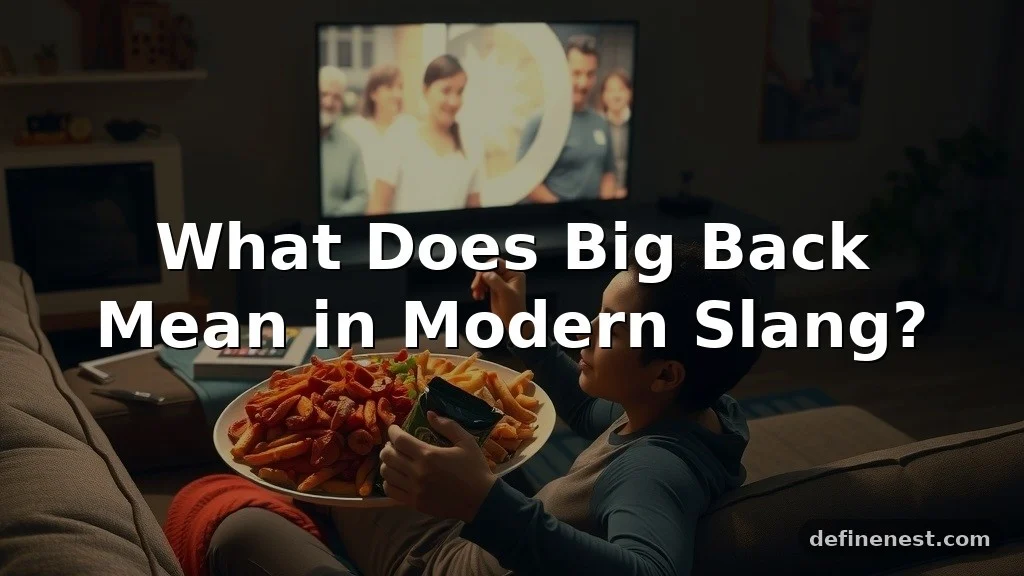
When someone is called a big back, it is rarely a medical or literal observation. Instead, it is used as a humorous shorthand for gluttony or a love for food. For example, if a content creator posts a video showing a massive spread of snacks they plan to eat during a movie night, the comment section will likely be filled with users calling them a big back.
In this context, the term is meant to be a form of social media humor. It acknowledges the universal urge to eat a bit too much occasionally.
It is a way of bonding over shared vices. However, the term is not always used with positive intent, as it can easily veer into territory that targets an individual’s weight or physical appearance.
The Background and Evolution of the Phrase
The origins of this expression are deeply rooted in the evolution of slang terminology on platforms like TikTok and Twitter. While phrases about body types have existed for generations, the modern iteration of this term gained traction through short-form video content.
It started as a niche way to describe someone who appeared to be eating constantly or choosing unhealthy food options. Because TikTok thrives on hyper-specific humor, the term quickly moved from a private joke to a viral phenomenon.
As the phrase spread, it underwent a transformation. It stopped being just a descriptor for a person and became a descriptor for behavior. This is what many now call big back energy or big back behavior.
It refers to the state of mind where one decides to ignore dietary goals in favor of pure enjoyment. This evolution is typical of internet culture, where a word or phrase is stripped of its original, perhaps more literal meaning and repurposed as a meme.
Today, the term is widely recognized across various social media platforms, often appearing in memes that depict people eating large meals or indulging in midnight cravings. It has become a permanent fixture in the lexicon of younger generations who use it to navigate their online social lives.
Usage in Various Contexts and Daily Dialogue
Understanding how to use this term requires knowing the right social context. It is most common in casual settings, particularly among friends who joke about food and lifestyle choices.
In a gaming lobby, you might hear a player say it to a teammate who is AFK because they are busy getting a snack. In texting, it is often used as a playful roast between friends.
Consider this dialogue between two friends, Alex and Jordan:
Alex: I just ordered three burgers and a large fry for myself.
Jordan: Man, you are really leaning into that big back lifestyle today!
Alex: I know, I know. I had a long day and I need the comfort food.
The term is used as a
In this scenario, the term is used as a lighthearted joke. It does not carry malice. However, the tone is everything.
If someone were to say this to a stranger or an acquaintance they do not know well, it could easily be interpreted as an insult. The term relies heavily on the existing relationship between the people involved. When used by friends, it is a form of camaraderie.
When used by strangers, it can feel like a direct attack on someone’s physical appearance. This is why it is essential to gauge the room before using the term.
Common Misconceptions and Necessary Clarifications
One of the biggest misconceptions about this term is that it is strictly a derogatory slur against people of a certain body weight. While it certainly can be used as a form of body shaming, it is not always intended that way.
Many people who are thin or fit also get called out for having big back behavior if they eat a lot in front of others. This creates a confusing dynamic where the term is simultaneously a joke about personality and a potential insult regarding body image.
Another misconception is that the term is a formal diagnosis of one’s eating habits. People often see the term on Urban Dictionary and assume it has a strict, singular definition. However, language in the digital age is fluid.
The term is more about the vibe of the situation than the actual anatomy of the person being described. It is crucial to clarify that while the term is popular, it is not a compliment.
Even when used as a joke, it centers on the idea that eating a large amount of food is something to be teased about. This can contribute to a culture of judgment around food and eating habits.
Similar Terms and Alternatives in Modern Slang
There are many ways to describe someone who loves food, and this specific term is just one of many that exist in our current vernacular. People often use these phrases interchangeably, though they carry different connotations. Below is a comparison of how these terms differ in usage:
| Term | Typical Context | Vibe |
|---|---|---|
| Big back | Food-related behavior | Playful or judgmental |
| Glutton | Formal/Descriptive | Often critical |
| Foodie | Passionate about food | Positive/Complimentary |
| Snack lover | Casual | Neutral/Affectionate |
| Bottomless pit | High food consumption | Playful |
As you can see, the term in question is unique because it specifically targets the physical frame while commenting on the behavior. Other terms like foodie or snack lover focus on the enjoyment of the food itself, whereas the term we are discussing focuses on the person consuming it.
If you want to avoid the potential negativity associated with body-focused slang, it is often better to use terms that highlight the love of food rather than the size of the person. You can read more about how language influences our perceptions at the Linguistic Society of America which provides insights into how slang evolves within cultures.
How to Respond to Being Called a Big Back
If you find yourself on the receiving end of this comment, your response should depend on who said it and how you feel about it. If it is a close friend who is just joking around, you might choose to lean into the humor.
You could respond by saying, “Hey, don’t judge my meal choices!” or “I am just fueling up for the night.” This keeps the conversation light and shows that you are not bothered by the teasing.
However, if the comment makes you uncomfortable, it is perfectly acceptable to set a boundary. You can simply say, “I don’t really like being teased about what I eat, could you drop it?” This is a mature way to handle the situation.
If the comment comes from someone you do not know well, you are under no obligation to engage with them. In the world of social media, the best response to unwanted commentary is often silence or the block button.
You do not need to justify your eating habits to anyone, especially not to random commenters online. Remember that your boundaries are yours to define, regardless of what the current slang trends are.
Regional Differences and Cultural Nuances
The usage of this term is not uniform across the globe. Because it originated on social media platforms that are heavily influenced by American English, it is most prevalent in the United States and other English-speaking countries.
Even within the U.S., the usage can vary significantly based on the region and the specific online communities involved. In some circles, it is a common part of the daily vocabulary, while in others, it might be completely unheard of or misunderstood.
Cultural context also plays a massive role. In cultures where food is a central part of hospitality and gathering, being teased for eating a lot might be viewed very differently than in cultures where dietary restraint is highly emphasized.
Furthermore, because this term is so closely tied to Gen Z and younger demographics, it may not be understood by older generations who are not as active on platforms like TikTok or Twitter. This creates a generational language gap where the term can be used in front of parents or older coworkers without them realizing that it is meant as a joke or a critique.
Usage in Online Communities and Dating Apps
On dating apps like Tinder or Hinge, the term is sometimes used in bios as a way to show that a person does not take themselves too seriously. A person might write, “I am a big back, so let’s go out for pizza.” In this context, it is a self-deprecating joke intended to show that they are fun and love to eat.
However, this is a risky strategy. Because the term can be interpreted as offensive, it might turn off potential matches who find the slang usage to be immature or mean-spirited.
In gaming communities, the term is frequently thrown around during high-intensity moments. If a player is taking a break to eat, their teammates might call them out. This is usually just friendly banter between friends who spend a lot of time together in virtual spaces.
The key to navigating these spaces is to understand the intent. If the group is generally supportive and friendly, the term is likely just a joke. If the group tends to be toxic or overly critical, it is best to take such comments with a grain of salt and avoid using the term yourself to keep the environment positive.
Hidden Meanings and Potential for Offense
It is crucial to address the darker side of this slang terminology. While it is often used for laughs, it can easily cross the line into body shaming and online bullying. When people use this term to target individuals based on their weight, it stops being about food and starts being about attacking someone’s physical image.
This is why it is so important to be aware of the impact your words have. Even if you think you are just being funny, the person on the other end of the screen might be struggling with their own body image or eating habits.
Context is the single most important factor. If you are mocking someone’s weight, you are engaging in harmful behavior. If you are laughing with a friend about how much you both ate at a buffet, you are engaging in shared humor.
The difference lies in the intent and the relationship. Never assume that someone will find a comment about their body funny, even if it is phrased as a joke. Being mindful of this distinction is what separates someone who is using slang for connection from someone who is using it to cause harm.
Suitability for Professional Communication
If you are wondering whether you should use this term in a professional setting, the answer is a resounding no. In a workplace, school, or any formal environment, using slang that references a person’s body or eating habits is highly inappropriate. Professional communication requires a level of respect and distance that is incompatible with the casual, often blunt nature of internet slang.
Using such terms in the office can lead to misunderstandings, HR complaints, or a reputation for being unprofessional. There are plenty of other ways to talk about food, snacks, or lunch plans without resorting to terms that could be interpreted as offensive. If you want to talk about your love for food with a coworker, stick to phrases like “I am a big fan of this restaurant” or “I really enjoy trying new snacks.”
Keep the slang for your private time with friends. Maintaining a professional tone is essential for building a career and ensuring that you are respected by your peers and superiors.
Frequently Asked Questions
1. Is big back a term used only by Gen Z?
While it gained massive popularity through Gen Z creators on TikTok, the term has spread to other age groups as well. However, it remains firmly rooted in modern, internet-driven slang.
2. Does this term always mean someone is overweight?
No. While it references physical appearance, it is frequently used to describe behavior, such as eating a large portion of food, regardless of the person’s actual body type.
3. Can I use this term to joke with my friends?
Yes, if you have a close relationship and you know that your friends will take it as a joke. Always be mindful of the tone and the context of the conversation.
4. Is this slang term offensive?
It can be.
It is often used as a form of body shaming. Whether it is offensive depends on the intent of the speaker and how the listener perceives it.
5. Where did the term originate?
The term evolved from viral social media content where users began calling out their own or others’ eating habits. It is a product of internet culture and viral memes.
What should I do if someone
6. What should I do if someone uses this term to bully me?
Do not engage with the bully. Block them, report their comments if they violate platform policies, and surround yourself with people who treat you with respect.
7. Is it appropriate for a professional setting?
Absolutely not. It is unprofessional and can be perceived as offensive or inappropriate in any formal or workplace environment.
Conclusion
Navigating the world of modern slang can be a complex task, especially when terms like big back blur the lines between humor and body shaming. We have seen how this phrase has evolved from a niche internet joke to a widely used descriptor for eating habits and lifestyle choices. While it can be a source of bonding and laughter among friends, it is also a term that carries significant baggage regarding body image and social judgment.
By understanding the origins, the potential for offense, and the necessity of context, you can better navigate how to use—or avoid—this term in your daily interactions. Remember that language is a tool for connection, and choosing your words with empathy and awareness is the best way to ensure that your communication remains positive, respectful, and inclusive for everyone you encounter online or in person.